
Electric vehicle charger installation sydney
EV sales in Australia jumped 51% in just one year. More Sydney homeowners and businesses are making the switch, and a reliable charger at your property is the next step. This page covers everything about EV charger installation in Sydney, from costs and compliance to choosing the right setup for your needs.
- Same-Day Services
- Fully Licensed & Insured
- 24/7 Emergency Call-Out
- Transparent Pricing & Free Quotes
Request a Call Back
Fill-in your details below and
we will get back to you soon
Our Specialties
Professional
Skilled and well-presented team.
Trusted
Over 10 years of proven service.
Prompt
Fast response for urgent calls.
Guaranteed
Quality work with full warranty.
How does electric car charger installation work for homes and businesses?
Electric vehicle charger installation involves a site assessment, dedicated circuit setup, and a compliance check by a licensed EV charger electrician in Sydney.
What is the electric vehicle charger setup process?
The process follows four clear steps. First, a site inspection checks your property layout and power access. Next, an electrical assessment reviews your switchboard capacity. The charger gets installed on a dedicated circuit, then tested for safe and compliant operation.
Do you need a licensed EV charger electrician in Sydney?
Yes, Australian law requires a licensed electrician for every EV charger placement. Unlicensed work voids your warranty, breaches AS/NZS 3000:2018 compliance standards, and can invalidate your home insurance. A certified EV charger electrician in Sydney ensures the job meets all legal and safety requirements.
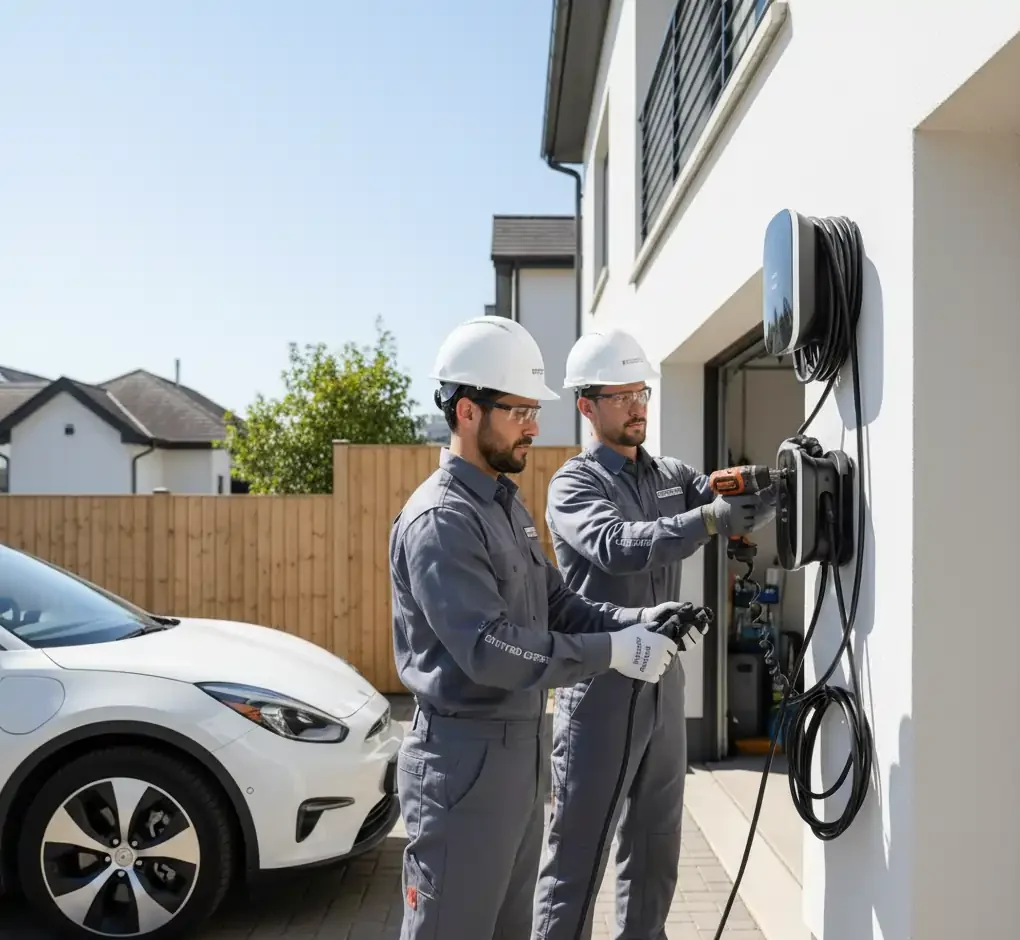
What types of electric automobile chargers can be installed (Level 1, Level 2, or DC fast)?
Three charger types are available for homes and businesses. Level 1 uses a standard 240V outlet and adds around 5/10 km per hour. Level 2 runs on a dedicated circuit and delivers 20/60 km per hour, making it the most practical option for residential and commercial use. DC fast chargers suit high traffic commercial sites but cost significantly more to install.
Our electrical services in Sydney
When it comes to your electrical needs, experience matters. Our Sydney-based team brings professional service, honest advice, and reliable solutions to homes, businesses, and industrial sites across the city. Available for scheduled work and emergency response—because electrical issues don't wait.
Residential Services
We provide comprehensive residential electrical services for Sydney homes, from minor repairs to major installations. Trust our skilled electricians to ensure your home's safety and efficiency. Contact us for reliable service!
24/7 Emergency Services
We offer 24/7 emergency electrical services to address urgent issues anytime. Our prompt, reliable and level 2 electricians are ready to restore your safety and comfort. Call us anytime for immediate assistance!
Commercial Services
Our expert team offers top-tier commercial electrical services. including installations, upgrades, and maintenance. We ensure your business operates smoothly and safely. Trust us for professional, efficient solutions.
Industrial Services
Your production can't wait for electrical issues. We provide reliable industrial electrical services, equipment installations, system upgrades, fault finding, and 24/7 emergency response—so your operations stay productive and your team stays safe.
Residential EV Charger Installation in Sydney
Home EV charging station installation gives you a faster, more convenient way to charge overnight. Here is everything Sydney homeowners need to know before getting started.
What EV charger is best for home use?
A Level 2 smart charger is the best option for most Sydney homes. It charges faster than a standard outlet, and built-in scheduling lets you charge during off-peak hours to cut electricity costs.
Can a wall mounted electric vehicle charger be installed at home?
Yes, a wall-mounted charger is the most practical home setup. Units like the Tesla Wall Connector Gen 3 and Wallbox Pulsar Plus mount directly to your garage or exterior wall, keeping cables tidy and charging speeds consistent.
Can electric automobile chargers be connected to solar power systems?
EV chargers can be set up to draw directly from your solar system. Chargers like the Zappi by Myenergi and Ocular LTE detect surplus solar energy and prioritise it for charging, reducing your grid electricity use significantly.
Is a switchboard upgrade required for home EV charging installation?
Not always, but older boards often need one. A dedicated circuit with RCD protection is required for every home EV charging system installation. If your switchboard is full or uses outdated fuses, an upgrade costing $1,500–$2,500 may be needed.
What vehicles are compatible with home electric car chargers?
Most home chargers work with all major electric car brands sold in Australia, including Tesla, BYD, and MG. Level 2 chargers use a Type 2 connector, which is the standard across virtually every electric vehicle on the Australian market.
Where can a home electric vehicle charger be installed?
A home charger can go in a garage, carport, or on an exterior wall facing the driveway. The best spot sits close to your switchboard to keep cable runs short and installation costs down.
Commercial EV Charger Installation in Sydney
Businesses across Sydney are adding Electric vehicle charging to their properties. Here is what commercial EV charging system installation involves, from payment systems to fleet solutions and multi vehicle load management.
What electric car charging solutions are suitable for commercial properties?
Commercial properties use three main charging setups: public charging bays for customers, dedicated fleet charging for company vehicles, and shared infrastructure for apartments and strata buildings. The right setup depends on your site size, vehicle volume, and how the space is used.
How do electric car charging payment systems work?
Commercial chargers run on OCPP (Open Charge Point Protocol), which connects the charger to a central management platform. Drivers pay through a tap and go card, mobile app, or RFID fob. Units like the Tritium Fast Charger, Kempower Charging System, Ocular IQ Tower, and EVBox BusinessLine all support multiple payment methods, making them practical for high traffic commercial sites where different drivers need quick, reliable access.
How is load managed when multiple EVs are charging?
Load balancing software distributes available power evenly across all active chargers. This stops the site from drawing more electricity than the connection allows, keeping every vehicle charging without tripping the system or overloading the grid.
Can Electric vehicle chargers be installed in apartments or shared buildings?
Yes, and NSW law gives residents the right to request a charger installation. Strata buildings can install shared infrastructure in common areas, with costs split across owners. An ordinary resolution requiring 50% owner approval is typically enough to get started.
Are commercial EV chargers suitable for public and outdoor use?
Most commercial chargers carry an IP54 or higher rating, meaning they handle rain, dust, and Sydney’s outdoor conditions reliably. Vandal-resistant enclosures and weatherproof sockets make them a practical fit for car parks, retail sites, and public charging bays.
What are fleet charging solutions for businesses?
Fleet charging sets up a centralised system where all company vehicles charge from one managed network. Charging sessions can be scheduled during off-peak hours, cutting energy costs while keeping every vehicle ready for the next working day.
What factors affect electric car charger installation requirements?
Several site specific factors shape what your installation actually needs. Electrical capacity, network approvals, and compliance standards all play a role before any charger goes in.
Does electrical capacity impact electric vehicle charger installation?
Yes, your existing load capacity directly affects what charger size you can run. Homes with single-phase power typically support a 7kW charger, while three phase connections handle 11/22 kW. An upgrade may be needed if your current setup cannot meet the demand.
Is a connection upgrade or approval required?
Some installations require approval from your local distributor network service provider (DNSP). Chargers drawing above a certain load threshold may trigger a connection upgrade, particularly for commercial sites adding multiple charging bays to an existing grid connection.
What safety and compliance standards apply?
Every installation must meet AS/NZS 3000:2018 and, from December 2024, chargers over 20A must support AS 4755 demand response modes. A licensed electrician signs off with a compliance certificate, confirming the work meets Australian electrical safety regulations.
Detailed Services
Popular Service We Provide
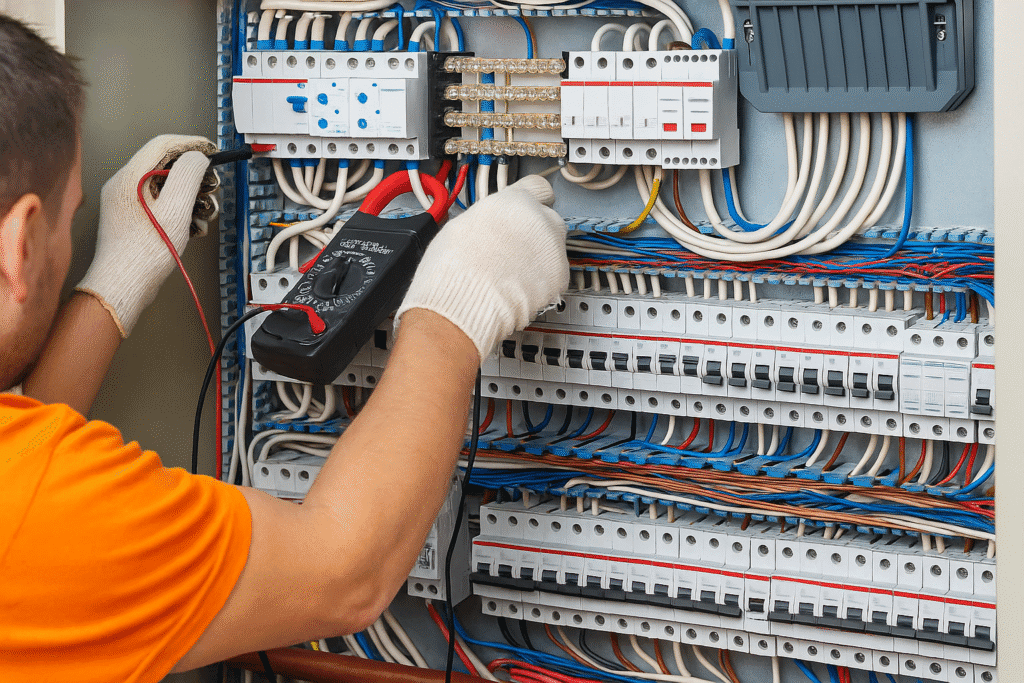
3 Phase Power Upgrades
Upgrade to a 3-phase power system for smoother performance and greater efficiency in heavy-load appliances and equipment. Ideal for homes and businesses needing stable power supply.
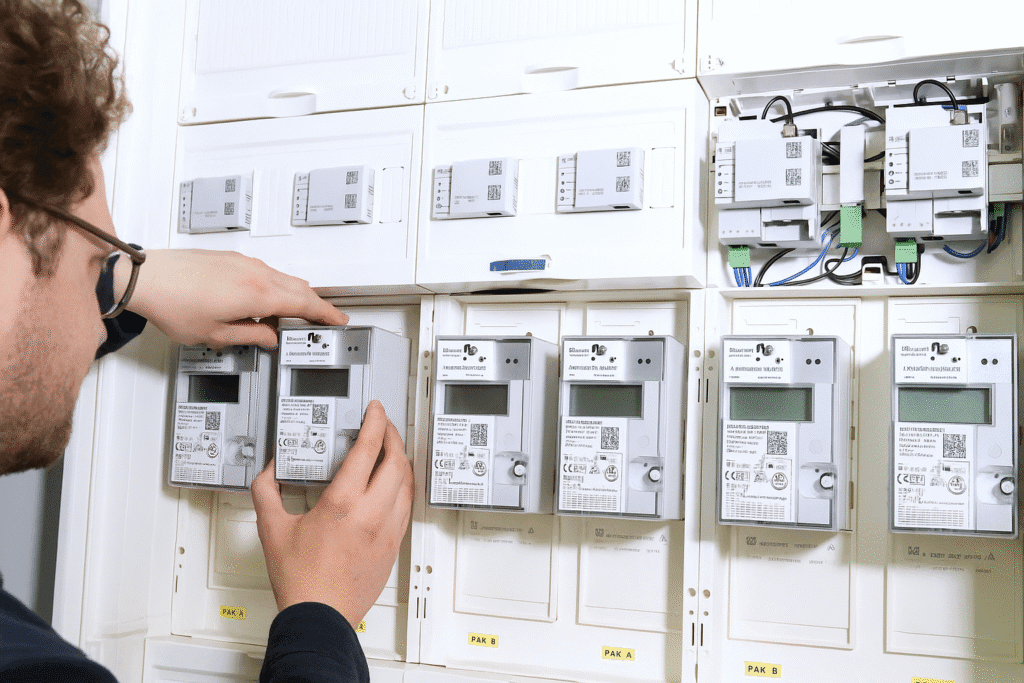
Metering Services & Smart Meter Installation
We install and configure advanced smart meters to accurately monitor your energy usage and reduce electricity costs with real-time data tracking.
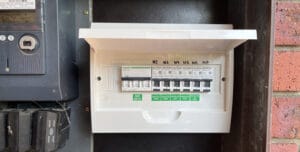
Switchboard Upgrades, Repairs & Relocation
Modernize or relocate your switchboard for improved safety, compliance, and energy distribution — all handled by licensed electricians.
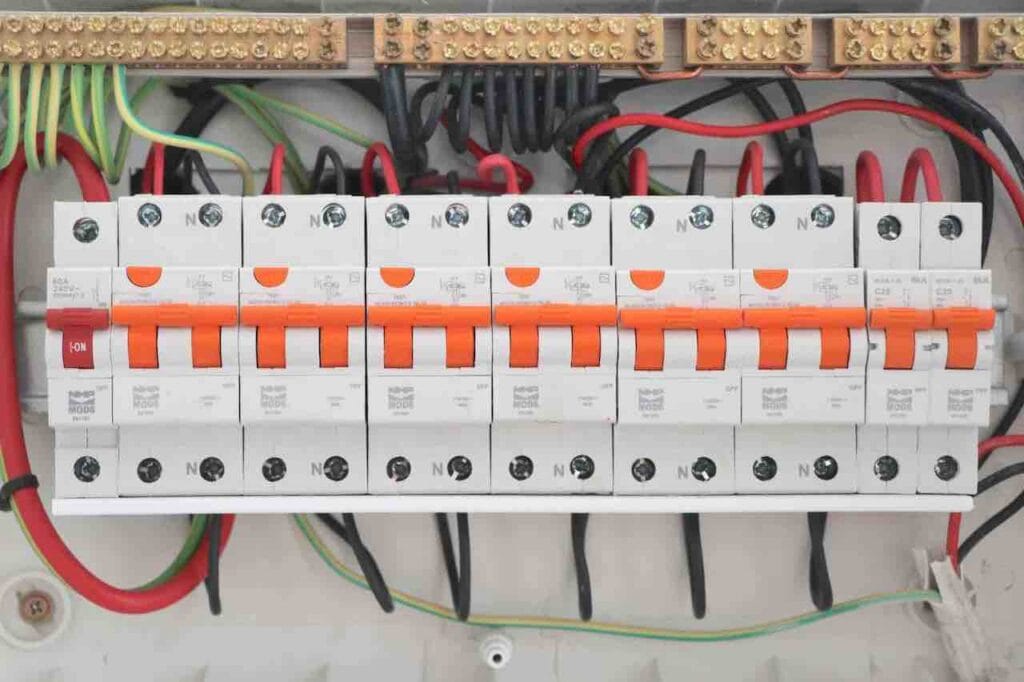
EV Charger Installation Cost in Sydney
Installation costs vary depending on your property type, charger model, and existing electrical setup. Here is what shapes the final price.
Residential EV Charger Installation Cost
The final cost depends on your switchboard condition, charger type, and how far the cable runs from your board to the parking spot.
Service Package | Other Providers (EST.) | Our Competitive Rate (Fixed) | Your Guaranteed Savings |
Normal Call-out Fee | $100 – $180 | $0 (Always Free) | 100% Saving – No Fees! |
Basic Install (Labor Only) | $850 – $1,300 | $800 – $1,200 | Save $50 – $100 |
Standard Bundle (7.4 kW) | $2,000 – $2,700 | $1,900 – $2,500 | Save $100 – $200 |
Solar Smart Bundle (Zappi) | $2,700 – $3,700 | $2,600 – $3,500 | Save $100 – $200 |
Level 2 ASP Power Upgrade | $1,200 – $2,000 | $1,100 – $1,800 | Save $100 – $200 |
Commercial EV Fleet Setup | $5,000 – $12,000+ | From $5,000 – $11,000+ | Major Project Savings |
Commercial EV Charger Installation Cost
Commercial installation costs scale with the number of bays, charger power output, and whether load management or payment systems are part of the setup.
Service Package / Component | Other Providers (EST.) | Our Competitive Rate (Fixed) | Your Guaranteed Savings |
Normal Call-out Fee | $100 – $180 | $0 (Always Free) | 100% Saving – No Fees! |
Basic Install (Labor Only) | $850 – $1,300 | $800 – $1,200 | Save $50 – $100 |
Standard Bundle (7.4 kW) | $2,000 – $2,700 | $1,900 – $2,500 | Best Value Bundle |
Solar Smart Bundle (Zappi) | $2,700 – $3,700 | $2,600 – $3,500 | Smart Integration |
Commercial Single Wallbox | $3,500 – $5,500 | $3,500 – $5,200 | Save up to $300 |
Dual Pedestal Setup | $8,000 – $14,000 | $8,000 – $13,600 | Fleet Scale Savings |
DC Rapid Charger (25-50kW) | $17,000 – $45,000+ | From $17,000+ | Expert L2 Project |
Is electrical upgrade included in the EV charger installation service?
Adding a charger to your property removes the hassle of public charging entirely. Here is what home and business owners actually gain from making the switch.
Is home EV charging more convenient than public charging?
Home charging removes the need to plan around public stations. Plugging in overnight means your vehicle starts every morning with a full charge, without queuing, without detours, and without paying public fast-charging rates of $0.40–$0.70 per kWh.
Can EV charging reduce long term energy costs?
Home charging costs around $0.25–$0.35 per kWh, significantly less than public chargers. Pair that with a solar setup and off-peak tariffs, and the savings climb fast. Average drivers covering 15,000km a year save between $800 and $1,200 annually compared to public charging.
| Feature | Your Info | Sydney Reality (Approx.) |
| Public Fast Charging | $0.40–$0.70 /kWh | $0.50–$0.90 /kWh |
| Home Charging (Peak) | $0.25–$0.35 /kWh | $0.21–$0.36 /kWh |
| Home Charging (Off-peak) | Not Mentioned | $0.08–$0.20 /kWh |
| Annual Savings | $800–$1,200 | $1,100–$1,300+ |
Does EV charging station installation increase property value?
A charger makes your property more appealing to a growing pool of EV owners. Research shows EV charging infrastructure can lift valuations by 3–7% for multi-family buildings, and some buyers are willing to pay a premium for homes already set up with charging infrastructure.
Our promise
Built on Trust, Delivered With Excellence
Safety First
Your safety is our top priority. Every installation, repair, and upgrade we complete follows strict Australian Standards and Level 2 regulations — ensuring total compliance and long-term peace of mind.
Professionalism
We take pride in our work. From residential jobs to large-scale commercial projects, our team delivers neat, efficient, and high-quality results that reflect the professionalism of Top Electricians Sydney.
Reliability
You can count on us 24/7. Whether it’s an emergency power fault or scheduled maintenance, we respond quickly and complete every task on time — with honest communication throughout the process.
Innovation
We embrace modern technology to provide energy-efficient, cost-effective, and future-ready electrical solutions — from smart metering to EV charger installations and sustainable energy systems.
Why Choose a Professional EV Charger Installer in Sydney
Cutting corners on installation creates real risks. Here is why hiring a certified EV charger electrician in Sydney protects your investment, your property, and your safety.
What risks are involved in DIY electric car charger installation?
DIY installation is illegal in Australia. Incorrect wiring can cause electrical fires, damage your vehicle, and void both your charger warranty and home insurance policy. Australian regulations require a licensed electrician for every EV charger setup, full stop.
What should you expect from a certified EV installer?
A certified installer covers every step from start to finish. Here is what the process looks like with a qualified professional:
- Site inspection to assess your switchboard, cable routes, and charger placement
- Dedicated circuit installation sized to match your charger and property setup
- Load testing to confirm the system runs safely under real charging conditions
- Compliance certificate issued on completion, meeting AS/NZS 3000:2018 standards
Top Electrician handles every step to Australian standards, so you know the job is done right the first time.
Where Can EV Chargers Be Installed?
EV chargers work across a wide range of properties and locations. The right placement depends on your setup, power access, and how you plan to use the charger daily.
Can EV chargers be installed in homes, apartments, and businesses?
Yes, electric vehicle chargers suit every property type. Standalone homes, strata apartments, commercial car parks, and retail sites all support EV charger deployment. NSW legislation also protects apartment residents’ right to request a charger in shared buildings.
What is the best location for EV charger placement?
The best spot sits close to your switchboard, within safe cable distance of where you park. Garages and covered carports work well for homes, while businesses should place chargers in clearly marked, accessible bays with weatherproof housing for outdoor use.
our service vs. others service
We Use Industry Leading Products