
Electrical problems in your home can quickly turn into serious safety hazards. Burning smells, sparks, or repeatedly tripping breakers often indicate underlying wiring faults that require immediate professional attention. These issues increase the risk of electrical fires, equipment damage, and personal injury if left unresolved.
Many homeowners are unsure who is legally qualified to fix electrical problems. Hiring unqualified individuals can result in unsafe repairs, code violations, insurance claim issues, and expensive future corrections.
This guide explains who can legally fix electrical problems, when you need a licensed electrician, what issues require same day repair, and how to choose the right professional to protect your home and family safely.
Can a licensed electrician legally fix electrical problems in Sydney homes?
Yes, only a qualified professional can legally repair, install, or modify electrical systems in Sydney homes. NSW regulations restrict most electrical work to trained experts to protect homeowners from fire, electrocution, and property damage. Attempting wiring, switchboard, or circuit work without proper certification is illegal and can result in fines, failed inspections, or voided insurance claims.
Certified electricians complete extensive training and apprenticeships, pass state exams, and maintain up-to-date certification. They provide a Certificate of Compliance for every job, confirming that all work meets NSW safety standards. This document safeguards both homeowners and the property during resale or insurance assessments.
Does electrical wiring work always require a licensed electrician in NSW?
Yes. In New South Wales, any electrical wiring work must be done by someone who holds a current electrical licence or certificate. This rule applies to all types of properties, whether residential, commercial, or industrial, and regardless of the cost of the job. It is illegal to carry out wiring installations, repairs, alterations, or removals unless the person doing the work has the appropriate credentials.
The law defines electrical wiring work as the physical installation, repair, alteration, or removal of electrical installations. These installations include fixed appliances, wires, fittings, meters, and other equipment that convey, measure, control, or use electricity in a particular place. This means that any work beyond very basic tasks falls under this requirement.
Attempting electrical wiring without the required licence is a breach of the Home Building Act 1989 and can attract substantial penalties. An individual may face fines of up to $22,000 for unlicensed work, while companies can be fined significantly more. Beyond fines, non‑compliant work can also lead to failed safety inspections and insurance complications.
What counts as electrical wiring work
Under NSW regulations, electrical wiring work includes:
- Installing, altering, or replacing fixed wiring
- Repairing switchboards or circuit connections
- Adding new circuits or reconfiguring existing ones
- Connecting power points, lighting circuits, and other fixed equipment
Even if the work seems simple, like adding a new outlet or moving an existing one, it still counts as electrical wiring work if it involves modifying the fixed wiring.
What does not count as wiring work
The regulations exclude certain items from the definition of electrical installation. For example, electrical equipment that operates at very low voltages (below specific thresholds) and portable devices connected to an existing socket can fall outside the requirement for wiring work. However, anything involving fixed wiring still needs a qualified tradesperson.
Legal protections and documentation
After any wiring job, the person who carried out the work must provide a Certificate of Compliance for Electrical Work. This certificate shows that the installation has been tested and complies with the relevant Australian Standards and NSW safety regulations. In NSW, this compliance certificate is legally required and must be submitted through the appropriate compliance portal.
Without this certificate, property owners may find it difficult to sell the home, pass a safety inspection, or make an insurance claim if an electrical fault leads to damage.
Is using an unlicensed electrician illegal and unsafe in Sydney?
Yes. In Sydney and across New South Wales, hiring an unlicensed person to perform electrical wiring, installation, repair, or modification is both illegal and unsafe. Electrical work that involves fixed wiring, circuits, switchboards or safety devices must be carried out by someone with the appropriate licence issued under NSW licensing laws. Working without this licence breaches state regulations and carries significant legal and safety consequences.
Under NSW law, electrical wiring work is defined as the physical installation, repair, alteration, or removal of electrical installations. These installations include wiring, socket outlets, fixed appliances, lighting circuits, switchboards, and other connections that convey or control electricity in a property.
Legal consequences of unlicensed electrical work
Performing restricted electrical tasks without the required certificate is a breach of the Home Building Act 1989 and the NSW electrical licensing framework. Individuals can face fines of up to $22,000 for carrying out electrical work without proper authorisation. Companies and business entities may incur even larger penalties. These fines are issued by Fair Trading and other regulatory bodies responsible for enforcing electrical safety standards.
In addition to fines, unlicensed work can lead to failed compliance inspections, orders to remove or redo the work, and enforcement actions by local councils or building inspectors. This can add to repair costs and delays. Work done improperly may also lead to legal disputes between homeowners and contractors.
Safety risks of unlicensed electrical work
Faulty or non‑compliant work creates serious safety hazards that extend beyond regulatory concerns. When wiring is not installed or tested according to standards, the risk of shock and fire increases. Loose connections, incorrect grounding, poor insulation, and overloaded circuits are common faults associated with unqualified work. These defects can ignite insulation, cause sparking inside wall cavities, and lead to fires.
Electrical faults often remain hidden until a severe incident occurs. Many electrical fires start behind walls and ceilings where wiring defects go unnoticed. Ensuring electrical work is done correctly reduces these risks and protects residents and property.
Insurance and compliance implications
Insurance policies generally require electrical installations to comply with applicable standards and local legislation. If electrical damage, fire, or injury occurs due to work that was not completed by a certified professional, insurers may refuse claims. This leaves homeowners responsible for all repair and replacement costs.
Proper documentation, such as a Certificate of Compliance for Electrical Work, is often required for insurance coverage. Without this certificate, insurers may treat the event as a known risk that was not properly mitigated, resulting in claim denial.
Long term consequences for property sales
Electrical compliance is often checked during property sales, inspections, and mortgage approvals. Unlicensed work that lacks proper certification may cause issues at settlement, delay sales, or require correction before the sale can proceed. Certified work, on the other hand, demonstrates that systems were installed and tested to meet safety standards, making the property more compliant and attractive to buyers.
Should emergency electrical problems always be repaired by a licensed electrician?
Yes. Emergency electrical problems in Sydney homes should always be handled by someone with the appropriate licence and qualifications. Urgent electrical faults can pose immediate risks of fire, electric shock, or significant property damage. NSW electrical safety regulations are designed so that only trained and authorised professionals work on systems that carry dangerous voltage levels, especially under emergency conditions.
Electrical safety laws in New South Wales do not distinguish between routine and urgent work when it comes to required qualifications. Whether a fault develops slowly over time or appears suddenly as an emergency, the legal requirement for competent, certified electrical work remains. Attempting to fix urgent issues without proper credentials not only breaks state rules but also increases the danger to people and property.
What qualifies as an electrical emergency
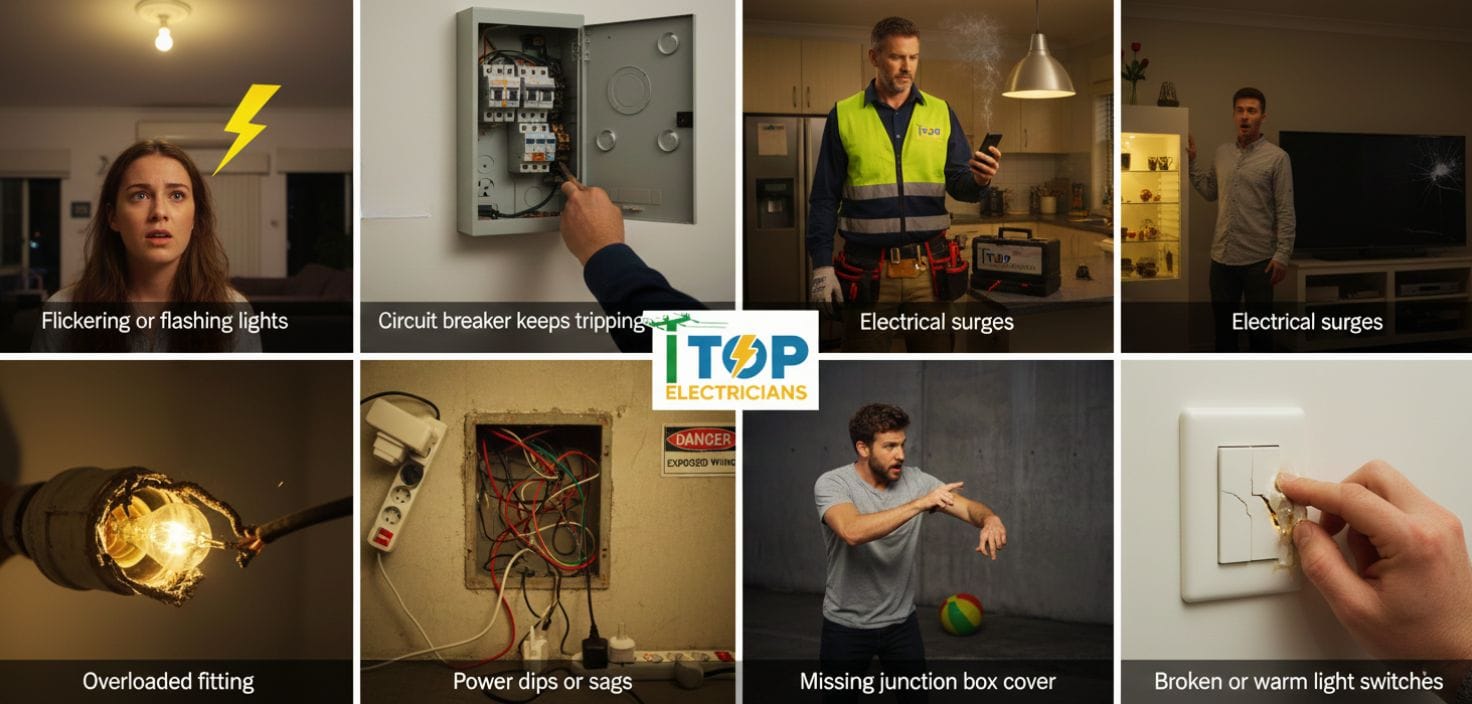
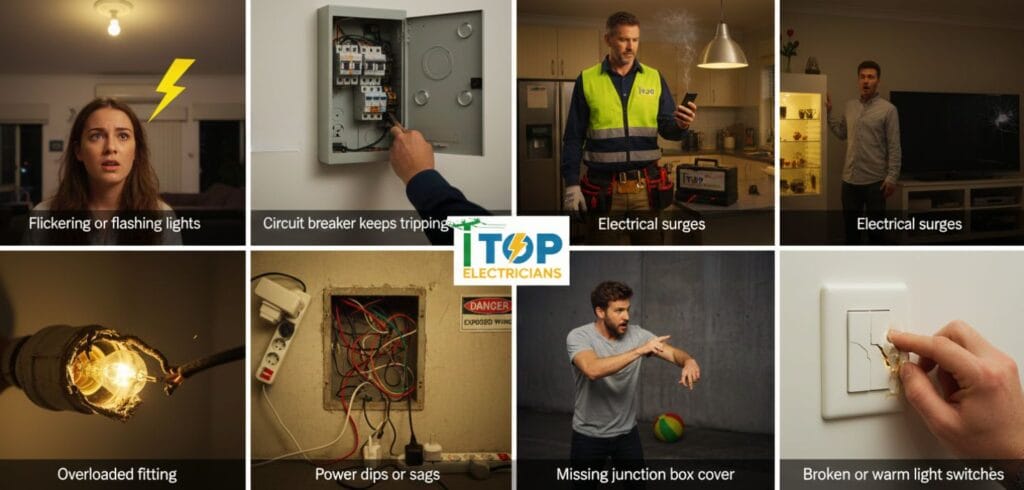
An electrical emergency typically involves faults that present clear and immediate danger. These include:
- Burning smells from outlets or switches: This can indicate overheated wiring or failing insulation, which may ignite and spread fire into walls or ceilings.
- Sparks or arcing: Visible sparking when switching devices on or off suggests failing connections or deteriorated components that can generate heat and start fires.
- Repeated breaker trips: A breaker that trips again and again often signals overloads or short circuits stressing the system beyond safe limits.
- Partial power loss in areas of the home: Loss of power in parts of a property can indicate damaged wiring, loose connections at the switchboard, or failing protective devices.
- Exposed or damaged wiring: Bare conductors pose a shock risk and can spark if touched or if they contact metal, moisture, or insulation.
These situations require immediate assessment and repair by a trained professional to prevent escalating hazards.
Legal and safety implications of ignoring emergencies
NSW building and electrical safety standards require that household electrical systems are safe and maintained. Leaving an electrical emergency unaddressed or attempting a DIY fix not only increases risk of serious injury but also may result in compliance issues. If faults lead to fire or injury and it is found that work was not completed by a certified professional, homeowners can face legal and financial consequences, including denied insurance claims.
In Australia, home and contents insurance policies typically require compliance with applicable safety standards. If a claim results from electrical faults and it is determined the work was not compliant, insurers may refuse payment for losses.
Why emergencies need qualified intervention
Electrical emergencies involve components connected directly to the main supply and often at high current levels. Safe diagnosis and repair involve:
- Identifying fault sources using specialised testing equipment
- Assessing insulation resistance and continuity
- Checking earth grounding and bonding
- Ensuring protective devices operate as intended
These tasks require formal training and licensed qualification. Trained professionals use this knowledge to pinpoint faults accurately and correct them without creating further danger.
Emergency response and customer protection
A qualified tradesperson responding to an electrical emergency not only fixes the immediate fault but also verifies that related circuits are safe. After repair, they should conduct testing to confirm that wiring, outlets, and protective devices are working correctly.
Licensed professionals also issue the required compliance documentation after repairs. This documentation may be needed for safety inspections, future insurance claims, or when selling a property.
Can homeowners legally repair electrical problems themselves in Sydney?
In Sydney, homeowners cannot legally repair most electrical problems themselves. NSW electrical safety laws require that almost all wiring work, circuit modifications, switchboard changes, and installation of fixed electrical devices are carried out by a person with the appropriate licence or certificate. This legal requirement applies whether the home is a standalone house, unit, or rental property.
NSW defines electrical wiring work as the installation, alteration, repair, or removal of electrical installations connected to the fixed supply. These installations include wiring, outlets, switchboards, lighting circuits, and other components that form part of the building’s electrical system. Any physical work on these parts is considered restricted and must be carried out by someone authorised under state law.
What homeowners may do
There are a very limited number of tasks that homeowners can safely do without breaching electrical safety regulations. These are usually simple, non‑wiring actions that do not involve altering the electrical installation. Examples include:
- Replacing light bulbs
- Resetting a tripped circuit breaker (without opening the switchboard)
- Plugging in or unplugging corded appliances
These actions do not involve making or altering connections within the fixed wiring system. However, anything beyond these simple tasks crosses into wiring work that requires appropriate qualifications.
What is restricted and requires professional intervention
Most electrical work in a home is restricted because it involves direct interaction with the fixed electrical system. Examples of work that homeowners cannot legally do include:
- Installing, moving, or replacing power points
- Repairing or rewiring switches or lighting circuits
- Modifying or extending wiring in walls or ceilings
- Touching or opening the main switchboard
- Installing new circuits or protective devices
Even if a task seems simple, such as replacing an outlet or relocating a power point, it still requires someone with recognised training and certification if it involves modifying wiring or connections.
Why these restrictions exist
The main reason for these legal restrictions is safety. Electrical systems carry dangerous voltages that can cause electric shock, serious injury, or ignition of fires if handled incorrectly. Certified professionals train for years to understand how circuits work, how to test installations safely, and how to comply with strict standards designed to reduce risk.
These safety standards are not optional. They apply to all electrical work connected to a property’s fixed electrical system, regardless of the cost or complexity of the task.
Compliance and inspection considerations
Work completed on a home’s electrical system without the appropriate licence or certificate may lead to compliance issues when selling the property. During building inspections, unauthorised electrical work can result in orders to remove or redo the work. It may also affect insurance claims if a fire or damage can be traced back to unapproved modifications.
In NSW, after any electrical work is carried out by a qualified person, a Certificate of Compliance for Electrical Work is issued. This document shows the installation was tested, complies with safety rules, and is legal. Without this certificate, homeowners may struggle to prove that work meets legal requirements.
When it is safe to act
While homeowners should not attempt most repairs, there are times when immediate safety steps can be taken:
- Switch off power at the switchboard if you smell burning or see sparks
- Unplug appliances that may be causing faults
- Clear water from outlet areas to reduce shock risk
These actions do not involve altering or repairing the electrical system itself, and they reduce danger while you wait for a professional.
Why does hiring a licensed electrician protect safety and legal compliance?
Engaging a qualified professional for electrical work in Sydney ensures both safety and compliance with NSW regulations. Electrical systems carry dangerous voltages that pose significant risk of shock, fire, or equipment damage when handled incorrectly. NSW law requires that almost all types of wiring, circuit work, and fixed installations be carried out by someone with recognised training and certification. This protects homeowners and occupants from hazards and guarantees that work meets legal standards.
Licensed professionals complete formal training, apprenticeships, and state examinations before performing electrical work independently. Their expertise covers installation, testing, fault diagnosis, and compliance with standards set by Australian and NSW authorities. This training helps ensure that electrical systems operate safely and that installations comply with legal and safety requirements.
Understanding safety standards and legal requirements
NSW electrical safety regulations align with Australian Standards, including AS/NZS 3000, also known as the Wiring Rules. These rules dictate how electrical systems must be installed and maintained to reduce risk of fire, electric shock, and equipment failure. A professional with recognised credentials is trained to interpret and apply these standards in practical work, including correct wiring methods, protective device installation, and safety testing.
Homes have complex electrical systems, including wiring inside walls, switchboards, power points, and protective devices like circuit breakers and residual current devices (RCDs). Mistakes in installation or repair can weaken safety mechanisms, allowing faults to go undetected until they lead to serious hazards.
Reducing risk of fire and electric shock
Improper electrical work is a leading cause of residential fires in Australia. Faulty connections, overloaded circuits, incorrect earthing, and poor insulation can all create conditions that lead to overheating and ignition. A trained professional understands how circuits distribute load, how to secure connections, and how to protect wiring from damage.
Similarly, incorrect wiring can leave live parts exposed or fail to provide adequate earth fault protection. This increases the chance of electric shock, particularly in wet areas like kitchens, bathrooms, or outdoor spaces. A qualified professional knows how to install safety devices correctly so that they operate as intended when faults occur.
The role of testing and compliance documentation
When a qualified tradesperson completes work, they perform tests to verify safety and functionality. These tests may include:
- Voltage checks to confirm correct supply levels
- Insulation resistance testing to detect wiring deterioration
- Earth continuity and grounding verification
- Protective device testing to ensure breakers and RCDs operate properly
After testing, a Certificate of Compliance for Electrical Work is issued. This document confirms that installations or repairs meet legal safety standards under NSW regulations. It serves as proof of due diligence and is often required for:
- Insurance purposes
- Property sales and inspections
- Council or regulatory compliance checks
Without proper documentation, homeowners may struggle to demonstrate that electrical work meets legal and safety standards, which can have far‑reaching consequences.
Legal protection and risk management
Hiring a licensed professional reduces legal risk for homeowners. NSW law provides a framework that holds only certified individuals accountable for electrical work. When work is completed by someone without proper credentials, homeowners can face fines, orders to remove unauthorised work, and complications during property inspections.
Insurance providers usually require evidence that all electrical work complies with applicable standards. If a fire, shock incident, or other damage occurs and it is found that electrical work was not carried out by someone with appropriate certification, insurers may refuse claims. This leaves the homeowner responsible for repair costs and potential legal exposure.
Professional standards and ongoing training
Licensed professionals are required to stay current with updates to standards, safety protocols, and new technology. Ongoing training and professional development help ensure that they understand the latest safety requirements and best practices. This commitment to continual learning further protects homeowners by aligning work with current regulations.