
That flickering light or extra power point can feel like an easy weekend fix. But performing electrical work without proper training isn’t just dangerous, it’s illegal, and the consequences go well beyond a fine.
Here’s why hiring a licensed electrician actually matters:
- Your wiring meets the legal AS/NZS 3000 standard
- Your home insurance stays valid
- You get an official compliance certificate
- Your switchboard can handle modern power demands
- Your EV charger or solar setup meets current standards
- You’re backed by real training and insurance, not guesswork
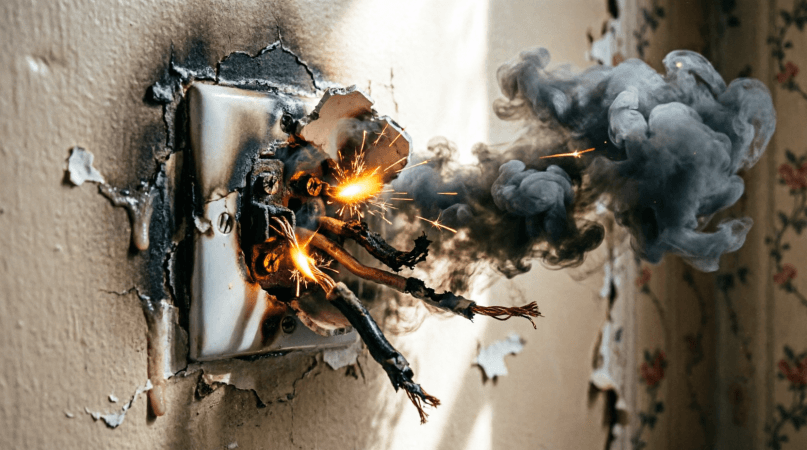
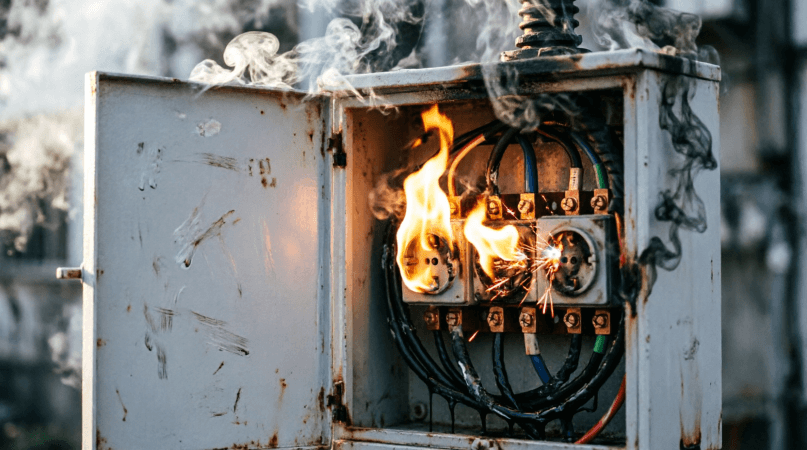
Australian homes run on 240-volt mains power, more than enough to cause a fatal shock or ignite a fire inside a wall cavity. That’s exactly why every state enforces its own Electrical Safety Act, with real penalties for anyone who skips the licence.
Unlicensed fixed wiring work can carry personal fines up to $22,000, and businesses operating without a licence risk prosecution and fines over $110,000.
Here’s what a licensed electrician, like the team at Top Electricians, actually protects you from.
1. Your Wiring Meets the AS/NZS 3000 Standard
Every legitimate electrical installation in Australia has to follow the AS/NZS 3000 Wiring Rules, covering everything from cable sizing to how close a power outlet can sit to water.
Unlicensed work commonly gets this wrong: undersized cabling, incorrect earthing, or a missing RCD safety switch. A Registered Electrical Contractor calculates your actual circuit load and tests the earth leakage system properly, rather than eyeballing it.
2. Your Home Insurance Actually Stays Valid
Uncertified electrical work is one of the fastest ways to lose an insurance claim, since insurers investigate the wiring after any fire and can reject the claim entirely if illegal work is involved.
A few ways this plays out in practice:
- Insurers want proof that any modified circuit was installed by a certified professional
- A fire claim can be denied even if the blaze started in a completely different room from the uncertified work
- Liability cover for injury or damage to someone else’s property becomes void if illegal wiring caused the incident
3. You Get an Official Compliance Certificate
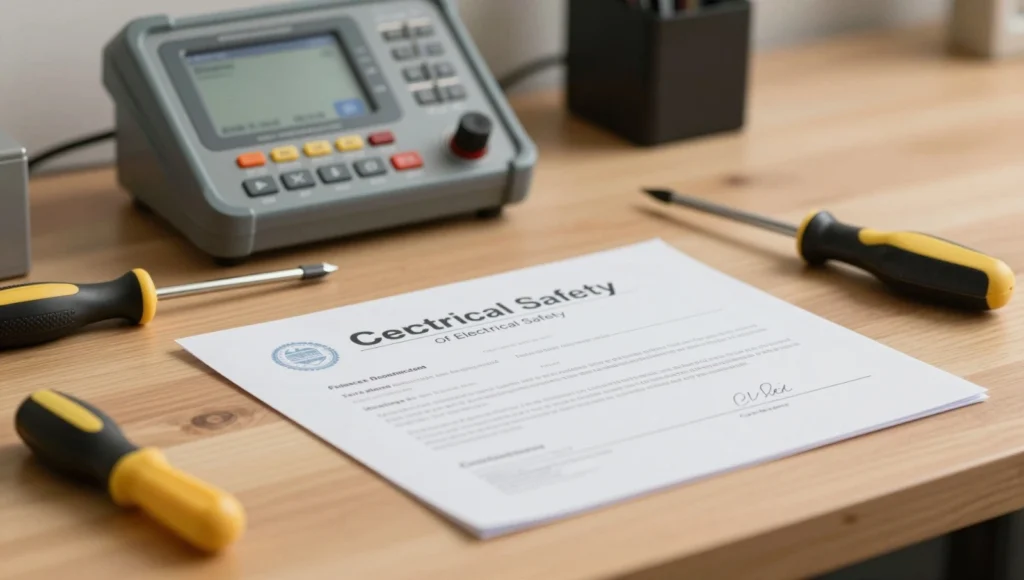
Every licensed electrician must submit formal compliance paperwork after prescribed work, known as a Certificate of Electrical Safety (CES) or Certificate of Compliance for Electrical Work (CCEW) depending on your state.
This certificate records what testing was done, who did the work, and exactly what was completed. It matters most when you go to sell: building inspectors check for it, and missing certificates can delay settlement or force a costly rewire before the sale can proceed.
4. Your Switchboard Can Actually Handle Modern Life
Older switchboards were built for basic appliances and incandescent bulbs, not induction cooktops, ducted air conditioning, and today’s power-hungry electronics, and pushing modern loads through an outdated board is a genuine fire risk.
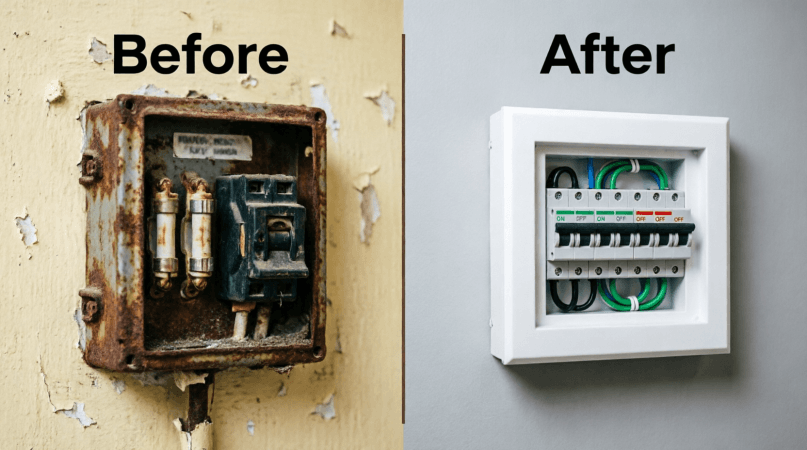
A licensed electrician assesses your service mains capacity properly before recommending a switchboard upgrade, replacing old fuse panels with modern circuit breakers, adding arc flash protection, and balancing the load across phases to protect your electronics from voltage surges.
5. Your EV Charger or Solar Setup Meets Current Standards
EV charging and solar installations come with their own strict rules under AS/NZS 3000:2018 Amendment 3, and getting them wrong isn’t just a compliance issue, it’s a real safety and warranty risk.
- Dedicated circuits – every wallbox charger needs its own hard-wired sub-circuit, not a shared one
- The right RCD – charging equipment needs a Type A or Type B residual current device to catch DC fault currents
- Demand response support – higher-capacity chargers need to support AS 4755 demand response to avoid overloading the local grid
- Solar integration – a proper install lets a smart charger work correctly with your interval meter, so you can actually use programs like Solar Sharer
6. You’re Backed by Real Training, Not Guesswork
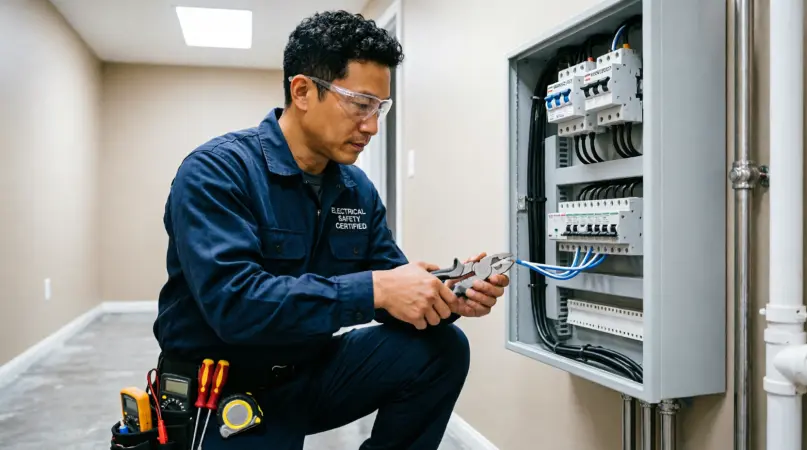
Becoming a licensed electrician in Australia takes a four-year apprenticeship combining formal coursework with thousands of hours of supervised, hands-on work, training no unlicensed handyman can match.
Legitimate electrical businesses also carry substantial public liability insurance, typically $10 million to $20 million, so your property is protected if something goes wrong. Top Electricians works to this same standard on every job, backed by ongoing training and full statutory compliance.
How to Check a Licence in Your State
Never take a verbal claim or a business card at face value. Every state has a free public register where you can check a contractor’s licence before they touch your wiring.
| State | Regulator | Where to Check | What to Look For |
| NSW | NSW Fair Trading | Service NSW Public Register | Electrical Contractor Licence or Qualified Supervisor Certificate |
| VIC | Energy Safe Victoria | ESVConnect Public Portal | Registered Electrical Contractor (REC) Licence Number |
| QLD | QBCC / Electrical Safety Office | ESO Licence Search Portal | Electrical Contractor Licence (ECL) and active insurance |
| WA | Building and Energy (DEMIRS) | Energy Safety Public Register | Electrical Contractor (EC) Licence Number |
| SA | Consumer and Business Services | CBS Public Register | Electrical Contractor Entity Licence and supervisor credentials |
What You’re Actually Paying For
Beyond the legal requirement, a licensed electrician brings a level of quality, correct materials, and hands-on experience that DIY or an unlicensed handyman simply can’t match.
- Quality of work – proper tools and techniques mean the repair or install actually holds up, instead of needing to be redone
- Correct materials – the right wiring gauge, connection points, and fittings for the job, all meeting legal standards rather than whatever’s on hand
- Real experience – having done the same job many times over means faster, more efficient work, and a better eye for what could go wrong before it does
Final Thoughts
Uncertified electrical work risks physical injury, a serious fine, and a rejected insurance claim, all to save a bit of money on a job that needed a professional anyway. A licensed contractor protects your home’s safety, its resale value, and your own peace of mind.
Before any work begins on your property, insist on seeing a valid contractor licence. Reach out to Top Electricians for a switchboard assessment, safety audit, or system upgrade done properly and compliantly from the start.
Frequently Asked Questions
Is DIY electrical work completely illegal in Australia?
Yes, for anything involving fixed wiring, including light switches, power points, and ceiling fans. You can only replace plug-in globes or use existing power outlets.
How do I check if an electrician is licensed?
Search their licence number or business name on your state’s public register, such as NSW Fair Trading, Energy Safe Victoria, or the QBCC.
What happens to my insurance if unlicensed work causes a fire?
Your insurer can deny the claim entirely, since most policies require any electrical modification to be done by a licensed professional.
What is a Certificate of Electrical Safety and why do I need one?
It’s official proof, issued by a licensed electrician, that completed work was tested and meets the AS/NZS 3000 Wiring Rules. You’ll need it for insurance audits and when selling your property.
Do I need a licensed electrician for an EV charger?
Yes. EV chargers must be hard-wired on a dedicated circuit with specific RCD protection. Skipping a licensed installer voids warranties and creates a real overload risk.
Ready to Hire a Licensed Electrician?
Whatever the job, from an emergency call-out to advanced Level 2 work, our team is ready to help anywhere in Sydney, any time you need us.
Our emergency electricians are available 24 hours a day to reliably handle any electrical task, wherever you are. We also offer trusted Level 2 electrician services, fully licensed to carry out more advanced work on properties.
We cover the whole of Sydney, including Greater Western Sydney and the Eastern Suburbs, so a licensed electrician is always within reach when you need one.
Let’s get started!