
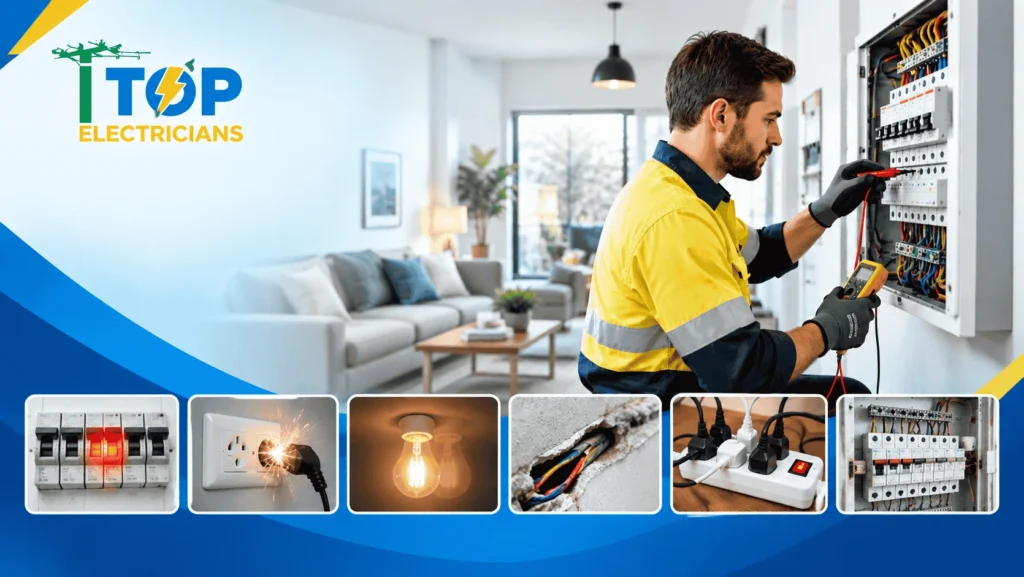
A burning smell from a wall, flickering lights during a storm or sparks from an outlet can turn a quiet evening into a crisis. Electrical faults are a leading cause of residential fires and serious injuries in Australian homes. Top Electricians Pty Ltd has 17+ years of experience as residential, commercial and industrial electricians in Sydney, from urgent emergency callouts to complex installations and Level 2 upgrades. Our licensed and accredited team offers general and emergency electrical services 24/7, 365 days a year, and this guide helps you spot urgent hazards, act safely and call the right service.
Smelling Burning Plastic or Spotting Sparks? The Hidden Electrical Dangers in Australian Homes
When an electrical issue occurs inside a home, the immediate impulse for many homeowners is to panic or attempt a quick DIY reset. Modern domestic power systems carry significant current, and minor symptoms often point to dangerous hidden faults behind walls or inside service panels.
Thermal overloading, deteriorated cable insulation, and loose wire terminations generate extreme resistance. This heat degrades protective plastic casings, creating a distinct, pungent burning smell similar to melting vinyl or fish. Left unchecked, this heat buildup triggers an arc flash, releasing localized temperatures that can ignite surrounding timber framing and insulation within seconds. Ignoring these early warning signs or delaying professional inspection places your household at immediate risk of severe fire hazard incidents.
The 60-Second Emergency Triage Matrix: Who Do You Call First?
When an electrical fault develops, Australian homeowners often waste critical minutes trying to determine who to call. Contacting a standard contractor for a street-mains failure leads to unnecessary callout fees, while calling your network provider for an internal appliance short delays urgent repairs.
| Symptom / Observed Hazard | Hazard Severity Level | Immediate DIY Safety Action | Who You Must Call |
| Active electrical fire, severe electrocution, or uncontained arcing | Critical / Life-Threatening | Evacuate the area immediately; do not touch the victim if still in contact with live power | Triple Zero (000) |
| Tingles from water taps, fallen street wires, or damaged service mains | High / Supply Network Fault | Do not touch any metal fixtures; keep at least 6 metres clear of downed cables | Regional Energy Distributor |
| Burning smell from wall outlets, persistent RCD tripping, or dead short | High / Domestic Property Fault | Isolate the main power switch at the panel if safe to reach; unplug connected devices | Licensed Emergency Electrician |
Understanding these functional boundaries ensures you engage the correct emergency service without delay:
- Call Triple Zero (000): Reserved strictly for active structural fires, explosions, or direct medical emergencies involving severe electric shock.
- Call Your Regional Energy Distributor: Contact your local grid provider (such as Ausgrid, Endeavour Energy, Energex, or CitiPower) when the fault originates outside your property boundary. This includes damaged street lines, sparking utility poles, or voltage surges affecting the broader neighborhood.
- Call a Licensed Emergency Electrician: Engage a credentialed licensed electrician for any internal system fault occurring on your side of the electricity meter, including switchboard failures, localized power outages, or damaged indoor wiring.We’re just a call away.0431 460 141
Let’s get started!
10 Critical Electrical Emergencies Requiring Immediate Professional Repair
1. Tingles or Small Shocks from Metal Water Taps
Feeling a distinct tingle or mild shock while washing your hands or turning an outdoor tap is a top-tier safety emergency. This symptom indicates a broken neutral wire on the primary supply line or a compromised MEN connection (Multiple Earthed Neutral system).
What is a Floating Neutral Fault? A floating or broken neutral occurs when the primary path returning electrical current safely back to the grid becomes severed. Because Australian domestic plumbing relies on equipotential bonding, electricity redirects through ground metal water pipes. This turns exposed household taps into active ground paths and severe electrocution hazards.
If you experience a tap tingle, immediately stop using all water fixtures, avoid touching any metal piping, and report the issue directly to your regional grid distributor as an urgent supply priority.
2. Burning Plastic Smells or Melted Power Point Housings
A foul, fishy, or plastic-like odor originating from a general purpose outlet (GPO) signals active thermal degradation. Loose internal terminal screws or degraded copper wiring increase electrical resistance, causing high current draw to generate intense heat behind the wall plate.
This extreme localized heat warps the plastic housing, scorches surrounding drywall, and creates dangerous arcing across internal contacts. Never attempt to plug appliances into a discolored or warm power point. Turn off power to the affected circuit at the main board and request an immediate emergency inspection.
3. Switchboard Overheating Driven by Solar, Battery, or EV Charger Load
The rapid adoption of home electrification across Australia has introduced unprecedented demands on legacy infrastructure. Integrating 32A dedicated EV fast chargers, battery storage units, and large rooftop solar arrays through an outdated panel can push a standard 63A main switch well past its continuous thermal threshold.
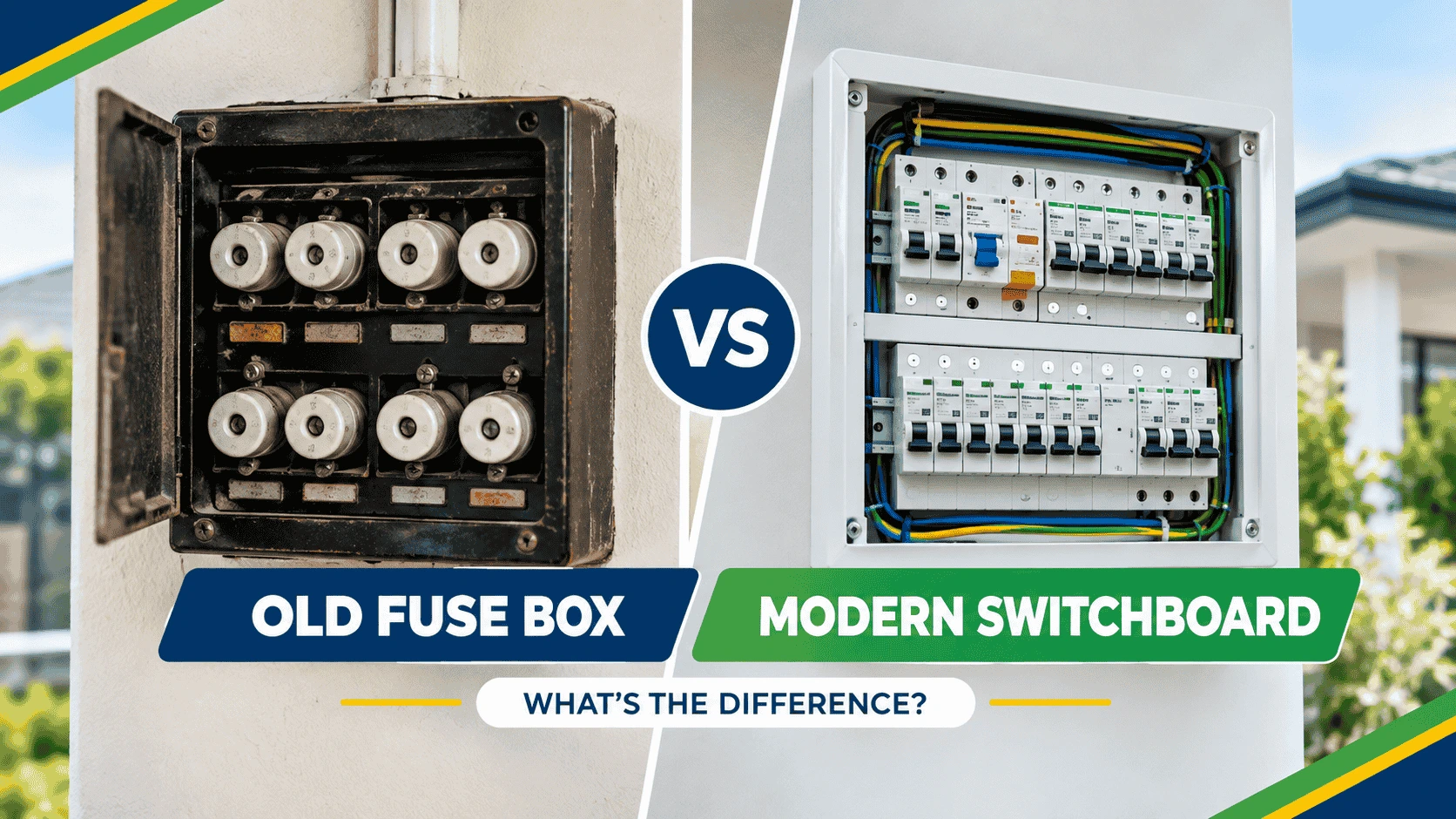
Excessive load across older consumer mains causes circuit insulation to melt, resulting in hot-to-the-touch panel doors, buzzing main switches, and sudden power cutoffs. Upgrading aging panels to handle high-draw modern loads is essential to prevent complete system breakdown and structural fire risks.
4. Buzzing, Sizzling, or Crackling Sounds Behind Walls
A properly functioning electrical installation operates in complete silence. If you hear persistent buzzing, sizzling, or crackling noises behind walls, light fixtures, or switch plates, you are listening to active electrical arcing.
An arc fault occurs when electrical current jumps across gaps in damaged, loose, or corroded conductors. This creates a high-temperature plasma discharge that can easily ignite dry timber studs or wall insulation inside wall cavities. Modern wiring installations built to AS/NZS 3000 standards utilize specialized protection devices to help prevent these invisible hazards, but audible crackling requires immediate circuit isolation.
5. Safety Switches (RCDs) Tripping Repeatedly and Refusing to Reset
A residual current device (RCD) is an essential safety switch engineered to monitor electrical balance and disconnect power in milliseconds if current leaks to ground. While a single trip can simply indicate a failed toaster or faulty power tool, an RCD that trips repeatedly and refuses to reset points to a severe, underlying system fault.
Forcing a tripped safety switch back into the “ON” position when an active ground fault or short circuit exists creates explosive force inside the panel, damaging internal mechanisms and escalating fire risks. Disconnect all appliances on the affected line. If the switch still refuses to reset, leave it OFF and call an electrician to trace the underlying leakage path.
6. Violent Sparks or Explosive Arc Flashes from Outlets or Panels
While a tiny blue static spark when plugging in an appliance can occasionally happen, a large yellow flash accompanied by a loud pop or flying sparks is a major hazard. According to safety alerts issued by WorkSafe Queensland, a severe arc flash inside an electrical panel can generate localized temperatures reaching up to 20,000°C, hotter than the surface of the sun.
This rapid expansion of superheated air creates an explosive pressure wave capable of throwing molten metal particles, vaporizing copper components, and causing severe thermal burns or permanent vision loss. If an outlet or panel produces visible sparks or a violent flash, clear the room immediately and isolate power if safe to do so.
7. Water Contact with Live Electrical Outlets or Flood Ingress
Severe weather events, burst plumbing pipes, or roof leaks that bring water into contact with active power lines create extreme electrocution hazards. Water acts as an efficient conductor, lowering skin resistance and allowing current to travel rapidly across damp floors or walls.
If water enters your meter box, wall outlets, or light fittings, do not step into standing water to reach the panel. Attempting to turn off switches in a flooded area risks direct current transfer through your body. Locate an isolated, dry power cut-off if available, or contact an emergency team to safely isolate power from the service mains.
8. Frayed, Exposed, or Damaged Live Cabling
Exposed copper conductors resulting from damaged outer insulation present an immediate shock risk to anyone in the building. Insulation breakdown often stems from pest damage, physical impacts during home renovations, or long-term UV exposure on exterior lines.
Leaving live copper exposed allows current to arch to nearby metallic building elements or conductive structural framing. Never attempt to wrap damaged structural wiring in basic electrical tape as a permanent solution. Turn off power to the affected line, keep children and pets away, and have the damaged cable completely replaced by a licensed professional.
9. Complete Single-Property Blackout While Neighbors Have Power
If your entire home loses power while adjacent properties remain illuminated, the issue is isolated strictly to your installation. This condition typically indicates a blown service fuse, a tripped main breaker, or damaged incoming supply connections at your property’s point of attachment.
A failure at the point of attachment where overhead grid lines connect to your fascia board can leave consumer mains dangling or damaged. Addressing these overhead connections or replacing main service fuses requires specialized accreditation. Standard domestic repairs cannot touch these mains, making an emergency service call necessary to restore primary power safely.
10. Unapproved Fixtures & Fake Compliance Marks (Recall Threats)
The market influx of cheap, direct-imported lighting fixtures and smart home equipment has introduced significant electrical hazards to Australian homes. Recent product recalls such as unapproved LED feature kits found to contain exposed live pins, highlight the risks of non-compliant hardware built without internal safety protections.
Non-compliant products often carry fraudulent packaging markings or lack necessary thermal controls, causing internal shorts and melted light fittings within hours of installation. Australian regulations require electrical equipment to meet strict manufacturing guidelines to ensure safety under local grid conditions.
How to Verify Legal Product Safety Compliance (The RCM Checklist)
To protect your home from dangerous, non-compliant electrical goods, always verify hardware before installation using these safety steps:
- Look for the Physical RCM Mark: Ensure the Regulatory Compliance Mark, a distinctive tick inside a triangle, is permanently stamped directly onto the physical product body, not just printed on the cardboard packaging.
- Search the EESS National Database: Cross-reference imported appliances or lighting fixtures on the Electrical Equipment Safety System (EESS) database to confirm valid registration.
- Buy from Certified Australian Retailers: Purchase fixtures through established trade suppliers that provide verifiable test certificates matching AS/NZS 3000 compliance frameworks.
Frequently Asked Questions About Australian Electrical Emergencies
Can I reset my own RCD safety switch if it keeps tripping?
Reset it once after unplugging everything on that circuit. If it trips again, leave it OFF. Repeated resetting into a fault damages switchboard contacts and raises fire risk, so wait for a licensed electrician.
What should I do if my house voltage drops below normal levels?
Australian supply should stay above 216V. If lights dim or electronics restart, unplug valuable appliances and call your energy distributor.
Is it legal in Australia to replace my own damaged power point cover?
No. Fixed electrical work, including replacing faceplates or wiring switches, generally requires a licence in every state and territory. Unlicensed work can void home insurance and carry heavy penalties.
Why does my switchboard make a buzzing or humming noise?
A low hum can mean an overloaded circuit, loose neutral or vibrating relay. Sharp buzzing or crackling means arcing at loose terminals, an active fire risk.
Who is responsible for repairing damaged power lines connected to my house?
Your energy distributor owns the street network and overhead service cables up to your point of attachment. You are responsible for the consumer mains, meter box, switchboard and internal wiring.
Emergency Action Summary: Protect Your Property and Call a Licensed Professional
When an electrical emergency occurs in your home, acting quickly and safely is essential to preventing injury and property loss. Recognizing critical hazards, from a floating neutral tap shock to a thermal switchboard overload, allows you to take immediate protective steps, isolate power safely, and contact the correct emergency service without losing valuable time.
For internal wiring faults, burnt outlets, or persistent switchboard failures, trust experienced trade specialists like Top Electricians to restore your system using compliant, high-grade components. Never compromise on home safety, isolate active hazards immediately and rely on credentialed professionals to keep your property fully protected.
We deliver fast, reliable electrical services all across Sydney, including Central Sydney, Eastern Suburbs, Northern Suburbs, Southern Suburbs and Western Suburbs, with Sydney-wide electrician coverage and Level 2 services available 24/7.