
Rust on a garden gate is a cosmetic problem. Rust inside or around your switchboard is something else entirely. A rusted switchboard in Sydney isn’t just an appearance issue, it’s a sign that moisture has been getting somewhere it absolutely shouldn’t, and it directly affects the safety of a board carrying live electricity into your entire property.
Top Electrician offer reliable, professional service when it comes to electrical switchboards and the problems that come with them, rust and corrosion included. Our team is trained to work confidently on any switchboard, carrying out repairs or full upgrades to the same high standard, whether the issue is a single corroded connection or a board that’s reached the end of its working life. Here’s what actually causes a rusted switchboard, how serious it really is, and what to do if you’ve spotted it on your own property.
What Does the Electrical Switchboard Do?
Your switchboard is the control centre for every circuit in your home or business. Power comes in from the meter, and the switchboard distributes it out across individual circuits, lighting, power points, appliances, each protected by its own circuit breaker (MCB) and, in a modern board, a safety switch (RCD) designed to cut power instantly if a fault develops.
In practical terms, the switchboard is what stands between a minor electrical fault and a genuine safety incident. When a circuit breaker trips, it’s doing its job, isolating a problem before it becomes dangerous. This is exactly why the physical condition of the board itself matters so much. A switchboard compromised by rust or corrosion can’t reliably protect the circuits it’s responsible for, which turns a routine maintenance issue into a genuine safety concern.
How Does Rust Form on an Electrical Switchboard?
Coastal Salt Air
Sydney’s coastal and harbourside suburbs, think the Eastern Suburbs, Northern Beaches, Sutherland Shire, and areas close to the harbour foreshore, expose outdoor switchboards and meter boxes to salt-laden air year-round. Salt accelerates oxidation on metal far faster than inland air does, which is why rusted switchboard issues show up disproportionately in these areas, even on boards that are otherwise well-maintained.
Moisture Intrusion
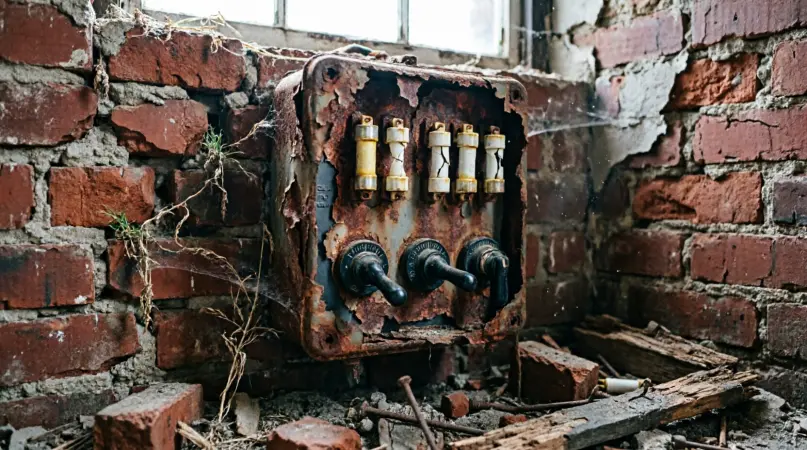
Older metal switchboard enclosures, particularly steel ones predating the shift to UV-stabilised polycarbonate housings, are vulnerable to water getting in through worn seals, cracked enclosures, or a poorly sealed meter box. Once moisture gets inside, it has nowhere to properly evaporate, and corrosion sets in on the metal components, connections, and backing plate.
Age and Deteriorating Seals
Rubber seals and gaskets around older switchboard and meter box enclosures degrade over time, particularly under constant UV and weather exposure. Once a seal fails, the enclosure effectively stops doing its job, and ongoing exposure to rain and humidity becomes a matter of when, not if, corrosion develops.
Poor Original Positioning
A switchboard mounted in a position that collects water, directly under a roofline with no guttering, in a low spot that pools after rain, or without adequate clearance from the ground, is set up to fail faster regardless of the enclosure quality.
Recognising It Early
Watch for visible orange or brown rust on the enclosure or mounting brackets, a surface that feels rough, flaky, or pitted rather than smooth, staining around the base that suggests water has been pooling or running down the unit, a musty or metallic smell near the board after rain, or a door or latch that’s become stiff or difficult to open.
What Do I Do With a Rusted Switchboard?
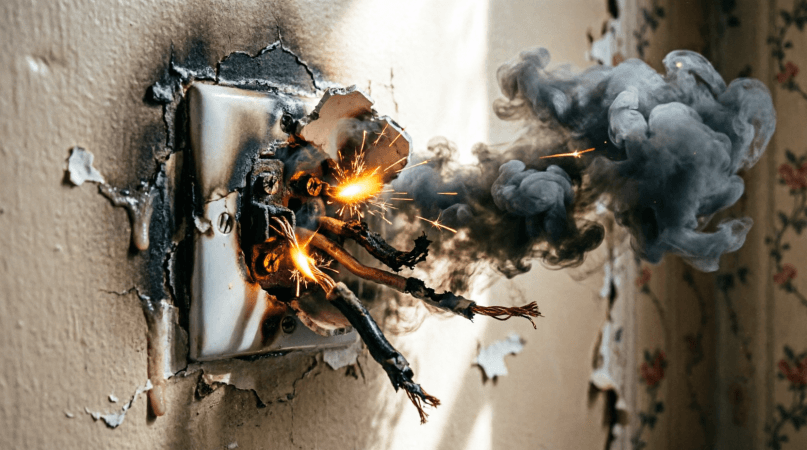
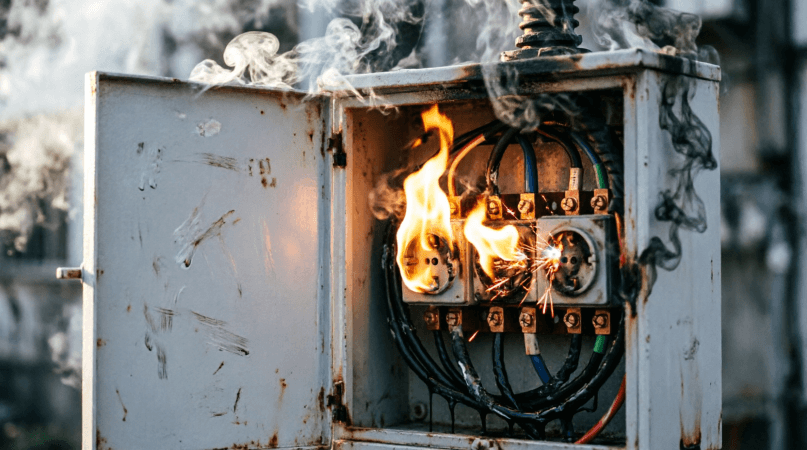
A rusted switchboard carries real, escalating risks, not just cosmetic ones. Corrosion weakens electrical connections, which raises the risk of current leaking to places it shouldn’t, including the metal enclosure itself. It also increases resistance at connection points, and resistance generates heat, a genuine fire risk when combined with weakened, corroded metal. Corroded circuit breakers and safety switches can fail to operate correctly exactly when they’re needed, either failing to trip during a real fault or tripping unpredictably on their own.
Here’s what to actually do if you’ve spotted rust on your board:
- Don’t touch or attempt to clean it yourself. You can’t know the extent of internal corrosion from the outside, and a rusted switchboard should be treated as a potential hazard, not a surface to wipe down.
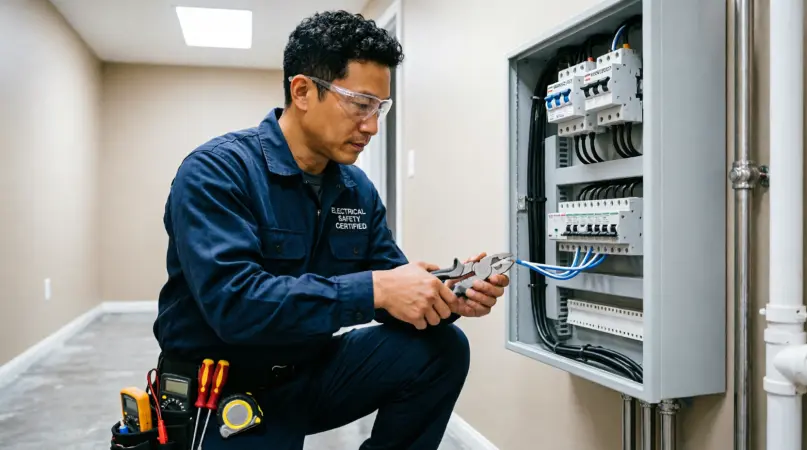
- Arrange a professional inspection. A licensed electrician can assess whether this is cosmetic surface rust or corrosion that’s reached internal connections and components.
- Don’t assume it’s purely cosmetic. Surface rust on the exterior can look minor while corrosion inside, on actual breakers and connections, is considerably more advanced.
- Treat rust alongside any other symptom as urgent. If you’re also noticing flickering lights, tripping breakers, or a burning smell, this points to active deterioration and shouldn’t wait.
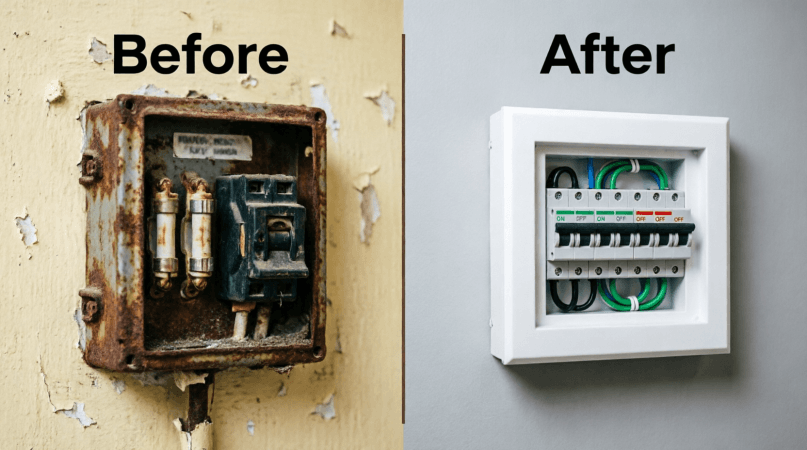
- Expect a repair or replacement recommendation, depending on how far the corrosion has spread. Isolated surface rust on an otherwise sound board may be manageable with a targeted repair, while corrosion reaching internal components, breakers, RCDs, busbars, generally means a full replacement is the safer and more cost-effective path. Older boards combining rust with other ageing issues, like ceramic fuses or no RCD protection, are almost always better addressed with a full upgrade than a patchwork fix.
Any repair or replacement should come with a Certificate of Compliance for Electrical Work (CCEW), confirming the work meets AS/NZS 3000 Wiring Rules and actually resolves the underlying issue rather than masking it.
How Can I Prevent Rust Forming on My Switchboard?
Prevention is considerably cheaper than dealing with advanced corrosion later, and a few practical steps make a real difference, particularly for properties in coastal or exposed locations:
- Choose a modern, weatherproof enclosure. UV-stabilised polycarbonate housings resist corrosion in a way older steel enclosures simply can’t, making this a worthwhile upgrade consideration if your current board is reaching the end of its life anyway.
- Check and maintain door seals. Degraded rubber seals are one of the most common entry points for moisture; replacing a worn seal is a small job compared to the corrosion it prevents.
- Ensure proper drainage around the unit. If your switchboard sits somewhere water tends to pool, redirecting runoff or adding a small drip edge can meaningfully reduce ongoing moisture exposure.
- Keep the surrounding area clear. Overgrown plants or debris against the enclosure trap moisture against the surface and slow natural drying after rain.
- Schedule periodic professional inspections. This is especially worthwhile for coastal properties, where accelerated corrosion means problems can develop faster than in inland areas. Catching early-stage rust during a routine check is far cheaper than addressing advanced corrosion later.
- Address any detected issue promptly rather than monitoring it indefinitely. Surface rust caught early is often a simple, affordable fix; left unaddressed, it only gets more expensive to resolve.
Professional and Affordable Switchboard Upgrades
If you’re dealing with a rusted switchboard, or simply want to get ahead of the problem before it starts, our team can properly assess your board and recommend the right path, a targeted repair, a protective upgrade, or a full replacement, based on what we actually find, not a generic assumption. Learn more about our switchboard upgrades and repairs service, and if you’re noticing other symptoms alongside visible rust, our guides on signs your switchboard requires repairs can help you figure out the full picture.
Backed by genuine 24/7 emergency service and licensed Level 2 electricians across Greater Sydney, Central Sydney, Eastern Suburbs, we’re ready to assess your switchboard whether it’s a routine concern or something that needs urgent attention.
Frequently Asked Questions
Is a bit of surface rust on my meter box really a problem?
It’s worth having checked rather than ignored. Surface rust can be an early sign of a failing seal or enclosure, and catching it early is far cheaper than waiting until corrosion reaches internal components.
Why do coastal Sydney homes get rusted switchboards more often?
Salt-laden air accelerates oxidation on metal significantly faster than inland conditions. Homes in the Eastern Suburbs, Northern Beaches, and other harbourside or coastal areas are genuinely more exposed to this than homes further inland.
Can a rusted switchboard cause a power outage?
Yes, in some cases. Severe corrosion can degrade connections to the point of failure, which can cause anything from a single circuit dropping out to a broader loss of power, depending on where the corrosion is concentrated.
How often should outdoor switchboards be checked in coastal areas?
Given the accelerated corrosion risk, coastal properties benefit from more frequent visual checks than inland homes, and a professional inspection every few years is a reasonable precaution rather than waiting for visible symptoms to appear.
Contact Top Electricians Sydney today for a professional inspection and an honest, affordable recommendation.