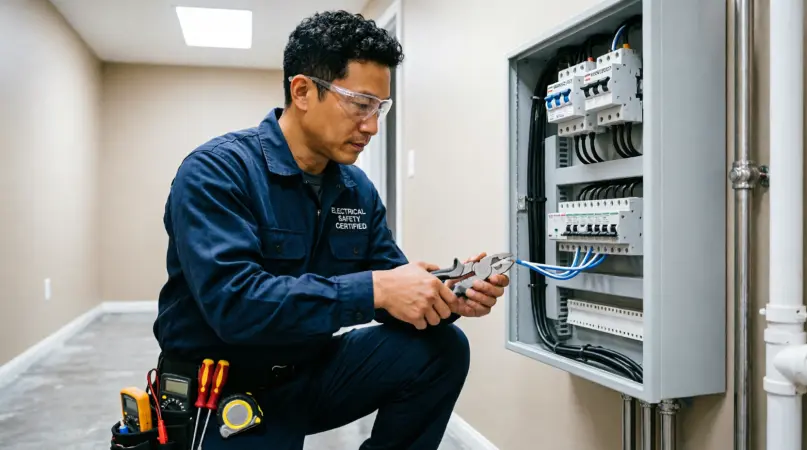

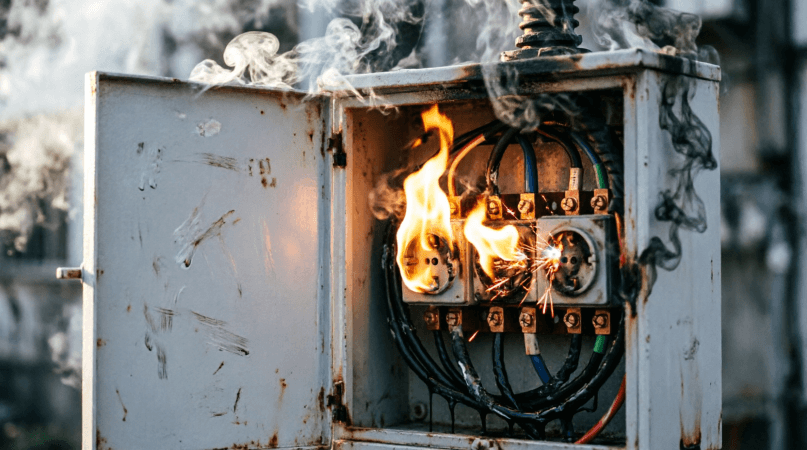
A switchboard fire usually starts with an overloaded circuit, a degraded ceramic fuse, or a loose connection that overheats inside the panel long before any flame is visible. Electrical faults and appliances cause around 40% of house fires in NSW each year according to the NSW Government, and up to 1,800 of those fires could have been prevented with a proper wiring check and safety switch installation. The switchboard, the single point where every circuit in your property connects, is where most of that risk originates. This guide from Top Electricians Sydney explains exactly what causes switchboard fires, what the regulations require, what an upgrade typically costs, and the practical steps that reduce your risk, whether you own a home, manage a rental, or run a business in Sydney. Our emergency Level 2 electrician team is also on hand to repair switchboards directly, carrying out the work needed to prevent a developing fault from turning into an electrical fire.
A quick real-world example
A loose neutral connection inside an older switchboard can run hot for months without tripping a single fuse, because a ceramic fuse only reacts to overcurrent, not to heat building up at a bad connection. By the time discolouration or a burning smell becomes noticeable, the insulation around that connection may already be compromised. This is exactly the kind of fault a thermal imaging inspection catches long before it becomes visible.
What Are Common Problems That Result in Switchboard Electrical Fires?
Switchboard fires are almost always caused by one of a small number of recurring problems: overloaded circuits, outdated ceramic fuses, loose or corroded connections, degraded insulation, or asbestos-era components that trap heat inside the panel. Each of these creates a point where electricity meets resistance, and resistance generates heat.
Overloaded circuits and high-draw appliances
Modern households run far more electrical load than older switchboards were ever designed to handle, including ducted air conditioning, electric vehicle chargers, induction cooktops, and multiple high-draw appliances on a single circuit. When a circuit carries more current than its rating allows, the cable and connections inside the switchboard heat up, and a board without proper overload protection can run hot for months before a visible fault appears.
Outdated ceramic fuses
Ceramic fuses rely on a thin wire that melts under excessive current, but they react slowly and can be incorrectly replaced with a higher-rated wire by an untrained person, removing the protection altogether. Unlike a modern circuit breaker, a ceramic fuse gives no early warning before a fault escalates into sustained overheating.
Loose or corroded connections
Over time, screw terminals inside a switchboard can loosen through vibration, thermal expansion, and age, creating a high-resistance connection. A loose connection generates localised heat every time current passes through it, and this is one of the most common ignition points our electrical fault finding team identifies during inspections.
Degraded wiring insulation
Older Sydney properties, particularly those still carrying original VIR or TPS cabling, often have insulation that has become brittle or cracked with age. Damaged insulation close to the switchboard increases the risk of arcing, which can ignite dust, debris, or nearby materials inside the panel enclosure.
Asbestos-era switchboard panels
Many pre-1990s Sydney switchboards are mounted on asbestos-containing backing panels, often alongside ceramic fuses that were never designed for modern loads. These older panels frequently combine several risk factors at once: no RCD protection, outdated fuses, and ageing internal wiring, making them one of the highest-risk configurations our fuse box replacement team encounters.
What the regulations say about switchboard safety
Every switchboard in NSW must comply with AS/NZS 3000 Wiring Rules, and safety switch installation is specifically addressed under the Electricity (Consumer Safety) Act 2004. SafeWork NSW, NSW Fair Trading, and Fire and Rescue NSW jointly run ongoing public safety campaigns on this exact issue, which reflects how common and preventable switchboard-related fires are. Key compliance points include:
- RCD safety switches are required on every circuit under current NSW regulations
- A licensed electrician must issue a Certificate of Compliance for Electrical Work (CCEW) after any switchboard work
- Landlords must confirm a working safety switch at the start of every tenancy under the Residential Tenancies Act 2010
- Safety switches should be tested using the in-built “T” or “Test” button at least twice a year, even if no other work is planned
- Any work on the service fuse, meter, or network connection point legally requires a Level 2 ASP electrician, not a standard licensed electrician
How much electrical work is linked to switchboard risk in NSW
Electrical risk is not a rare or isolated issue in NSW. Electric shock is the second leading cause of traumatic fatalities in construction in NSW, with more than 1,000 incidents and close to 600 injuries recorded by SafeWork NSW since 2020. On the residential side, roughly 40% of house fires each year are electrical in origin, and switchboard condition is consistently one of the first things investigators and licensed electricians check after a fault.
How Do I Reduce the Switchboard Fire Risk?
You reduce switchboard fire risk by replacing outdated fuses with circuit breakers, fitting RCD safety switches to every circuit, avoiding circuit overload, and scheduling regular inspections by a licensed electrician. None of these steps require guesswork; each one targets a specific cause identified above.
Book a professional switchboard inspection
A licensed electrician can identify overheating signs, loose connections, and outdated components before they become a fire risk, often using thermal imaging equipment to detect heat buildup that isn’t visible to the eye. Scheduling a full electrical safety inspection every 3 to 5 years is the most reliable way to catch a developing fault early.
Upgrade ceramic fuses to circuit breakers
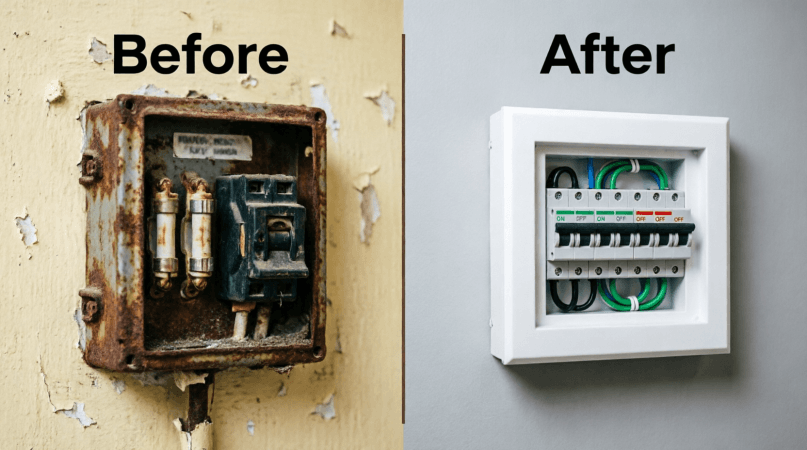
Replacing ceramic fuses with modern circuit breakers removes the single biggest point of failure in an older switchboard, since breakers trip instantly on overload instead of slowly heating a fuse wire. This is the core of any switchboard upgrade and typically pairs with fitting RCDs across every circuit.
Install RCD safety switches on every circuit
An RCD does not stop a switchboard fire on its own, but it cuts power the moment it detects current leaking to earth, which is often the first sign of a developing insulation fault. Current standards require RCD protection as part of any compliant switchboard, and a board without full RCD coverage carries a meaningfully higher risk profile.
Avoid overloading individual circuits
Spread high-draw appliances such as air conditioners, EV chargers, and kitchen equipment across separate, dedicated circuits rather than daisy-chaining them through powerboards and extension leads. If you’re planning a renovation, an EV charger, or a solar installation, have an electrician assess whether your existing wiring and circuit capacity can safely support the added load, and whether a 3-phase power upgrade is needed, before you install anything.
Never attempt DIY switchboard repairs
Opening a live switchboard, replacing a fuse with a higher-rated wire, or attempting any repair without a licence is illegal in NSW and significantly increases fire and electrocution risk. If any part of the work involves the service fuse, meter, or network connection, it legally requires a Level 2 ASP electrician, not a standard electrician.
Act immediately on warning signs
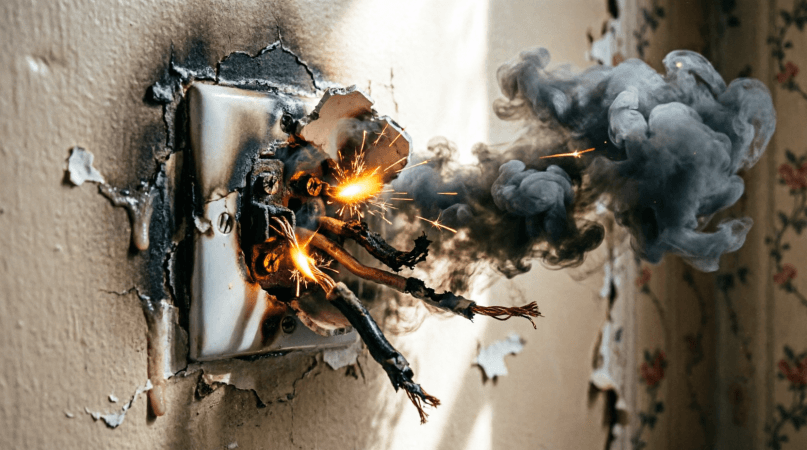
Burning smells, scorch marks, buzzing sounds, warm powerpoints, or frequent tripping are not issues to monitor over time; they indicate active heat buildup inside the switchboard. If you notice any of these signs your fuse box needs replacement, switch off the affected circuit at the board and contact a licensed electrician immediately, or call our 24/7 emergency electrician team if the smell or sound is active now.
What to do if you smell burning or see smoke right now
If a burning smell or smoke is coming from your switchboard at this moment, follow these steps in order:
- Switch off the main power at the switchboard if it is safe to reach
- Move everyone away from the switchboard and do not touch it again
- Do not use water near the panel under any circumstances
- Call triple 000 if you see flames or heavy smoke, then call a licensed emergency electrician
- Do not re-enter the area or restore power until a licensed electrician confirms it is safe
Trusted Switchboard Upgrade and Repairs
Top Electricians Sydney provides licensed switchboard upgrades, fuse box replacements, and fire-risk inspections across every region of Sydney, backed by Level 2 ASP accreditation and over 10 years of hands-on experience. Every job follows the same structured process, regardless of whether it’s a small repair or a full switchboard replacement.
Our switchboard safety process
- Inspection and risk assessment. We examine your board for overheating, corrosion, outdated fuses, and missing RCD protection, using thermal imaging where needed to detect hidden heat buildup.
- Transparent, upfront quote. You receive a clear price before any work begins, with no hourly surprises and a $0 call-out fee.
- Compliant repair or replacement. Faulty components are repaired, or the full board is replaced with a modern switchboard fitted with circuit breakers and RCDs on every circuit, to AS/NZS 3000 Wiring Rules.
- Testing and certification. Every circuit is tested before power is restored, and we issue a Certificate of Compliance for Electrical Work (CCEW) on completion.
Why Sydney homeowners and landlords choose us
- Licensed and Level 2 ASP accredited electricians, authorised by Ausgrid and Endeavour Energy
- 24/7 emergency response for active switchboard faults
- Transparent, fixed pricing with no hidden call-out fees
- Safe asbestos handling for older pre-1990s switchboards
- Service across every region of Sydney, including Central Sydney, Eastern Suburbs, Northern Suburbs, Southern Suburbs, and Western Suburbs
Our emergency Level 2 electricians are trained to assess switchboard fire risk and carry out the repairs or upgrades needed to resolve it, using professional methods on every job regardless of property type. The team works across all of Sydney for switchboard fire risk management and related switchboard services, from the Eastern Suburbs through to Greater Western Sydney.
If your switchboard shows any of the warning signs covered above, don’t wait for it to become an emergency. For trusted switchboard installation, repair, inspection and upgrade services, rely on Top Electricians Sydney for a transparent, no-obligation quote and let a licensed electrician assess your risk before it becomes a fire.
Call Now – 0431 460 141
Frequently Asked Questions
Can a switchboard catch fire without any warning signs?
It’s uncommon but possible, particularly with ceramic fuse boards that give no early indication of overload. This is why regular inspections matter even when nothing seems obviously wrong.
Is my home insurance affected by an outdated switchboard?
Many insurers can deny or reduce a claim for an electrical fire if the switchboard was non-compliant with current AS/NZS 3000 standards, particularly if it lacked RCD protection. Check your policy and consider an upgrade if your board is outdated.
How do I know if my switchboard needs an upgrade rather than a repair?
If the board itself is structurally sound and the issue is isolated to one fuse or connection, a repair may be enough. If the board is running ceramic fuses, lacks RCD protection, or shows multiple risk factors at once, a full upgrade is the safer long-term option.
How often should RCD safety switches be tested?
NSW Fair Trading recommends testing every safety switch using its built-in “T” or “Test” button at least twice a year, in addition to having the whole board professionally inspected every few years.
Is it legal to replace a ceramic fuse myself?
No. All electrical work beyond replacing a light globe or resetting a tripped breaker must be carried out by a licensed electrician in NSW. DIY fuse or switchboard work is illegal and significantly increases the risk of fire and electric shock.
Do landlords have specific switchboard obligations in NSW?
Yes. Under the Residential Tenancies Act 2010, landlords must confirm a working safety switch at the start of every tenancy, and any switchboard fault identified during a tenancy is treated as an urgent repair.
For more on NSW electrical safety requirements, see the NSW Government’s electrical safety page.