
Electrical faults and appliances cause around 40% of house fires in NSW each year, and up to 1,800 of those fires could be prevented with a proper wiring check and working safety switches. Most electrical fires start quietly, inside a wall cavity or switchboard, long before any flame is visible, which is exactly what makes them so dangerous. Here at Top Electricians Sydney, we understand the main reasons why an electrical fire often starts within a home or business, from faulty and damaged outlets, lights, and extension cords to outdated wiring. Cutting off the electricity and using a fire extinguisher suitable for electrical fires helps put the fire out, and watching for discoloured outlets, burning smells, outdated wiring, and tripping circuit breakers helps you catch the risk before it gets that far. This guide covers what actually causes electrical fires, what NSW regulations require, how to recognise the early signs, what to do if one starts, and how to get a licensed electrician on-site fast if you need one.
A quick real-world example
A powerboard overloaded with a space heater, a phone charger, and a lamp can run safely for months, right up until a cold night when the heater draws its full rated current at the same time as everything else. The connection inside the powerboard, not the heater itself, is often where the heat builds up first, because a worn outlet or a cheap powerboard has more electrical resistance than a modern, compliant one. This is why appliance age and powerboard quality matter just as much as how many devices are plugged in.
Top Causes for Electrical Fires
Electrical fires are almost always caused by a small set of recurring issues: overloaded circuits, faulty or outdated wiring, damaged appliances, and electrical work that was never carried out by a licensed electrician. Understanding these causes is the first step toward preventing a fire in your own property.
Overloaded circuits and powerboards
Running too many high-draw appliances through a single circuit, or stacking multiple powerboards off one outlet, forces more current through the wiring than it was designed to carry. This generates heat inside the walls and at the outlet itself, and the risk increases significantly when air conditioners, heaters, and kitchen appliances share the same circuit.
Outdated or damaged wiring
Older Sydney homes, particularly those still carrying original VIR or TPS cabling from before the 1970s, often have insulation that has become brittle, cracked, or chewed by pests over time. Exposed or damaged wiring increases the risk of arcing, which can ignite nearby dust, insulation, or timber framing inside a wall or roof cavity.
Ceramic fuse switchboards
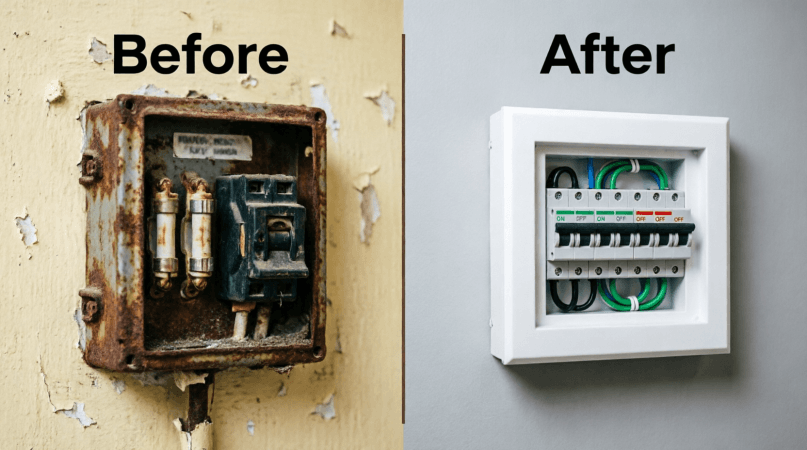
A switchboard still running ceramic fuses instead of circuit breakers reacts too slowly to a developing fault and offers no protection against electric shock. Our detailed guide on switchboard fire risks breaks down exactly how an outdated board contributes to electrical fires and what replacing it involves.
Faulty or damaged appliances
A damaged cord, a cracked plug, or an appliance with an internal fault can draw excessive current or arc internally, and this risk increases significantly with cheap, uncertified, or ageing appliances. Appliances left running unattended, particularly heaters and chargers, are a common source of residential electrical fires.
DIY electrical work and unlicensed repairs
Incorrect wiring, poor connections, or using a fuse with a higher rating than the circuit was designed for are common results of unlicensed electrical work, and all of them increase fire risk substantially. Electrical work in NSW beyond replacing a light globe or resetting a breaker must legally be carried out by a licensed electrician.
Extension cord and power strip misuse
Running extension cords under carpet, coiling them while in use, or connecting high-draw appliances through a cord rated for lighter loads causes heat to build up along the cable. This is a particularly common, and particularly preventable, cause of fires in both homes and small businesses.
What NSW regulations require
Electrical fire prevention in NSW is not just good practice; it is governed by specific legislation, and compliance is the clearest way to reduce your risk. Key requirements include:
- RCD safety switches on every circuit, required under the Electricity (Consumer Safety) Act 2004
- All wiring and switchboard work completed to AS/NZS 3000 Wiring Rules
- A Certificate of Compliance for Electrical Work (CCEW) issued after any licensed electrical work
- Landlords confirming a working safety switch at the start of every tenancy under the Residential Tenancies Act 2010
- Any work on the service fuse, meter, or network connection legally requiring a Level 2 ASP electrician authorised by Ausgrid or Endeavour Energy.
SafeWork NSW, NSW Fair Trading, and Fire and Rescue NSW run ongoing public campaigns on exactly this issue, and electric shock remains the second leading cause of traumatic fatalities in construction in NSW, with more than 1,000 incidents and close to 600 injuries recorded by SafeWork NSW since 2020.
How to Stop an Electrical Fire
If an electrical fire starts, the single most important first step is to cut the power at the switchboard if it is safe to reach, because electricity continuing to flow is what keeps an electrical fire burning and makes it dangerous to approach. The steps below apply whether the fire is small and contained or has already started to spread.
Cut the power immediately
Switch off the main power at the switchboard, or the specific circuit if you can identify it safely. This removes the energy source feeding the fire and makes any further response significantly safer.
Never use water on an electrical fire
Water conducts electricity, and throwing water on an electrical fire while the circuit is still live risks electrocution in addition to spreading the fire. Even after the power is cut, water should not be used unless you are certain the fault has been fully isolated.
Use the correct fire extinguisher
A Class E (electrical) fire extinguisher, typically a carbon dioxide (CO2) or dry chemical powder type, is the only appropriate extinguisher for an electrical fire while power may still be present. Never use a water or foam extinguisher on an active electrical fire.
Evacuate and call triple zero
If the fire is spreading, producing heavy smoke, or you are unable to safely cut the power, leave the property immediately and call 000. Do not re-enter the building until emergency services confirm it is safe.
Call a licensed electrician before restoring power
Once the immediate danger has passed, do not attempt to restore power or inspect the damage yourself. A licensed electrician needs to assess the cause, confirm the circuit is safe, and carry out any repairs before the property is reconnected. Our 24/7 emergency electrician team at Top Electricians Sydney responds to exactly these situations across Sydney.
Prevent the next one
Most electrical fires are preventable with routine maintenance, and the cost of prevention is consistently lower than the cost of fire damage, repair, and potential insurance disputes. A general guide to prevention costs:
| Preventive Service | Estimated Cost Range (AUD) |
| RCD safety switch installation (per circuit) | $180 to $350 |
| Full electrical safety inspection | $100 to $400 |
| Switchboard upgrade (ceramic fuse to circuit breaker) | $900 to $1,800 |
| Electrical fault finding and repair | From $80 call-out, hourly rate applies |
A full electrical safety inspection every 3 to 5 years identifies the early warning signs covered below before they become an emergency, and fitting RCD safety switches to every circuit cuts power automatically the moment a fault is detected.
Signs of an Electrical Fire
An electrical fire rarely starts without warning, and recognising the early signs gives you time to act before a small fault becomes a serious hazard. Watch for the following indicators in your home or business:
- A persistent burning, plastic, or rubber smell with no obvious source
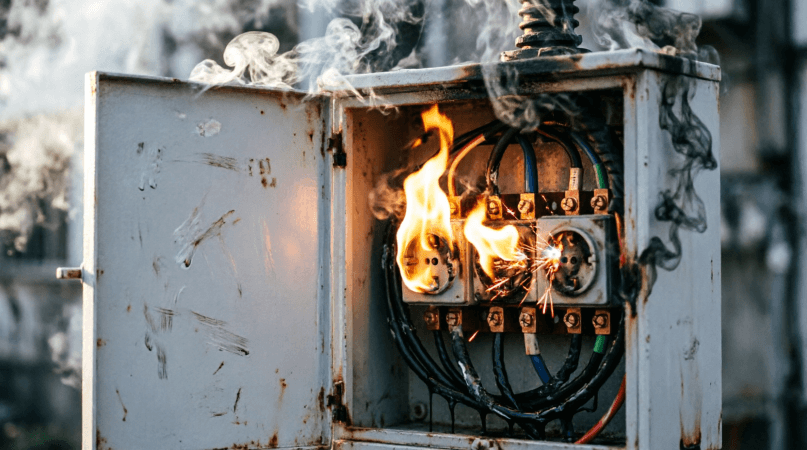
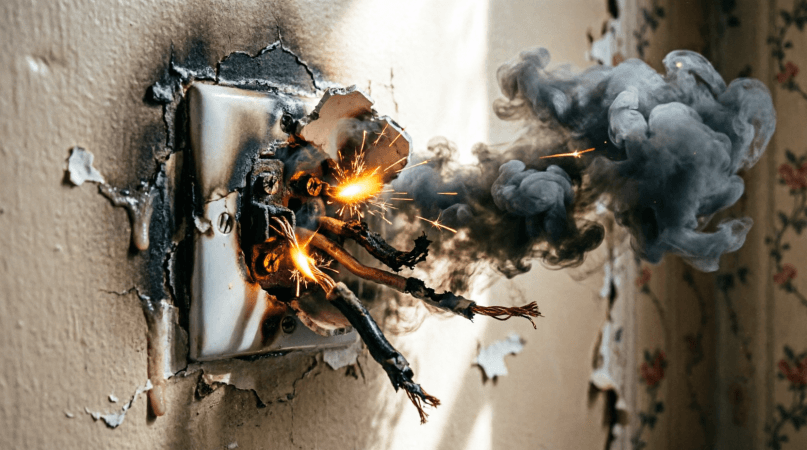
- Smoke coming from an outlet, switch, or the switchboard itself
- Scorch marks or discolouration around a powerpoint or switchboard panel
- Buzzing, crackling, or humming sounds from behind a wall or the switchboard
- Lights that flicker or dim noticeably when an appliance switches on
- Powerpoints or switches that feel warm or hot to the touch
- Circuit breakers or safety switches that trip repeatedly without an obvious cause
- Sparking from an outlet, switch, or appliance when plugged in or used
How to tell the difference between a minor fault and a fire risk
A single circuit tripping once after a storm is usually a minor, isolated event. A pattern of repeated tripping, any burning smell, or heat at a specific outlet is different; it indicates the fault is active and worsening, not isolated. If you notice any of these signs, treat it as urgent rather than something to monitor. Our electrical fault finding team can locate the exact cause before it escalates into a fire.
Reliable Emergency Electrician Services
Top Electricians Sydney provides licensed, Level 2 ASP accredited emergency electricians available 24/7 to respond to active electrical faults, burning smells, sparking outlets, and switchboard emergencies across every region of Sydney. When electricity is involved, speed and the right qualifications both matter.
What happens when you call us
- Immediate phone guidance. We talk you through cutting power safely and what to avoid while help is on the way.
- Fast dispatch. A licensed electrician is sent to your location, day or night, including weekends and public holidays.
- On-site diagnosis. We identify the exact cause of the fault using proper testing equipment, not guesswork.
- Safe, compliant repair. All work follows AS/NZS 3000 Wiring Rules, with a Certificate of Compliance for Electrical Work issued on completion.
Why Sydney residents and businesses trust us
- Over 10 years of experience and 2,500+ completed electrical projects across Sydney
- Licensed and Level 2 ASP accredited electricians, authorised by Ausgrid and Endeavour Energy
- 24/7 emergency response, including weekends and public holidays
- Transparent, upfront pricing with no hidden call-out fees
Areas we service
We respond to electrical emergencies across Central Sydney, Eastern Suburbs, Northern Suburbs, Southern Suburbs, and Western Suburbs, with licensed electricians positioned to reach you quickly wherever you are.
If you’ve noticed any of the warning signs covered above, don’t wait for them to escalate. Call now for fast, licensed emergency electrical support anywhere in Sydney.
Call Now – 0431 460 141
Frequently Asked Questions
Can an electrical fire restart after it appears to be out?
Yes. A fault inside a wall cavity or switchboard can continue smouldering even after visible flames are extinguished, which is why a licensed electrician should inspect the property before power is restored.
Is it safe to unplug an appliance that’s sparking?
Only if you can do so without touching any exposed metal or wet surfaces, and ideally after switching off the relevant circuit at the switchboard first. If in doubt, cut power at the main switch instead.
How quickly can an electrical fire spread?
An electrical fire inside a wall or roof cavity can spread rapidly once it reaches insulation, timber framing, or stored materials, often well before it becomes visible from inside the property. This is why early signs should never be ignored.
Do I need a Level 2 electrician for emergency electrical work?
Most emergency repairs are handled by a standard licensed electrician, but any fault involving the service fuse, meter, or network connection legally requires a Level 2 ASP electrician authorised by Ausgrid or Endeavour Energy.
Will my landlord or insurance cover electrical fire damage?
This depends on your policy and whether the electrical system was compliant at the time of the fire. Non-compliant switchboards without RCD protection are a common reason insurers reduce or deny claims, which is another reason routine inspections matter.
How often should I test my safety switches?
NSW Fair Trading recommends testing every safety switch using its built-in “T” or “Test” button at least twice a year, in addition to a full professional inspection every 3 to 5 years.
What’s the difference between a Class E fire extinguisher and other types?
A Class E extinguisher is specifically rated safe to use on live electrical equipment, unlike water or foam extinguishers which conduct electricity and increase the risk of electrocution. Most Australian homes and offices should keep a Class E or combination-rated extinguisher accessible near the switchboard or kitchen.
For more on NSW electrical safety requirements, see the NSW Government’s electrical safety page.