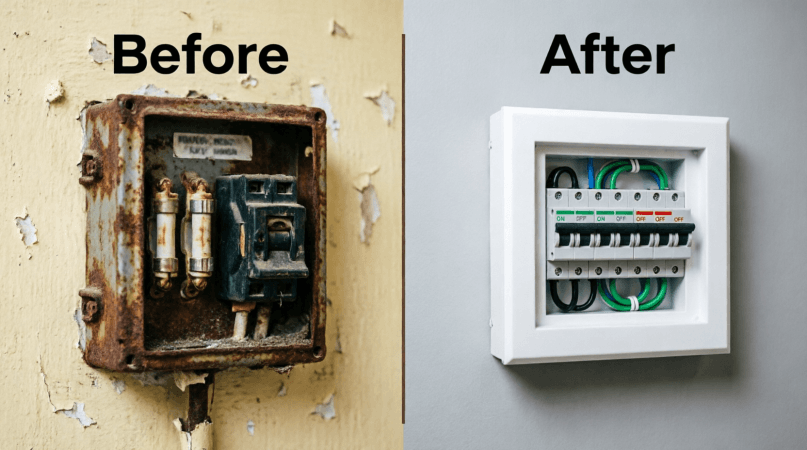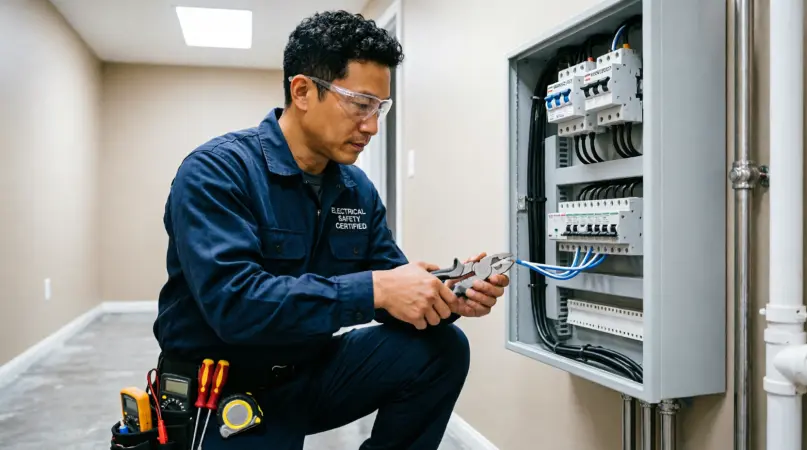

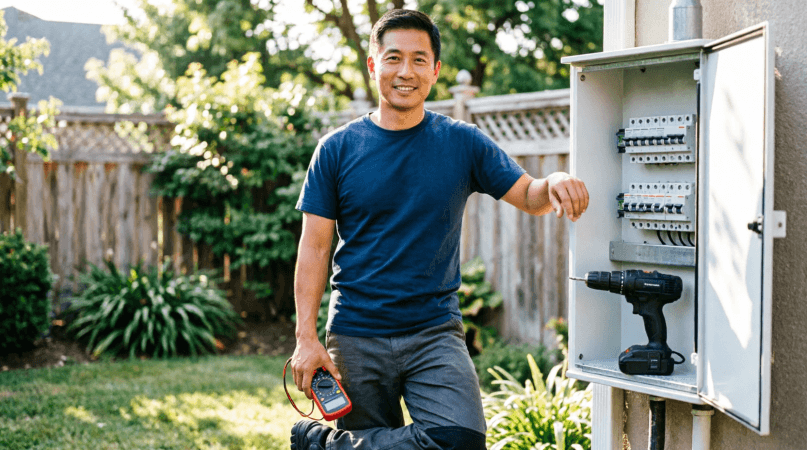
Upgrading an outdated electrical panel is essential to safely power modern homes, high-draw appliances, solar systems, and EV chargers, but upgrade and replacement aren’t the same job. A switchboard upgrade generally means replacing the internal breakers and RCD safety switches inside an existing, structurally sound panel. A full switchboard replacement means removing the old enclosure entirely, along with the consumer mains cabling and any hazardous backing material, and starting fresh. Knowing which one your property actually needs, rather than assuming the more expensive option is always necessary, is what this guide is about.
As a trusted local contractor with over 17 years of experience, Top Electricians Sydney offers 24/7 service through fully accredited Level 2 ASP electricians. From switchboard modernisation and consumer mains repairs to private power poles and metering, our team manages the full scope of work under Ausgrid and Endeavour Energy network standards across Sydney.
Repair, Upgrade, or Replace? The Sydney Homeowner’s Decision Framework
A common concern for property owners is whether an electrician is recommending a genuine fix or simply upselling a bigger job than necessary. Under AS/NZS 3000:2018, retrofitting safety switches on an existing, untouched switchboard is not legally mandated across NSW. A full overhaul becomes necessary only when you add new circuits, undertake major alterations, or need to clear an official defect notice, or when the board itself is already showing clear signs of failure. Use the three scenarios below to see which pathway matches your situation.
Single breaker faults or isolated trips
If your panel is a modern unit already fitted with circuit breakers, but one switch keeps tripping, a complete overhaul is rarely required. The cause is typically an isolated faulty appliance, an overloaded single branch circuit, or one degraded breaker. The right path is a targeted repair: an electrician carries out fault finding, replaces the failing component, or tightens a loose thermal connection, without disturbing the rest of the board.
Missing shock protection on an otherwise sound board
If your enclosure is structurally sound, clean, and spacious, but relies on older circuit protection without earth leakage defence, you’re in a middle-ground category. The panel lacks RCD safety switches, which leaves occupants exposed to elevated electrocution risk during an earth fault. The right path here is a partial upgrade: the physical enclosure stays in place, and individual RCBO protection modules are retrofitted onto the existing circuits, improving safety without the cost or disruption of a full panel removal.
Ceramic fuses, asbestos backing, or high-load electrification
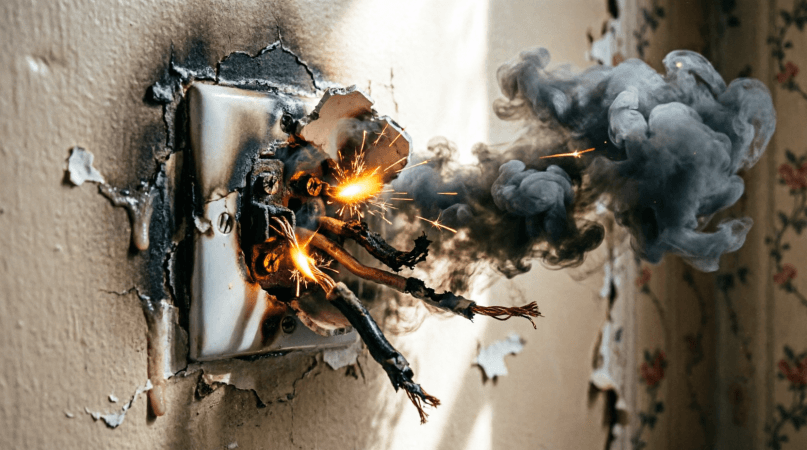
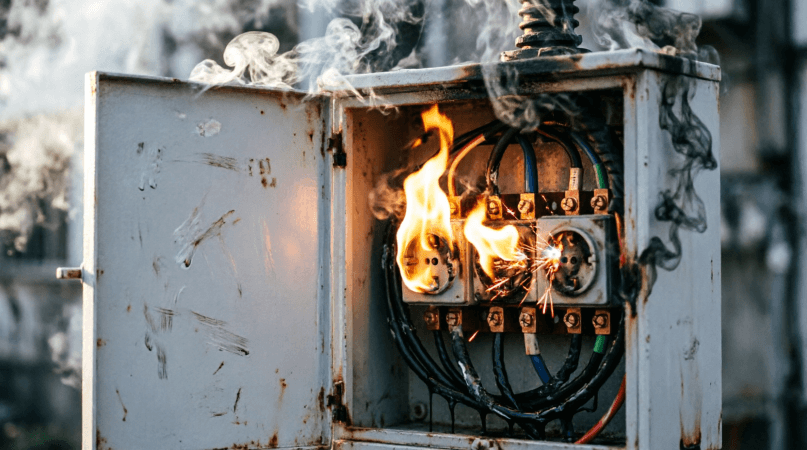
If your meter box contains outdated components or visible deterioration, attempting a minor repair is no longer safe or practical. Watch for old-style porcelain fuses with exposed fuse wire, persistent burning plastic smells, or visible scorch marks around the terminals. Backing panels manufactured before 1990 frequently contain bituminous pitch materials such as Zelemite or Lebah, which incorporate bonded asbestos. In this scenario, a complete replacement is the right path: full isolation, controlled removal of hazardous material by qualified specialists, mounting a new DIN-rail enclosure, and fitting modern protective switches across every circuit. See our dedicated guide on switchboard asbestos removal for how that part of the process works.
Switchboard Upgrade vs Replacement: Comparative Breakdown
Choosing between an upgrade and a full replacement comes down to your home’s physical infrastructure, total power requirements, and whether a compliance trigger applies. The table below compares the two approaches directly.
| Criteria | Switchboard Upgrade | Switchboard Replacement |
| Primary scope of work | Swapping ceramic fuses or legacy breakers for modern RCBOs inside the existing box | Removing the old box entirely and installing a new DIN-rail panel, including the backing panel |
| Enclosure retained? | Yes, the existing metal or plastic box stays in place | No, the full housing unit is removed and replaced |
| Asbestos handling required? | No, the board must remain completely un-drilled and undisturbed | Yes, if the backing panel contains asbestos, licensed abatement is required first |
| Grid isolation method | Local main switch isolation at the board | Main service fuse removal or disconnection at the Point of Attachment |
| Consumer mains impact | Existing incoming power cables are generally retained | Frequently triggers an upgrade to higher-capacity supply cables |
The Hidden Trigger: Consumer Mains Cables and Level 2 ASP Grid Connections
Most guides treat a switchboard as an isolated box on a garage wall. In real-world Sydney installations, upgrading an old panel routinely triggers upstream requirements that extend all the way out to the street power lines.
When an electrician removes a legacy fuse board in an older home, the entire installation needs to comply with current current-carrying capacity rules, not just the board itself. Homes built before 1980 often rely on original 6mm VIR wiring or older single-insulated consumer mains capped at a modest amperage. Fitting modern RCBO switches onto an old board while leaving undersized consumer mains in place creates a bottleneck and falls short of current installation codes. To properly support modern household loads, the original supply cable typically needs upgrading to modern XLPE-insulated consumer mains with significantly higher current capacity.
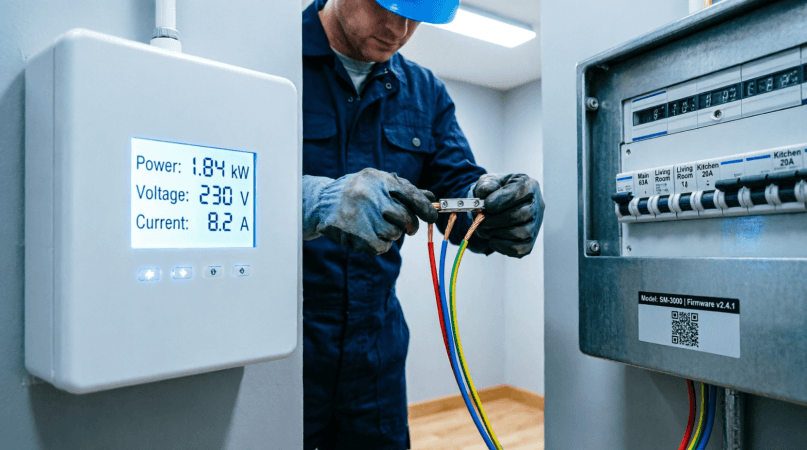
This reveals an important trade distinction: a standard electrician cannot legally disconnect your home from the street power grid to carry out this work. Connecting new consumer mains at the roof line or overhead network junction requires a Level 2 ASP electrician, specifically authorised by energy distributors such as Ausgrid or Endeavour Energy. Only an ASP can legally pull street service fuses, work within the network operator’s boundary, isolate power at the Point of Attachment, and re-energise the property once the new installation passes testing.
Top Electricians Sydney’s in-house team includes licensed Level 2 ASP technicians, which allows us to carry out both the internal panel modernisation and the external grid connection in a single visit, rather than coordinating separate contractors across multiple appointments.
Frequently Asked Questions
What is a CCEW, and why must I receive one after switchboard work?
A Certificate of Compliance for Electrical Work (CCEW) is a mandatory legal document required under NSW safety regulations. Your electrician must lodge a CCEW with NSW Fair Trading and your electricity network provider after completing any switchboard modification or replacement, confirming the work complies with AS/NZS 3000 standards.
Can I just use plug-in circuit breakers instead of replacing my ceramic fuses?
No. While plug-in breakers fit into old ceramic fuse bases, they’re a temporary compromise at best. They don’t offer RCD earth leakage protection, can leave live terminals accessible, and don’t satisfy modern Australian wiring safety requirements.
Why did my energy retailer issue a defect notice during a smart meter installation?
Technicians installing smart meters are required to report electrical hazards they find. If they discover exposed live connections, a damaged meter backing panel, or a missing neutral isolation point, the network operator can issue a formal defect notice giving the property owner a set window, typically 21 days, to complete the necessary switchboard work.
Will installing an EV charger or solar system require a full switchboard replacement?
In most cases, yes. High-draw equipment such as EV chargers, solar inverters, and induction cooktops need dedicated circuits protected by RCBOs, and older fuse panels generally lack the physical space and current capacity to support these heavy, continuous loads safely.
Does insurance cover damage caused by an outdated switchboard?
Most home insurance policies cover accidental electrical fires, but many insurers include clauses excluding claims caused by neglected or unmaintained electrical systems. A switchboard with known hazards, such as scorch marks or bypassed fuses, can put an insurance payout at risk after an incident. Check your specific policy for details.
Securing Your Sydney Home’s Electrical Future
Choosing between a switchboard upgrade and a full replacement comes down to your home’s age, current power demands, and your longer-term electrification plans. A partial upgrade works well for a modern enclosure that simply lacks earth shock protection. A pre-1990 home with ceramic fuses, an asbestos backing panel, or undersized consumer mains generally needs a complete replacement to be genuinely safe and compliant.
Top Electricians Sydney’s licensed technicians and Level 2 ASP contractors provide transparent, on-site assessments to help you choose the right pathway for your specific property. Contact us today to book a full electrical safety inspection and find out exactly what your switchboard needs. We service all of these areas, along with Central Sydney, Eastern Suburbs, Northern Suburbs, Southern Suburbs, and Western Suburbs.
Call Now – 0431 460 141