
Your switchboard works quietly in the background until, suddenly, it doesn’t. Most switchboard problems don’t appear out of nowhere; they announce themselves first, through a strange sound, a tripped breaker that won’t settle, or a smell that wasn’t there last week. Learning to recognise when your switchboard requires repairs in Sydney means catching these issues while they’re still a straightforward fix, rather than letting them develop into something far more serious.
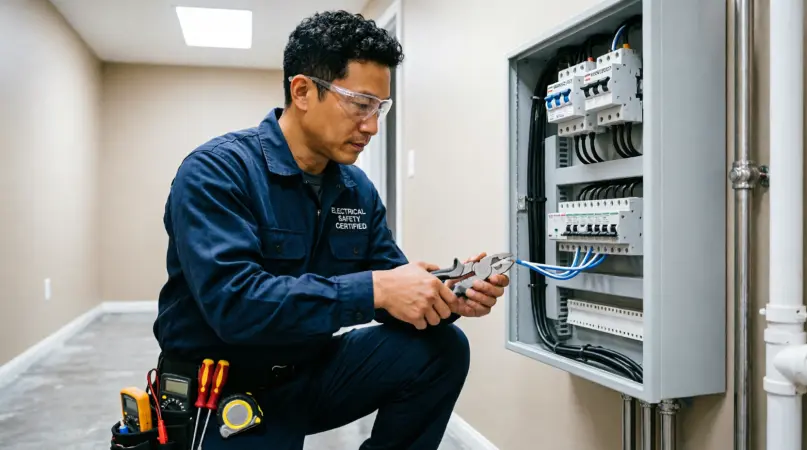
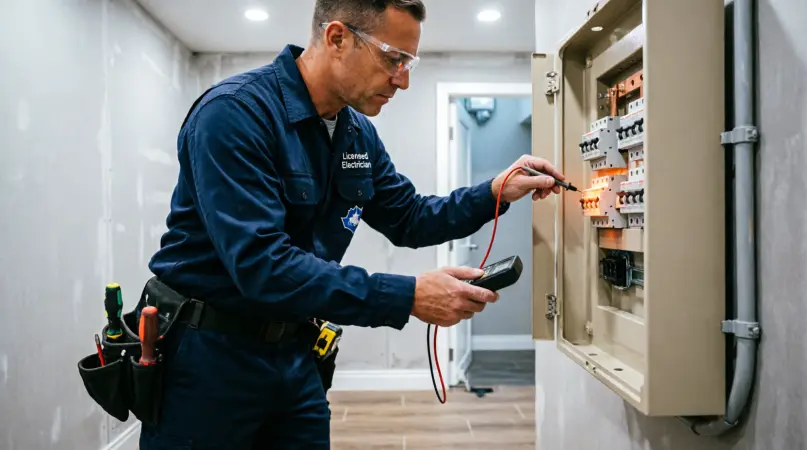
At Top Electricians Sydney, we inspect switchboards across Greater Sydney every week. Acting early matters for two concrete reasons: it keeps your household genuinely safe under AS/NZS 3000 (the Wiring Rules that govern every electrical installation in Australia), and it almost always costs less than waiting until a minor fault becomes a major one. A licensed electrician pinpoints exactly what’s wrong with your specific board rather than guessing, and where a job extends into service line or metering territory, our Level 2 electricians are equipped to take care of it properly, no handoff to a second contractor required.
What Signs Indicate That My Switchboard Needs Repairing?
A Quick Way to Think About Urgency
Not every sign below carries the same weight. A board that’s simply old is worth monitoring; a burning smell is worth an emergency call tonight. As you read through, keep that distinction in mind rather than treating all eleven signs as equally urgent.
1. One Breaker Trips Repeatedly While the Rest of the Board Is Fine
If a single circuit breaker (MCB) trips again and again, while every other circuit on the board behaves normally, the issue is almost always isolated to that one component: either a worn breaker or a developing fault on the circuit it protects. This kind of focused, repeat tripping is one of the clearest signs your switchboard requires repairs rather than a full replacement.
2. A Safety Switch Won’t Reset at All
An RCD (safety switch) that refuses to reset, no matter what’s unplugged, signals an active fault rather than a temporary overload. This isn’t something to keep attempting over and over. It needs a licensed electrician to trace the actual cause, whether that’s an earth fault, a failing component, or a wiring issue elsewhere on the circuit.
3. Visible Scorch Marks or Discolouration
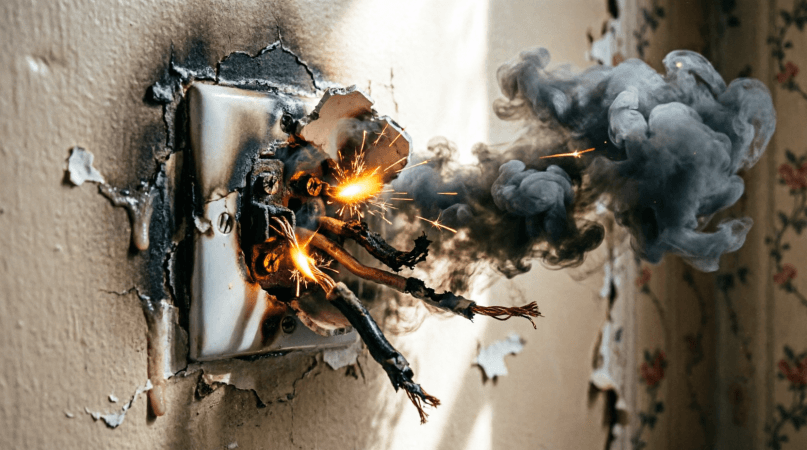
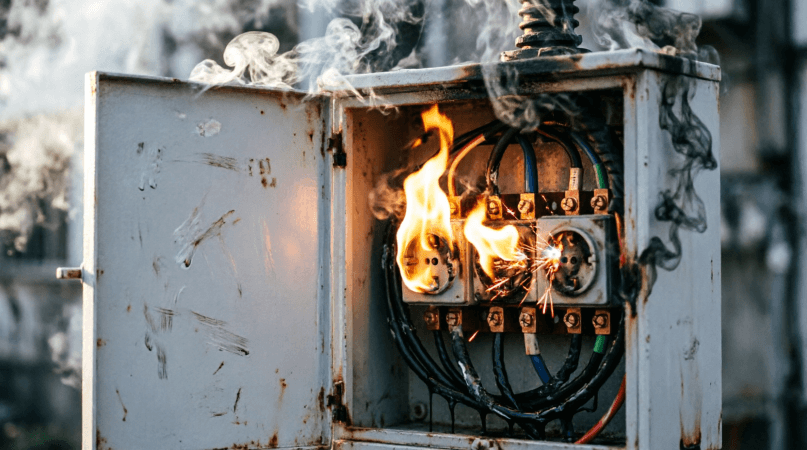
Any browning, blackening, or melted plastic around a specific switch or breaker is a clear, visible sign of overheating at that point. This kind of localised damage usually points to a loose connection or a failing component right at that spot, something a proper repair can address before it spreads further across the board.
4. The Board Feels Warm to the Touch
Your switchboard should feel cool, or at most neutral, under normal operation. If any part of it, a particular breaker, the enclosure itself, or the area around the main switch, feels noticeably warm, that’s a genuine warning sign. Warmth usually means current isn’t flowing as cleanly as it should, often due to a loose or deteriorating connection generating resistance and heat.
5. Crackling, Buzzing, or Humming Sounds
A switchboard should be silent. Any crackling, buzzing, or persistent humming coming from the panel points to an electrical arc or a loose connection, both genuine fire risks if left unaddressed. This sign alone is enough reason to stop using the affected area and arrange an inspection promptly.
6. A Burning Smell Near the Switchboard
A faint but distinct burning or acrid smell near your switchboard, even without any other obvious symptom, should never be ignored. This is the clearest sign on this list that warrants treating as an emergency rather than scheduling a routine visit; turn off power to the area if it’s safe to do so, and call an emergency electrician immediately.
7. Flickering Lights Isolated to One Circuit
If flickering or dimming is happening consistently on one specific circuit, rather than across your whole home, the cause often traces back to a loose connection at the switchboard itself rather than an issue with the light fittings. This is a good example of a sign that’s easy to dismiss as minor but genuinely worth having checked.
8. Loose or Rattling Switches Inside the Enclosure
When you open the switchboard cover (without touching anything, this is for electricians only), breakers or switches that look visibly loose, misaligned, or don’t sit firmly in place are a sign of mechanical wear or a mounting issue. A loose breaker doesn’t make reliable contact, which can lead to both unreliable operation and localised heat build-up over time.
9. Visible Corrosion Inside the Panel
Rust, greening, or corrosion on any metal components inside the switchboard, often from past moisture intrusion, weakens connections and accelerates component failure. If you spot this during a casual glance (without opening the panel yourself), it’s a strong reason to have the board properly assessed.
10. The Board Is Over 20 Years Old
Age alone doesn’t guarantee a fault, but it’s a genuine risk factor worth weighing. Components inside a switchboard wear mechanically over time, and a board approaching or past the two-decade mark is statistically far more likely to be carrying at least one of the issues already covered on this list, even if nothing obvious has shown up yet.
11. Fuses or Breakers Blow Consistently, Not Just Occasionally
A single blown fuse tied to a specific event, a storm, a one-off overload, isn’t unusual. A pattern of repeated blows across ordinary, everyday use is different, and it points to something wearing out inside the board rather than bad luck.
What This Looks Like in Practice
A Hills District homeowner recently called us about a kitchen circuit that tripped every few days, always at the same breaker, while the rest of the house was unaffected. That’s a textbook example of sign #1: isolated, repeat tripping, not a board-wide problem. The fix was a single breaker replacement, done on the spot, for well under the cost of a full board inspection-and-replace job. Contrast that with a Cronulla property where a resident noticed both a faint burning smell and a warm switchboard enclosure, two signs together, which we treated as an emergency callout and found a deteriorating connection at the main switch itself, a genuinely different risk category entirely.
Are Electrical Switchboard Upgrades Better Than Repairs?
Not always, and this is exactly where a lot of homeowners overspend in one direction or underspend in the other. Most of the signs above point toward a contained, relatively straightforward repair: replacing a single breaker, tightening a connection, or addressing one failing component. But a few things shift the picture toward a full upgrade being the smarter long-term choice over a repair:
- Multiple signs appearing at once, rather than a single isolated symptom
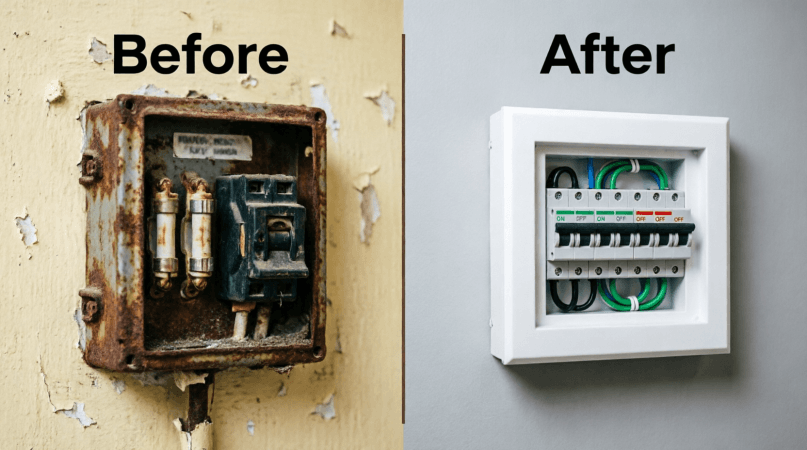
- A board that’s already old, still running ceramic fuses, or lacking RCD protection entirely
- Repeated repairs to the same board over a short period, a sign the underlying equipment is simply wearing out
- Any sign involving the main switch itself, rather than an individual circuit
The Simple Rule of Thumb
A repair makes sense when the rest of the board is modern, compliant, and otherwise healthy. An upgrade makes more sense when the board itself is the underlying problem, where repairing one component now just delays the next one failing a few months later. If you want the fuller picture on when an upgrade is the better call, our companion guide on switchboard upgrades covers that decision in depth.
What to Do If You Notice One of These Signs
- Don’t ignore it, even if it seems minor. Most switchboard faults get worse, not better, with time.
- Avoid DIY investigation. Opening or working inside a switchboard yourself is both illegal without a licence in NSW and genuinely dangerous.
- Note what you’re observing, which circuit, what sound, when it happens, since this helps your electrician diagnose the issue faster.
- Treat burning smells, sparking, or visible heat as urgent, and call an emergency electrician rather than waiting for a scheduled appointment.
- Book a proper inspection for anything else on this list, even if it’s not yet an emergency.
If you’re already noticing repeated, unexplained trips rather than a single clear symptom, our dedicated guide on why your switchboard keeps tripping walks through the most common causes in more depth.
Frequently Asked Questions
How much does it typically cost to repair a switchboard in Sydney?
It depends on the specific fault. A single circuit breaker replacement typically runs $150–$400, and a single RCD (safety switch) replacement runs $180–$350. More involved repairs, or anything requiring extensive diagnosis, cost more. Our switchboard repair cost guide breaks down pricing by repair type in full.
Is a warm switchboard always dangerous?
Any persistent warmth beyond what feels neutral is worth having checked, even if it isn’t yet causing visible problems. Heat typically indicates resistance from a loose or deteriorating connection, and catching it early is far cheaper and safer than waiting for it to worsen.
Can I tighten a loose connection myself?
No. Any work inside a switchboard must be carried out by a licensed electrician under AS/NZS 3000 Wiring Rules. Attempting it yourself is both illegal and genuinely dangerous given the live components involved.
How often should a switchboard be inspected?
There’s no fixed mandatory schedule for most homes, but a periodic check, particularly for boards over 10 to 15 years old, or at the point of buying or selling a property, catches developing issues before they become urgent.
Will I get a compliance certificate after a switchboard repair?
For any prescribed electrical work, yes. A licensed electrician issues a Certificate of Compliance for Electrical Work (CCEW), confirming the repair meets AS/NZS 3000 standards. Keep this on file; it matters for insurance and any future property sale.
Does a repaired switchboard need replacing again soon?
Not necessarily. A properly diagnosed, isolated repair on an otherwise healthy board can last for years without further issues. Recurring problems on the same board, rather than a single clean fix, are the real signal that an upgrade is the better long-term investment.
Reliable Switchboard Repairs in Sydney
If any of these signs sound familiar, the sooner it’s looked at, the more likely it’s a straightforward, affordable repair rather than something bigger. Our switchboard upgrades and repairs service and safety switch upgrade options cover everything from a single component fix through to a full board replacement.
Backed by genuine 24/7 emergency service and licensed Level 2 electricians across Greater Sydney, Central Sydney, Eastern Suburbs, we’re ready whether your switchboard issue can wait for a scheduled visit or needs attention right now.
Contact Top Electricians Sydney today for a proper inspection and an honest, fixed-price quote.