
Once is an inconvenience. Twice in a day starts to feel suspicious. By the third time your power cuts out, most people are standing in front of their switchboard wondering what’s actually going on. A switchboard keeps tripping Sydney situations almost always has a specific, identifiable cause, and knowing what to check yourself versus what needs a licensed electrician can save you both time and an unnecessary call-out.
At Top Electricians Sydney, this is one of the most common troubleshooting calls we get, backed by genuine 24/7 emergency service and licensed Level 2 electricians across Greater Sydney for anything that turns out to be more than a simple fix. Here’s how to work through it.
First: Confirm It’s Actually a Fault, Not an Outage
Before troubleshooting your board, rule out the obvious. If neighbouring properties have also lost power, or streetlights nearby are out, you’re likely dealing with a network outage rather than a faulty switchboard, and no amount of resetting your breakers will fix that. Our guide on power outage vs electrical fault walks through exactly how to tell the two apart in under a minute.
If your neighbours still have power and it’s just your property affected, you’re dealing with a genuine faulty switchboard issue, and the rest of this guide applies.
Common Causes of a Switchboard That Keeps Tripping
1. An Overloaded Circuit
This is the most common and least serious cause. Too many high-draw appliances running on the same circuit, think a kettle, toaster, and heater all plugged into one area, can exceed what that circuit is rated to carry, tripping the circuit breaker (MCB) as a protective response. This is circuit breaker tripping doing exactly what it’s designed to do.
What to check: Note what was running when the trip happened. If it’s consistently the same combination of appliances on the same circuit, that’s your answer. If your property still uses an older fuse-based board, our fuse box repairs and upgrades service covers this specific scenario.
2. A Faulty Appliance
A single appliance with an internal fault, often an earth leakage issue, can trip your safety switch (RCD) every time it’s plugged in or switched on, even though the rest of your home’s wiring is perfectly fine. Safety switch tripping tied to one specific appliance is one of the easier causes to isolate.
What to check: Unplug everything on the affected circuit, reset the switch, then plug items back in one at a time. If the trip happens again at the same appliance, you’ve found your culprit.
3. Moisture or an Earth Fault
Water intrusion, whether from a leaking roof, a damp outdoor power point, or condensation inside a fitting, can cause current to leak to earth, triggering an RCD to cut power as a safety measure. This is particularly common in Sydney after heavy rain, and it’s a genuine electrical fault Sydney homeowners should take seriously rather than simply resetting and ignoring.
What to check: Think about whether the trip coincided with rain, a recent spill, or a known damp area of the property. This cause shouldn’t be ignored, since it points to an active safety risk.
4. A Deteriorating or Failing Circuit Breaker
Circuit breakers and RCDs don’t last forever. Mechanical wear over years of use can cause a breaker to trip prematurely, or fail to hold even under normal load. If your board is older, or the same breaker trips repeatedly regardless of what’s plugged in, the breaker itself may simply be worn out. Our guide on what an electrical switchboard is explains how these components are meant to work together, which helps make sense of why a single worn part can cause recurring trips.
What to check: If resetting the same breaker results in an immediate or near-immediate trip again, with nothing obviously overloaded, this points toward the breaker itself rather than what’s connected to it.
5. Loose or Deteriorating Wiring Connections
Over time, connections within the switchboard or along a circuit can loosen or corrode, creating intermittent faults that trip a breaker unpredictably. This cause is harder to self-diagnose, since it often doesn’t correlate neatly with any specific appliance or weather event.
What to check: If trips seem random and don’t match a pattern you can identify, this is a strong sign the issue is internal to the switchboard or wiring, not something a controlled test will reveal safely on your own.
6. Multiple Circuits Sharing One Safety Switch
Many older Sydney homes have a single RCD protecting several circuits as a group, rather than individual RCBOs per circuit. In this setup, a fault anywhere in that group trips the whole switch, which can make the real source frustratingly hard to pin down without proper testing equipment.
What to check: If your home has only one or two safety switches covering many circuits, this shared setup is a likely contributor to repeated, hard-to-isolate trips, and it’s a common reason homeowners eventually upgrade to individual RCBOs per circuit. Our electrical switchboard and meter box service page covers this kind of upgrade in more detail.
What’s Safe to Check Yourself (and What Isn’t)
Safe to do yourself:
- Observing which appliances were running when a trip occurred
- Unplugging devices and resetting the breaker to isolate a suspected appliance
- Noting whether trips correlate with weather, time of day, or specific activities
- Checking whether neighbouring properties also lost power
Not safe to do yourself:
- Opening the switchboard panel itself
- Attempting to test, repair, or replace a breaker or RCD
- Repeatedly resetting a switch that trips immediately, without investigating why
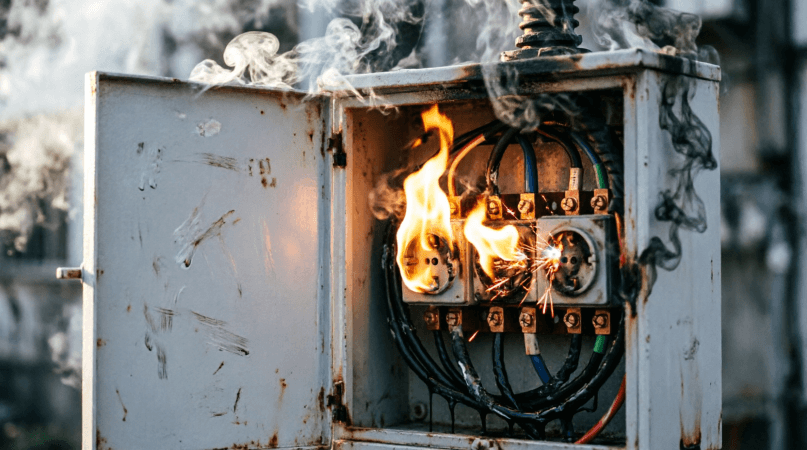
- Ignoring a burning smell, scorch marks, or a warm switchboard, these require an emergency electrician immediately, not more resetting
When a Faulty Switchboard Needs Professional Repair
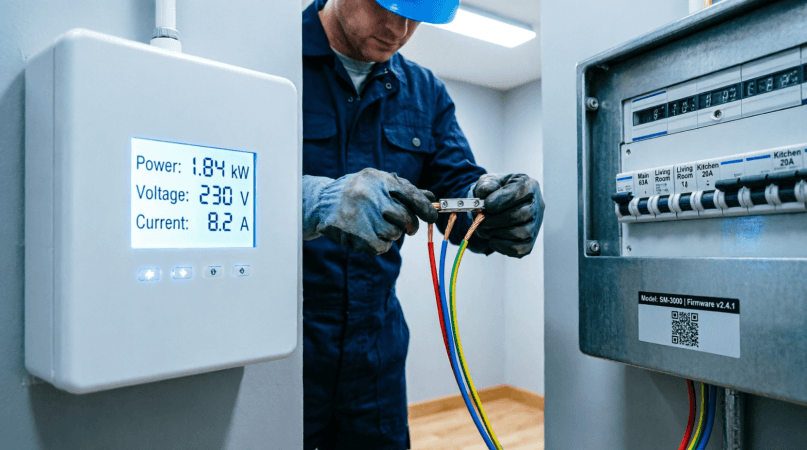
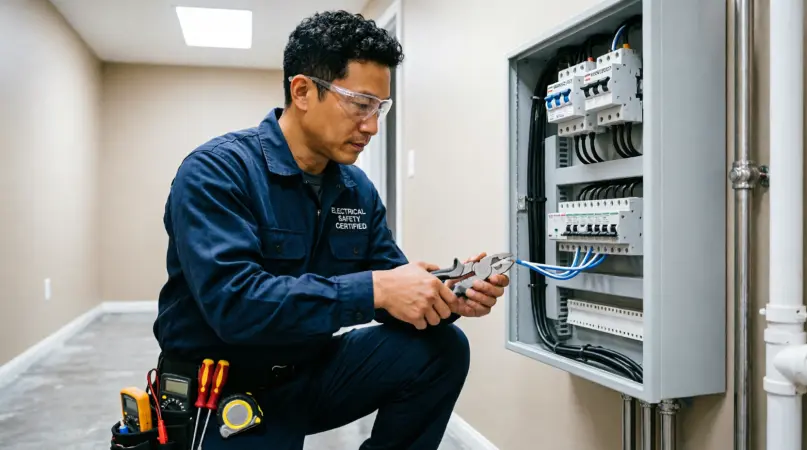
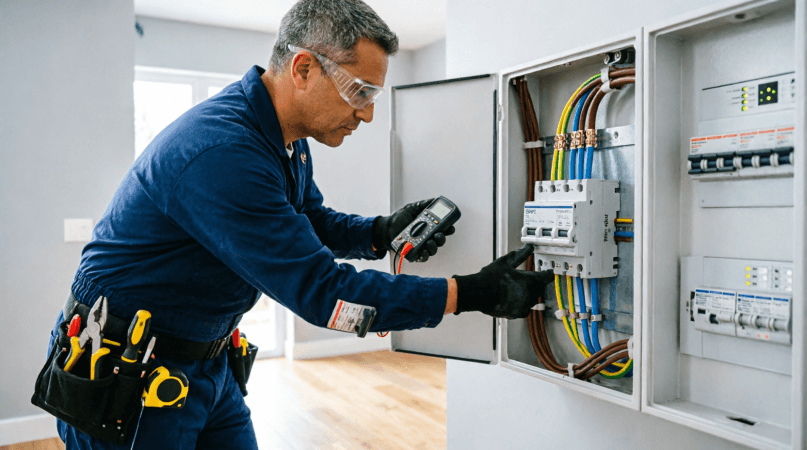
If you’ve worked through the checks above and still can’t isolate a clear cause, or if the trip recurs regardless of what’s unplugged, it’s time for a proper diagnosis. A licensed electrician uses testing equipment to trace the fault to its actual source, rather than guessing based on symptoms alone. This typically involves:
- Testing each circuit individually to isolate which one is actually faulting
- Inspecting the switchboard itself for loose connections, corrosion, or worn components
- Checking whether the issue is isolated to one breaker or points to a broader switchboard problem
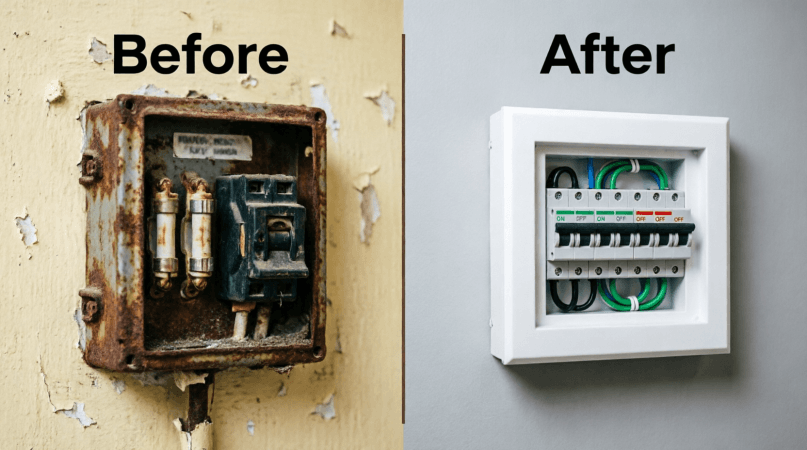
- Recommending either a targeted repair or, if the board is ageing and the fault is one of several developing issues, a full upgrade
For a sense of what a proper repair typically costs, our switchboard repair cost guide breaks down pricing for common fixes, from a single breaker swap through to a full board replacement.
When This Becomes an Emergency
Most tripping switchboard issues are frustrating but not dangerous. A few signs mean you should stop troubleshooting and call an emergency electrician immediately:
- A burning smell near the switchboard
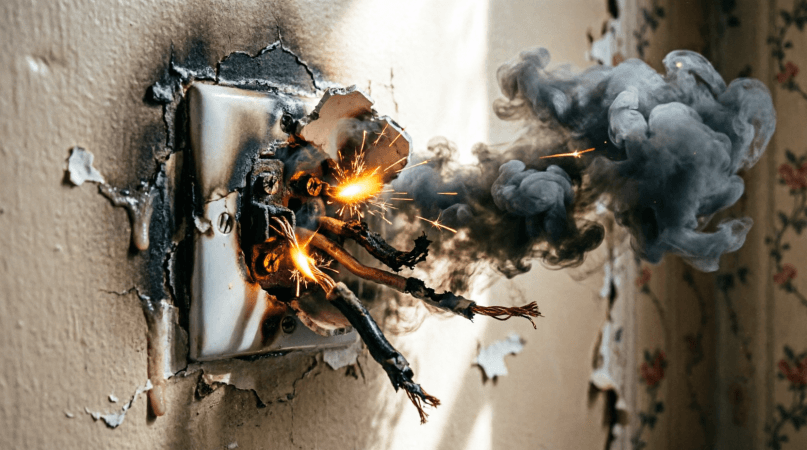
- Visible scorch marks, melted plastic, or discolouration
- The switchboard or a specific breaker feels warm or hot to the touch
- Sparking at the panel or at any power point
- A safety switch that won’t reset no matter what’s unplugged
If any of these apply, treat it as an emergency electrical fault Sydney situation and call immediately rather than continuing to investigate yourself.
Frequently Asked Questions
Is it dangerous if my switchboard keeps tripping?
Not always, an overloaded circuit or a single faulty appliance is inconvenient but not inherently dangerous. However, repeated unexplained trips, especially combined with warmth, smell, or sparking, should always be treated seriously and assessed by a licensed electrician.
Why does my safety switch trip but not my circuit breaker?
A safety switch (RCD) responds specifically to earth leakage, current escaping its intended path, often due to moisture or a faulty appliance. A circuit breaker (MCB) responds to overcurrent, like an overloaded circuit, so the two protect against different types of faults.
Can I just reset the breaker and keep going?
For a one-off trip with an obvious cause, like an overloaded circuit, resetting is fine. But if the same breaker keeps tripping repeatedly without a clear pattern, repeatedly resetting it without investigating the cause risks masking a genuine fault.
How much does it cost to fix a switchboard that keeps tripping?
It depends on the cause. A single faulty breaker or RCD typically costs $150 to $400 to replace, while a broader issue involving multiple ageing components may point toward a full switchboard upgrade. Our switchboard repair cost guide has the full breakdown.
Should I upgrade to individual RCBOs if one safety switch covers multiple circuits?
It’s worth considering, particularly if trips are frequent and hard to isolate. Individual RCBOs mean a fault on one circuit only affects that circuit, rather than cutting power to everything sharing the same safety switch.
Get Your Switchboard Properly Diagnosed
A switchboard keeps tripping Sydney situation that resists simple troubleshooting usually means there’s a real underlying cause worth finding, not just living with. Our licensed electricians properly test and diagnose the issue rather than guessing, and our switchboard upgrades and repairs and safety switch upgrade services cover everything from a single breaker swap to a full board replacement.
Backed by genuine 24/7 emergency service and licensed Level 2 electricians across Greater Sydney, Central Sydney, Eastern Suburbs, Northern Suburbs, Southern Suburbs, Western Suburbs, we’re available whether your switchboard issue can wait for a scheduled visit or needs attention right now.
Contact Top Electricians Sydney today for a proper diagnosis and a fixed-price repair quote.