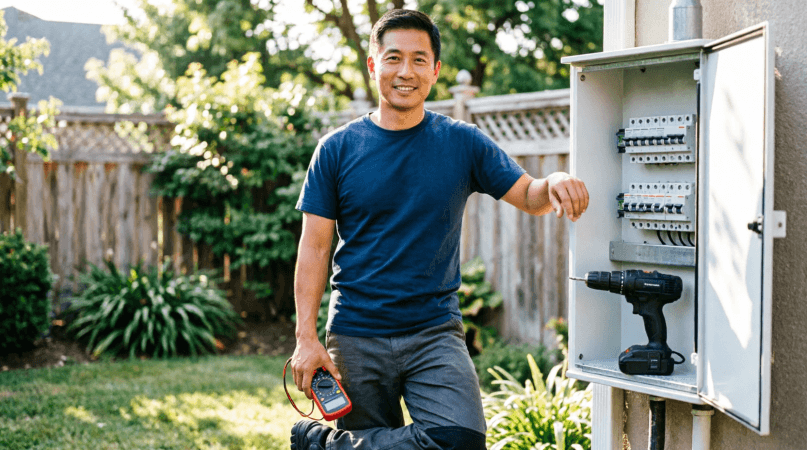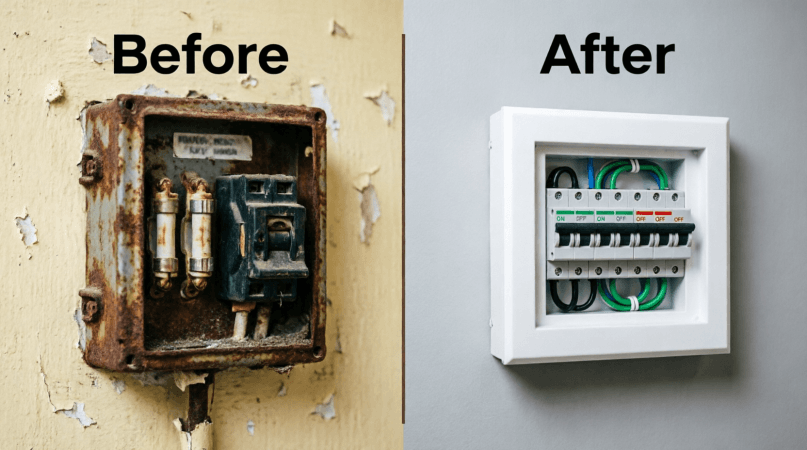

A switchboard upgrade replaces an outdated or non-compliant board, often still running ceramic fuses with no RCD protection, with a modern, AS/NZS 3000-compliant one. In Sydney, most residential upgrades cost $1,500–$6,500, take a few hours to a day and a half, and must be carried out by a licensed electrician who issues a Certificate of Compliance (CCEW) on completion.
Top Electricians Sydney has been assessing and upgrading switchboards across Greater Sydney for years, with licensed Level 2 electricians handling residential, commercial, and industrial jobs alike. Common triggers for an upgrade include old age, overheating cables, short-circuiting appliances, too much load on one board, flickering lights, or a formal electrical defect notice, all of which electrical safety standards (AS/NZS 3000:2018) require property owners to address, since older boards carry a measurably higher fire and shock risk.
Why Household Electricity Demand Has Outgrown Older Switchboards
A Different Electrical Household Than the One These Boards Were Designed For
Switchboards installed decades ago were sized for a very different household. A home from the 1970s or 80s wasn’t built with ducted air conditioning, an EV charger, a pool pump, and a solar inverter all running at once. As appliance ownership and overall energy use have grown, older boards, particularly anything still running ceramic or porcelain fuses, simply weren’t designed to carry that load safely.
A Real-World Example
Take a typical 1975-built Sutherland Shire home. Its original board was sized for lighting, a few power points, and one air conditioner. Today the same property runs a ducted system, an induction cooktop, a pool pump, and is adding an EV charger, loads the board was never rated for. This mismatch, not necessarily a “broken” board, is why so many Sydney properties end up needing an upgrade.
When a Switchboard Upgrade Is Legally Required
A switchboard upgrade isn’t always optional. Under NSW electrical safety regulations, administered by NSW Fair Trading and governed by AS/NZS 3000:2018, you’re required to bring your switchboard up to current standards in several specific situations:
Trigger 1: You’ve Received an Electrical Defect Notice
If Ausgrid, Endeavour Energy, or Essential Energy (depending on which network area your property sits in) identifies a fault during an inspection, they issue a formal defect notice. This typically requires rectification within 21 days of issue, and ignoring it can ultimately result in your power supply being disconnected at the network level.
Trigger 2: New Prescribed Electrical Work
Installing a new power point or circuit counts as prescribed electrical work, which must meet current AS/NZS 3000 standards. An outdated board often can’t support this without upgrading first, meaning a seemingly small job (adding one power point) can reveal a much larger compliance gap.
Trigger 3: Adding Major Appliances
Adding a pool pump, irrigation system, or ducted air conditioning can push total demand beyond what your existing board and consumer mains were designed to carry, triggering a mandatory upgrade as part of that installation.
Outside of these specific triggers, there’s no blanket law forcing you to upgrade a functioning older board, but as the next section covers, waiting carries its own risks.
Warning Signs That Point to a Switchboard Upgrade
A number of signs tend to show up well before a switchboard fails outright:
- Circuit breakers tripping more frequently than they used to
- An outdated fuse box, most commonly still running ceramic or porcelain fuses
- Lights flickering at random, unrelated to any specific appliance
- Fuses blowing more often when several appliances run simultaneously
- Appliances short-circuiting more frequently than seems normal
- Buzzing, crackling, or humming sounds coming from the board itself
- Cables inside the switchboard overheating, which can lead to further overload and damage
- A board that’s simply old, since the older the system, the more likely developing problems become
What Happens If These Signs Are Ignored
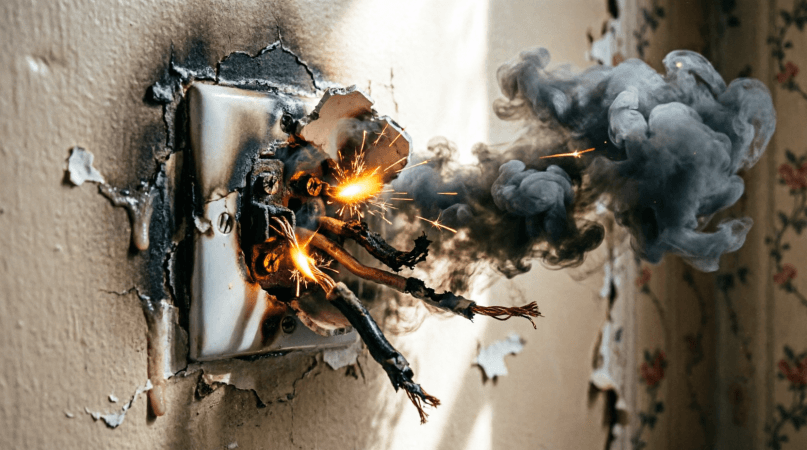
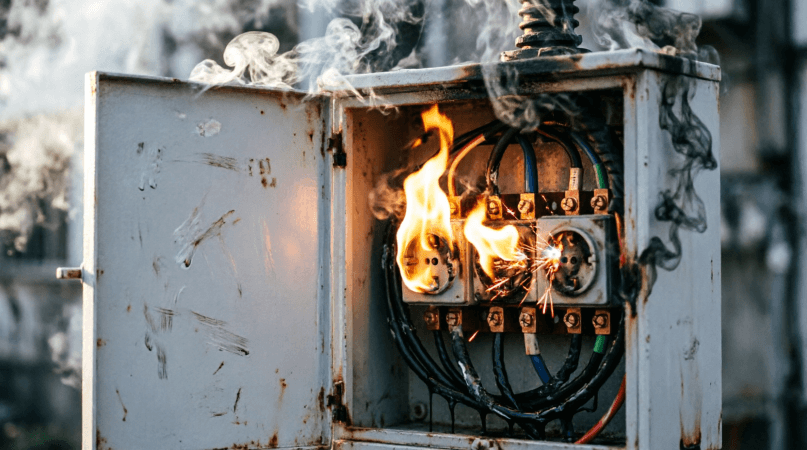
Left unaddressed, these signs can progress toward genuinely serious outcomes: electric shock, electrical fire, and damage to connected appliances, all of which a properly upgraded, modern switchboard is specifically designed to prevent. This isn’t theoretical risk language; degraded connections generate heat, and heat combined with ageing insulation is a documented fire pathway in residential properties. Our dedicated guide if what you’re seeing looks more like a single faulty component than a board-wide issue, our guide on signs your switchboard requires repairs can help you tell the difference.
Why Ceramic Fuses Are Considered Outdated
Ceramic (porcelain) fuses were a standard safety device in Australian homes through much of the last century, and they’re still found in a meaningful number of older Sydney properties today. They work by melting a thin fuse wire when current exceeds a safe threshold, cutting power to that circuit. The problem is that this technology has been functionally superseded for decades:
No Built-In People Protection
A ceramic fuse protects wiring and equipment from overcurrent, but it offers no meaningful protection against electric shock the way a modern RCD does. This is the single biggest safety gap between an old board and a modern one.
No Simple Reset
Where a modern circuit breaker can be switched back on in seconds, a blown ceramic fuse needs a replacement fuse wire, often handled incorrectly by homeowners under pressure, which introduces its own safety risk, including the temptation to use an incorrectly rated wire “just to get the power back on.”
Physical Deterioration
Ceramic fuse holders crack and degrade with age and heat cycling over years of use, which can itself become a fault point, independent of whatever circuit it’s protecting.
Mismatch With Modern Load
These fuses were rated for the electrical demands of decades ago, well below what a modern household now routinely draws.
If your home is several decades old and the switchboard has never been touched, it’s reasonably likely you’re still running this kind of outdated protection.
What Is an RCD, and Why Does It Matter?
An RCD (Residual Current Device), commonly called a safety switch, is the single biggest safety upgrade a modern switchboard offers over an older fuse-based board.
How an RCD Actually Works
It works by continuously comparing the current flowing out through the active wire against the current returning through the neutral wire. The moment it detects an imbalance, a sign current is leaking somewhere it shouldn’t, potentially through a person, it cuts power in a fraction of a second, well before a dangerous shock can develop into a fatal one.
Why So Many Sydney Homes Still Lack Full RCD Coverage
RCDs have been a mandatory inclusion in new residential electrical work for a number of years under current wiring rules, but a large number of older Sydney homes were built and wired before this requirement existed, and many still don’t have this protection retrofitted. If your board predates mandatory RCD requirements and has never been upgraded, this is one of the clearest, most important reasons to prioritise a switchboard upgrade regardless of what else is or isn’t going wrong.
Fuses vs Circuit Breakers vs RCDs: What’s the Difference?
These three terms get used interchangeably by homeowners, but they protect against different things.
| Device | What It Protects | How It Responds | Resettable? |
|---|---|---|---|
| Fuse | Wiring and equipment | Melts under excess current | No, requires replacement |
| Circuit breaker (MCB) | Wiring and equipment | Trips under overcurrent | Yes, manual reset |
| RCD (safety switch) | People, against electric shock | Cuts power on current leakage | Yes, manual reset |
| RCBO | Both of the above, combined | Overcurrent and leakage | Yes, manual reset |
A genuinely modern, properly upgraded switchboard includes all of these working together, individual circuit breakers for overcurrent protection and RCDs (increasingly combined into a single RCBO per circuit) for shock protection on every circuit, not just some.
How Much Does a Switchboard Upgrade Cost?
Pricing depends heavily on your board’s current condition and the scope of work required:
| Scope | Typical Cost (AUD) |
|---|---|
| Standard like-for-like replacement | $1,500 – $3,500 |
| Upgrade including asbestos decommissioning | $2,200 – $4,200 |
| Three-phase board upgrade | $3,500 – $6,500 |
| Upgrade combined with relocation | $4,500 – $6,500 |
Why a Very Cheap Quote Should Raise Questions
Be cautious of a quote that sits well below this range. Electrical work priced unusually low is sometimes a sign the provider isn’t fully licensed, is reusing components that should be replaced, or is cutting corners on testing and certification, none of which you’ll necessarily notice until something goes wrong. A proper, itemised quote should always follow an in-person assessment rather than a generic phone estimate. Our full switchboard upgrade cost guide breaks this down further, and if you’re dealing with a specific fault rather than a full upgrade, our switchboard repair cost guide covers that separately.
What Happens During a Switchboard Upgrade
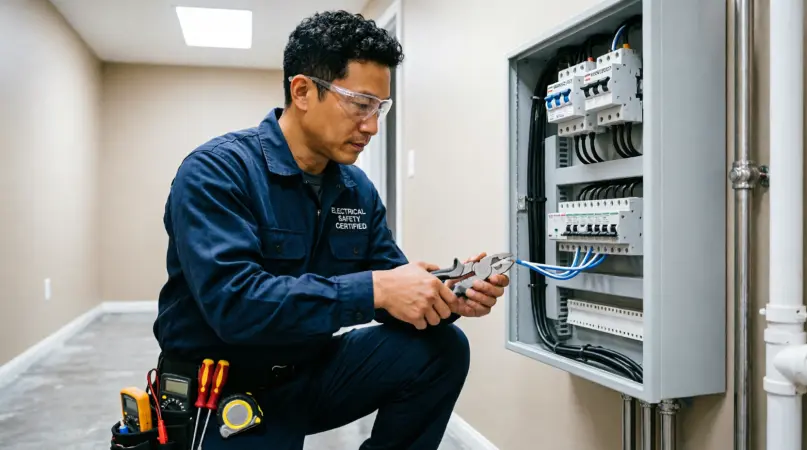
A properly managed upgrade follows a clear, safety-driven sequence, typically completed within a few hours for a straightforward job:
- Power isolation, safely disconnecting supply to the property before any physical work begins
- Removal of the old board, including every outdated fuse and protective device
- Installation of a new enclosure, sized appropriately for the number of circuits, breakers, and RCDs your property needs
- Reconnection of every circuit to new, correctly rated circuit breakers and RCDs (or combined RCBOs)
- Inspection of the earthing system, confirming it’s still in proper working condition
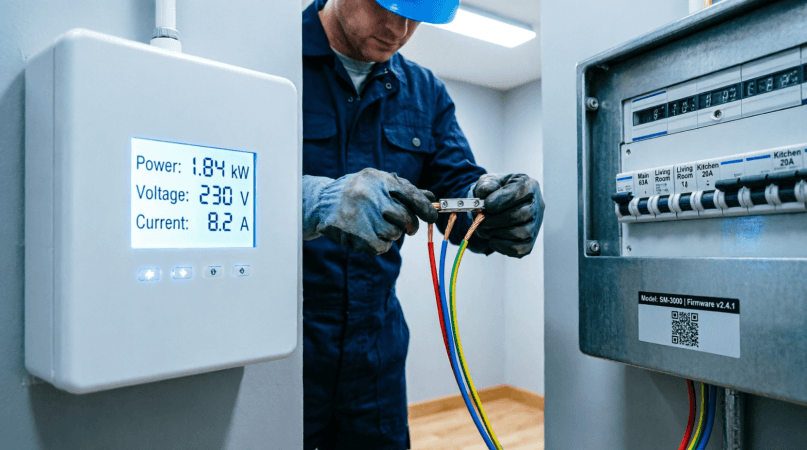
- A full round of electrical testing across the completed installation, confirming every circuit and protective device is functioning correctly before power is restored
- Certificate of Compliance (CCEW) issued, documenting the completed work and lodged digitally with NSW Fair Trading
Our full switchboard replacement process guide walks through each of these steps in more detail.
Why DIY Switchboard Work Is Genuinely Dangerous
Switchboard upgrades are not a weekend project, and this isn’t just regulatory caution.
The Wiring and Protection Mismatch
Every cable in your home is sized specifically for the load it’s meant to carry. A standard lighting circuit, for example, uses wiring rated for a specific current range, well above what an old porcelain fuse was rated to handle. A homeowner attempting a DIY fix who installs an incorrectly rated fuse wire or breaker, often using something simply because it fits, can unknowingly remove the very protection that’s supposed to prevent overheating and fire.
It’s Also Illegal
Beyond the physical danger, carrying out prescribed electrical work without an appropriate licence is against the law in NSW under the regulations administered by NSW Fair Trading. It also typically voids home and contents insurance, since insurers generally require electrical work to be certified by a licensed practitioner.
This mismatch between wiring capacity and protective device rating is one of the more common root causes behind switchboard-related house fires, and it’s entirely avoidable with a professional, correctly specified upgrade.
Asbestos Backing Panels in Older Switchboards
Many switchboards installed before the late 1980s, prior to asbestos cement products being phased out of Australian construction, used an asbestos backing panel behind the wiring. If your board hasn’t been touched since before that period, this is a genuine possibility, not a remote one.
Who Regulates This, and How It’s Handled
Asbestos handling in NSW is governed by SafeWork NSW under the Work Health and Safety Regulation. Decommissioning an asbestos backing panel requires a licensed electrician following proper containment and disposal procedures, sometimes alongside a Level 2 ASP, and removal work generally needs regulator notification beforehand, which can extend the project timeline. Our guide on rusted switchboards covers how older enclosures tend to deteriorate more broadly.
Upgrading Your Consumer Mains
The consumer mains are the cables connecting the street supply to your switchboard, arriving either via overhead service lines or underground cabling. Older homes were often fitted with mains sized for a much lower electrical load than modern households now demand.
When the Mains Become the Real Bottleneck
If your property is running more appliances, air conditioning, cooking equipment, pool pumps, than the mains were originally sized for, the cabling itself can become a bottleneck, regardless of how good your new switchboard is. Upgrading the board alone in this situation solves only half the problem.
Who’s Authorised to Do This Work
Consumer mains work is classified as Level 2 work, since it involves the service connection rather than just your internal switchboard, and must be carried out by a Level 2 Accredited Service Provider (ASP). If your network distributor identifies a fault with your consumer mains during an inspection, you’ll typically receive a defect notice requiring rectification within 21 days. For jobs involving this kind of service-side work, our Level 2 electricians handle the assessment and upgrade directly.
Three-Phase Switchboard Upgrades
A three-phase switchboard supplies power across three separate phases rather than one, and it’s typically found in commercial and industrial properties, as well as larger residential homes running substantial electrical loads: multiple air conditioning units, ducted systems, or a granny flat with its own significant demand.
The Practical Advantages
The main advantages of three-phase power are a power supply that never fully drops to zero the way single-phase can momentarily appear to under heavy load, generally greater reliability for high-demand equipment, improved energy efficiency at scale, and comparatively less cabling required to deliver the same total capacity.
Who Can Legally Do This Work
Only a licensed Level 2 ASP electrician is authorised to install, replace, or upgrade a three-phase switchboard or its associated consumer mains, and any defect notice relating to three-phase infrastructure needs to go to a Level 2 provider specifically, not a standard electrician.
Frequently Asked Questions
How do I know if I need a repair or a full upgrade?
If the issue is isolated to one component and the rest of your board is modern and compliant, a repair is usually sufficient. If your board has ceramic fuses, lacks RCD protection, or shows multiple ageing issues at once, a full upgrade is generally the more cost-effective long-term choice.
Is a switchboard upgrade mandatory in NSW?
There’s no blanket requirement to upgrade a functioning older board on its own, but specific triggers, a defect notice, new circuit installation, or major appliance additions, do create a legal obligation to bring the board up to current AS/NZS 3000 standards.
Can I stay in my home during the upgrade?
Yes, for most residential upgrades. Power will be off for a few hours during the active work, but the job doesn’t require vacating the property.
Does a switchboard upgrade add value when selling a property?
It can. An outdated or non-compliant board is a common flag in pre-purchase inspections, and addressing it proactively removes a common negotiating point for buyers.
What’s actually inside a Certificate of Compliance for Electrical Work (CCEW)? A CCEW documents exactly what work was carried out, confirms it meets AS/NZS 3000 Wiring Rules, and is now lodged digitally with NSW Fair Trading. It’s your legal proof the work was done correctly, and it matters for insurance claims and any future property sale.
Will my power bill change after a switchboard upgrade?
The upgrade itself doesn’t reduce consumption, since it doesn’t change how much electricity your appliances use. What it does is remove the energy losses and safety risks associated with deteriorating connections, and it’s often a prerequisite for adding solar or more efficient appliances that can genuinely lower your bill afterward.
Get a Proper Assessment and Fixed-Price Quote
A switchboard upgrade is one of those jobs that’s easy to put off until it isn’t anymore. If any of the signs above sound familiar, the right next step is a proper on-site assessment, not a guess based on your board’s age alone.
Backed by genuine 24/7 emergency service and licensed Level 2 electricians across Greater Sydney, Central Sydney, Eastern Suburbs, Northern Suburbs, Southern Suburbs, Western Suburbs our switchboard upgrades and repairs service covers everything from a single repair through to a full three-phase upgrade.
Contact Top Electricians Sydney today for a free assessment and fixed-price quote.