
Most Sydney homes run on single phase power, and for years that was enough. But with EV chargers, ducted air conditioning, and high powered workshops becoming common, more property owners are asking a straightforward question: is single phase power still enough, or does the property need three phase?
The difference between single phase and three phase power comes down to how electricity reaches the property and how much load it can carry. Single phase runs at 230-240 volts through one active wire, while three phase delivers around 400 volts across three active wires.
This article breaks down how each system works, how to check what supply the property currently has, and what it actually costs to upgrade in Sydney.
What is single phase power and how does it work in residential properties?
Single phase power is the standard electrical supply across most Australian homes, running at 230V through one active wire and one neutral wire. The active wire delivers current while the neutral wire provides the return path, completing the circuit.
For a typical Sydney home, this setup handles everyday needs without any issues. Lights, fridges, televisions, washing machines, and standard power points all run comfortably on single phase power. The system becomes a limitation only when high-demand equipment gets added to the property.
How single phase electricity is supplied to most Sydney homes
Single phase power reaches Sydney homes either through overhead service cables running from street poles to the property, or through underground consumer mains connected to the meter box. The underground cables connect directly to the property’s switchboard and meter box, providing a stable supply. Both methods deliver the same 230V single phase supply. The difference is physical, not electrical.
Common household appliances that run on single phase power
Most standard household appliances, including refrigerators, lighting systems, televisions, computers, and air conditioning units, are compatible with single phase power systems. These appliances draw low enough current that a single active wire handles the load without issue.
Common single phase appliances include:
- Lights and ceiling fans
- Fridges and washing machines
- TVs, computers, and home entertainment
- Standard split-system air conditioners
- Kettles, microwaves, and ovens
Single phase power becomes a limitation when larger equipment, particularly those requiring significant torque to start, such as industrial motors or high-power heating units, gets added to the property.
What is three phase power and why is it used in commercial or high load properties?
Three phase power works by distributing the electrical load across three alternating currents, ensuring a constant flow of energy that reduces power fluctuations and allows for smoother operation of machinery. In Australia, three phase power runs at 400 volts between phases and 230 volts between any phase and the neutral line.
Commercial and industrial properties use this system because it handles heavy equipment running at the same time without voltage drops or tripped circuits. Businesses, factories, and larger properties often run several heavy appliances at once, and single phase systems can struggle to supply enough power, causing voltage drops or overloaded circuits.
How three phase electricity delivers higher and more stable power
Three phase power works like a three-lane highway. Each phase peaks at a different time, so power never drops to zero, unlike single phase which rises and falls in a single wave. The 120 degree spacing between each phase reduces voltage fluctuations, minimises equipment vibrations, and allows motors and machinery to run with less wear.
This steady delivery means appliances draw current more evenly across the system, which reduces heat build-up and lowers the risk of tripped circuits under heavy load.
Equipment and appliances that require three phase power
Appliances that require three phase power include workshop tools such as lathes, pumps, compressors, industrial air conditioning, large electric water heaters, and high powered EV chargers.
Common three phase appliances include:
- EV chargers (11kW and 22kW)
- Ducted air conditioning systems
- Industrial compressors and workshop machinery
- Commercial ovens and commercial kitchen equipment
- Large solar inverters and battery storage systems
Three phase power is ideal for high-load appliances because the load splits across all three phases, delivering better stability and performance.
Common real world examples of three phase power in homes and businesses
Three phase power shows up more often than most people expect, across both residential and commercial properties.
Factories and manufacturing plants rely on three phase power to run heavy machinery, conveyor belts, and large motors with greater efficiency and less energy waste. Commercial buildings including office blocks, shopping centres, and businesses use it for HVAC systems, lighting, and lifts.
On the residential side, a homeowner running a home workshop with a lathe and air compressor, plus a 22kW EV charger in the garage, would need three phase power to run all of that at the same time without overloading the system.
What is the main difference between single phase and three phase power?
The difference between single phase and three phase comes down to how many active wires carry current, how much voltage the system delivers, and how evenly the electrical load gets distributed. A three phase supply can carry three times as much power as a single phase supply while only needing one extra wire.
Here is a side by side comparison:
| Feature | Single Phase | Three Phase |
| Active wires | 1 | 3 |
| Voltage (line to neutral) | 230V | 230V |
| Voltage (line to line) | 230V | 400V |
| Frequency | 50Hz | 50Hz |
| Power delivery | Fluctuates | Constant |
| Best for | Homes, small loads | Commercial, high-load |
| Wiring complexity | Simple | More complex |
| Load balancing | Single circuit | Spread across 3 phases |
Visual: How the waveforms differ
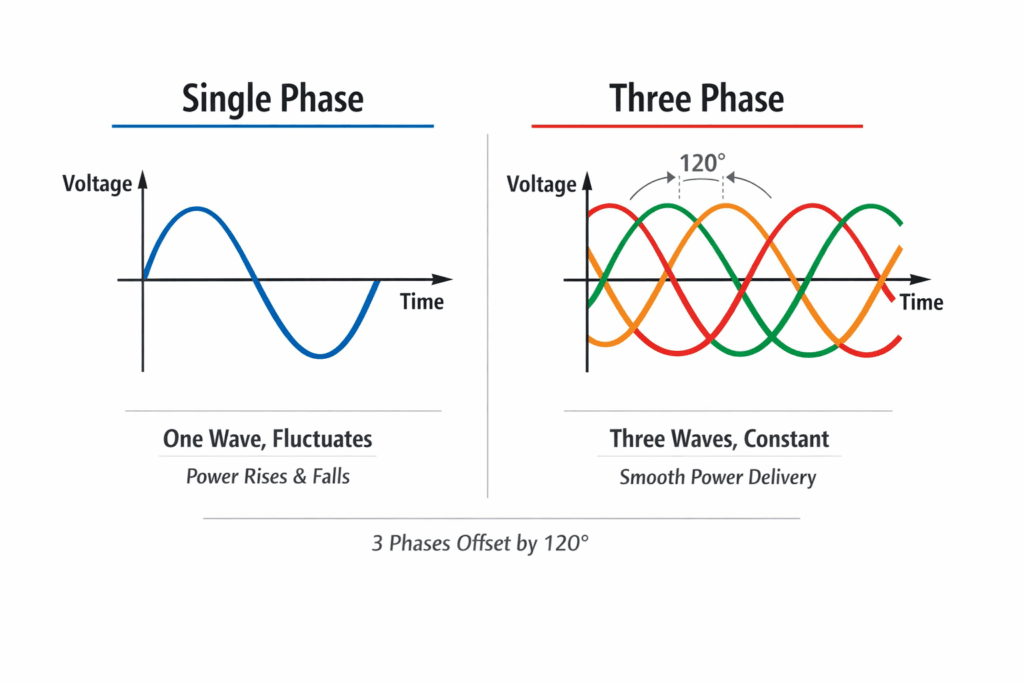
Each active phase in a three phase system carries the same voltage but sits offset by 120 degrees from the others. This means that as one phase drops toward zero, the other two keep delivering power, producing smooth and continuous energy delivery.
Key structural differences in wiring and electrical supply
Single phase power delivers electricity through one active wire and one neutral wire, while three phase power uses three active wires plus a neutral. That extra pair of active wires changes everything about how the system handles load. Three phase power needs only one additional wire to deliver three times as much power as single phase, which means less conductor material and lower transmission losses.
Typical voltage levels for single phase and three phase power
Single phase power runs at 230V in Australia, while three phase power delivers either 230V between each phase and neutral, or 400V between any two active phases. That higher line to line voltage is what allows three phase systems to run heavy equipment without requiring thicker cables or oversized circuits.
How three phase power balances electrical load more efficiently
Three phase power distributes electrical loads across three phases, minimising the risk of overload on any single phase. This balanced setup reduces energy waste, cuts down on appliance vibrations, and lowers the risk of overheating, which means appliances run longer and bills stay lower.
How can you tell if your Sydney property has single phase or three phase power?
The fastest way to check starts at the switchboard. Look at the main switch inside the switchboard. A single phase switch spans the width of one pole, while a three phase switch spans three poles. Labels like “1P 2W” confirm single phase, while “3P 4W” confirms three phase supply. Still unsure? A quick call to the energy provider with an account number gives a confirmed answer in minutes.
Checking your electrical switchboard and service connection
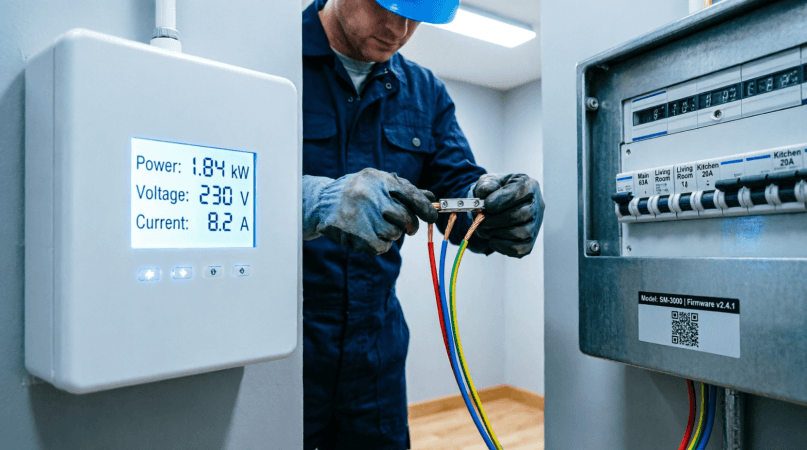
The width of the main switch tells the story. Single phase switches are one pole wide, while three phase switches are three poles wide. Smart meters make it even easier. Labels like “1P 2W” confirm single phase, while “3P 4W” confirms three phase supply.
Signs your property may already have three phase supply
Three clear signs point to three phase power: a “3 Pole Main Switch” label on the switchboard, a “415V” marking near the meter, or three service fuses grouped together at the meter board. A smart meter showing “L1, L2, L3” labels also confirms three phase supply. Still not sure? A photo sent to a licensed electrician gets a confirmed answer without touching anything.
When should you upgrade from single phase to three phase power?
The right time to upgrade is when the property’s electrical demand starts pushing past what a single active wire can safely carry. A practical rule of thumb is that once the total wattage of appliances running at the same time exceeds 7.5kW, a three phase connection makes sense. Other clear signals include flickering lights when large appliances start up, or plans to install a 22kW EV charger, ducted air conditioning, or a home workshop with heavy machinery.
Not every property needs it. If the existing setup performs well and there are no plans for high draw appliances, single phase power may be entirely sufficient.
Installing large appliances such as EV chargers, workshops, or commercial equipment
A single phase connection cannot deliver enough power for a 22kW EV charger. The property needs a three phase upgrade to accommodate that level of charging capacity. The same applies to workshop machinery. Equipment like ducted air conditioning, industrial compressors, and large motors all need three phase power to run efficiently without overloading the supply.
- 22kW EV charger: requires three phase
- Ducted air conditioning: often requires three phase
- Workshop lathes, compressors, welders: require three phase
- Large solar inverters above 10kW per phase: require three phase
When electrical load demand exceeds single phase capacity
Single phase connections in Australia typically max out at 63 amps, which translates to roughly 14kW of continuous demand. Once high-draw appliances stack up, the system starts pushing its limits.
Ducted air conditioning pulling 8kW, a heat pump drawing 3kW, and an EV charger adding another 7kW already pushes a single phase system close to its ceiling. At that point, upgrading is a practical necessity, not just a convenience.
What are the benefits of upgrading to three phase power for Sydney properties?
Upgrading to three phase power does more than just add capacity. Three phase systems distribute power more evenly across all three phases, which cuts voltage drop, reduces energy waste, and lowers stress on electrical components, which can extend their lifespan. The upgrade also means running all appliances, including heavy consumption ones, at the same time without tripping any circuits. Properties with three phase supply are better positioned for future technology, from solar batteries to smart home systems, without needing another costly upgrade down the line.
Improved electrical efficiency and stable power distribution
Power flows evenly through three wires in three phase systems, which creates better load balance, reduces energy waste, and cuts down on vibrations and overheating that normally waste energy. The stable current distribution also reduces wear on electrical components, extending the lifespan of appliances and lowering maintenance costs over time.
Supporting high powered appliances and future energy needs
Three phase power handles high loads smoothly and reduces equipment wear, preparing properties for EVs, solar expansions, and smart systems without constant overloads. As homes become more electrified, three phase power handles modern demands and future-proofs properties for things like virtual power plants and large scale energy storage.
How electricians install or upgrade three phase power in Sydney
The upgrade process follows a clear set of steps and must be handled by a licensed professional. The process runs from an initial consultation through to application submission, approval from the electricity distributor, service line upgrade, switchboard replacement, and meter installation. The whole process typically takes 5 to 7 weeks from application to final connection. No part of this work is a DIY job. Only Level 2 Accredited Service Providers are authorised to carry out three phase connection work in Australia.
Switchboard upgrades and electrical system modifications
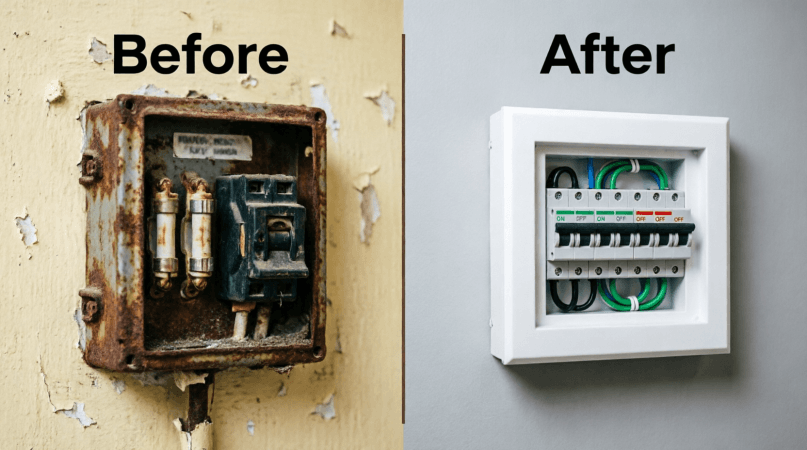
Switchboards must comply with current Australian Standards AS/NZS 3000 and include safety switches for all circuits. Upgrading to three phase almost always means replacing the existing switchboard with a larger unit to house the three phase meter and all required circuit breakers. The process also covers new cabling, service line changes, and a compliance certificate before power gets restored.
Working with a licensed Level 2 electrician for safe installation
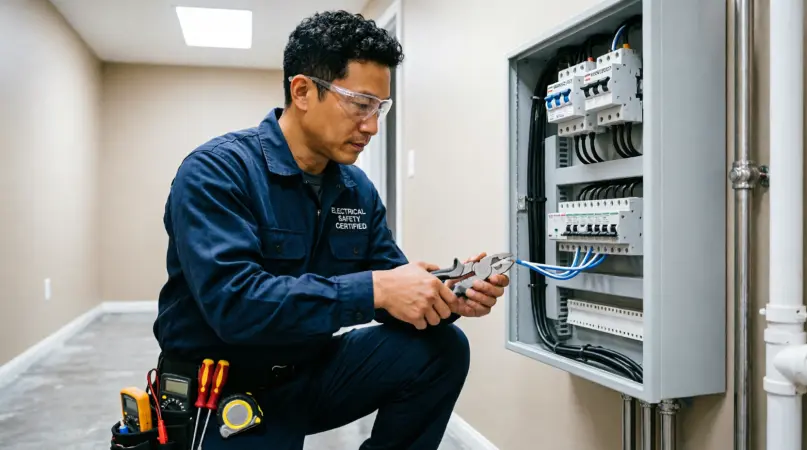
A Level 2 ASP holds a licence that allows them to install, repair, and maintain underground and overhead service lines between the public network and the property switchboard. Moving from single phase to three phase involves mains power, meter boxes, and supply cables outside the switchboard, which means only a Level 2 accredited professional can legally carry out that work.
Frequently Asked Questions About Single Phase vs Three Phase Power
These are the most common questions property owners ask before deciding between single phase and three phase electrical systems.
Can a residential home have three phase power?
Yes. Australian electricity networks have the infrastructure to provide three phase power to residential homes. New builds with high-demand appliances like EV chargers increasingly request it at the time of construction.
Is three phase power more expensive than single phase electricity?
No. The same per-kilowatt-hour charges apply after switching to three phase. The only extra cost is the one-off installation and switchboard upgrade fee.
Do electric vehicle chargers require three phase power?
Not always. Single phase EV chargers deliver between 3.6kW and 9.6kW, while three phase chargers push up to 22kW, cutting charge times significantly. The right choice depends on driving habits and budget.