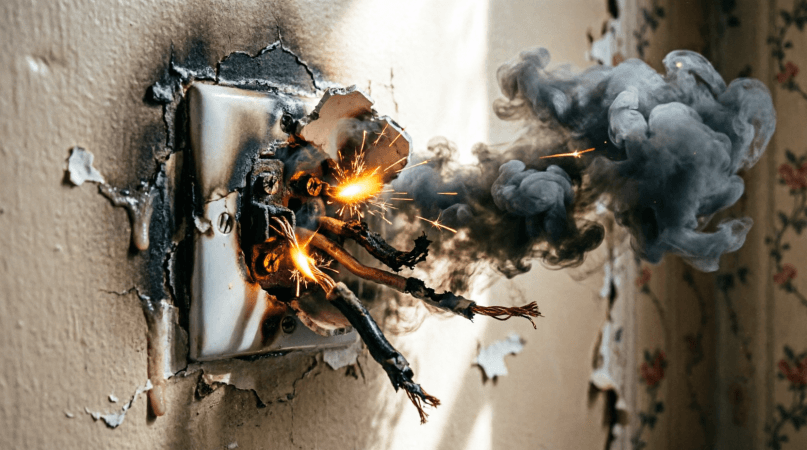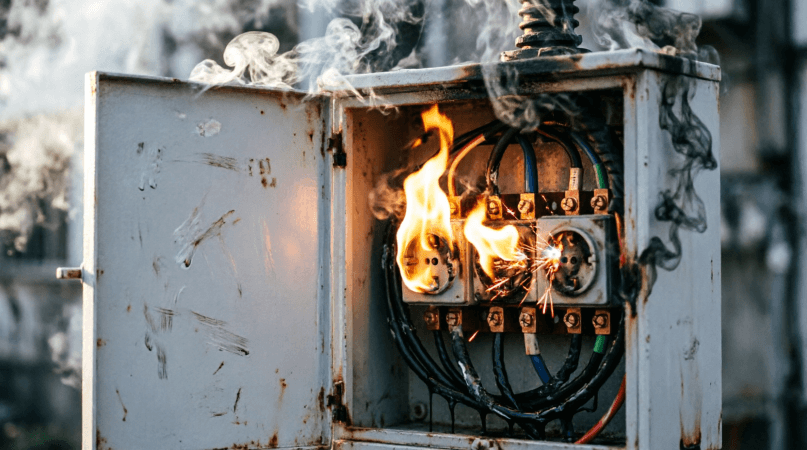

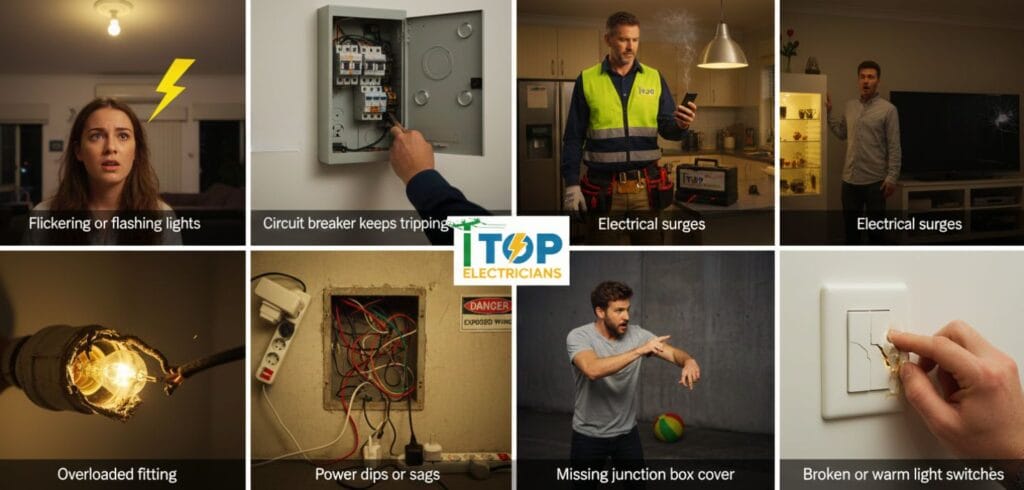
A burning smell near a power point. A breaker that trips every time you switch on the kettle. Sparks when you flip a light switch. These aren’t quirks to wait out until the weekend. They’re signs of an underlying wiring fault, and every hour you leave one unresolved is an hour the risk of fire, shock, or serious equipment damage keeps building.
The confusing part for most homeowners isn’t recognising something is wrong. It’s knowing who is actually allowed to fix it. Can a handyman do it? Does it matter if it’s an emergency? What happens if you just have a go yourself? Get this wrong and you’re not just risking a bad repair. You’re risking fines, a voided insurance policy, and problems that resurface at settlement when you try to sell.
This guide sets out exactly who can legally fix electrical problems in a Sydney home, what counts as licensed work under NSW law, which faults need same-day attention, and how to choose someone qualified to protect both your property and the people living in it.
Can a licensed electrician legally fix electrical problems in Sydney homes?
Yes. Only a qualified, licensed professional can legally repair, install, or modify electrical systems in Sydney homes. NSW regulations restrict virtually all electrical work to trained and certified tradespeople, specifically to protect homeowners from fire, electrocution, and property damage. Attempting wiring, switchboard, or circuit work without the proper licence is illegal, and it can result in fines, failed inspections, or a voided insurance claim if something later goes wrong.
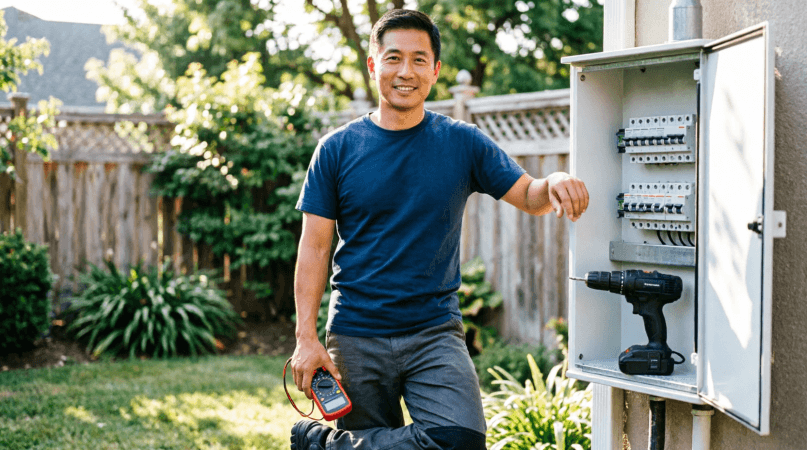
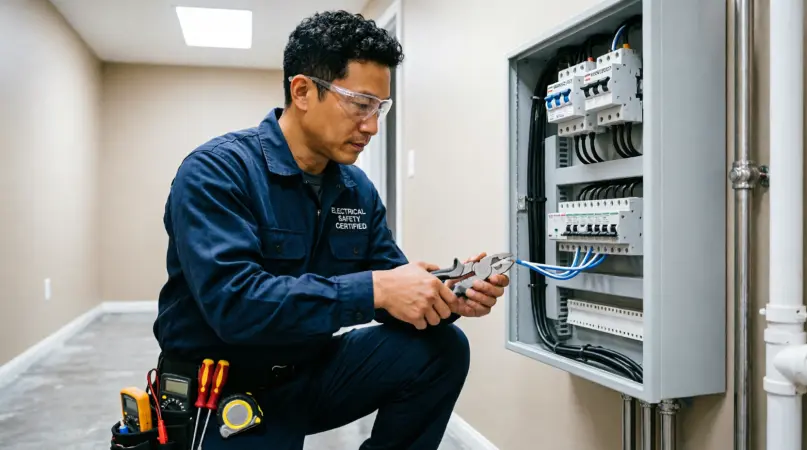
Licensed electricians complete years of structured training and apprenticeship, pass state licensing exams, and keep their certification current. Once a job is finished, they issue a Certificate of Compliance for Electrical Work, confirming that everything installed or repaired meets NSW safety standards. Keep this certificate. It matters at resale and during any insurance assessment.
Does electrical wiring work always require a licensed electrician in NSW?
Yes. In New South Wales, any electrical wiring work must be carried out by someone holding a current electrical licence or certificate. This applies to every type of property, residential, commercial, or industrial, and it applies regardless of how small or cheap the job seems. Carrying out wiring installations, repairs, alterations, or removals without the appropriate credentials is illegal, full stop.
NSW law defines electrical wiring work as the physical installation, repair, alteration, or removal of an electrical installation. This covers fixed appliances, wires, fittings, meters, and any equipment that conveys, measures, controls, or uses electricity at a property. In practice, this means almost anything beyond the most basic, non-wiring task falls under this requirement.
Doing wiring work without a licence breaches the Home Building Act 1989 and carries real penalties. An individual can be fined up to $22,000 for unlicensed work, and companies face substantially larger penalties on top of that. Beyond the fine itself, non-compliant work can also fail a safety inspection outright and create insurance headaches down the track.
What counts as electrical wiring work
Under NSW regulations, electrical wiring work includes:
- Installing, altering, or replacing fixed wiring
- Repairing switchboards or circuit connections
- Adding new circuits or reconfiguring existing ones
- Connecting power points, lighting circuits, and other fixed equipment
Even something that feels minor, like adding a new outlet or shifting an existing one, still counts as wiring work the moment it touches the fixed wiring.
What does not count as wiring work
A narrow band of tasks sits outside this definition. Equipment that runs on very low voltage, and portable devices simply plugged into an existing socket, generally fall outside the requirement for a licensed wiring job. Anything that touches fixed wiring, though, still needs a qualified tradesperson regardless of how simple it looks.
Legal protections and documentation
Once wiring work is complete, the person who did it must issue a Certificate of Compliance for Electrical Work. This confirms the installation has been tested and meets the relevant Australian Standards and NSW safety regulations, and in NSW it’s legally required to be lodged through the appropriate compliance portal.
Without this certificate, selling a property, passing a safety inspection, or making an insurance claim after an electrical fault can become genuinely difficult.
Is using an unlicensed electrician illegal and unsafe in Sydney?
Yes, on both counts. Hiring an unlicensed person to carry out electrical wiring, installation, repair, or modification in Sydney is illegal, and it’s unsafe. Any work involving fixed wiring, circuits, switchboards, or safety devices has to be carried out by someone holding the appropriate licence under NSW licensing law. Working outside this breaches state regulations, and the consequences run further than most homeowners expect.
Legal consequences of unlicensed electrical work
Carrying out restricted electrical tasks without a licence breaches the Home Building Act 1989 and the broader NSW electrical licensing framework. Individuals can be fined up to $22,000, and businesses face even steeper penalties, enforced by NSW Fair Trading and other regulatory bodies responsible for electrical safety standards.
Beyond the fine, unlicensed work can lead to failed compliance inspections, orders to remove or redo the work entirely, and enforcement action from local councils or building inspectors. That means added cost, added delay, and sometimes a dispute with whoever did the original work.
Safety risks of unlicensed electrical work
Faulty or non-compliant work is a serious hazard well beyond the regulatory side. Wiring that isn’t installed or tested to standard raises the risk of shock and fire directly. Loose connections, incorrect grounding, poor insulation, and overloaded circuits are the faults that show up again and again in unqualified work, and any one of them can ignite insulation or spark inside a wall cavity.
The frustrating part is that these faults often stay hidden until something serious happens. Plenty of house fires start behind a wall or ceiling where a wiring defect has been quietly building for months. Getting the work done properly the first time is what keeps this risk off the table.
Insurance and compliance implications
Home and contents insurance generally requires electrical work to comply with the applicable standards and legislation. If a fire, shock, or other damage traces back to work that wasn’t done by a certified professional, insurers can, and often do, refuse the claim. That leaves the homeowner covering the full cost of repair and replacement.
A Certificate of Compliance for Electrical Work is usually the document insurers ask for. Without it, an insurer may treat the incident as a known, unmitigated risk, which is exactly the basis on which claims get denied.
Long-term consequences for property sales
Electrical compliance gets checked during property sales, building inspections, and mortgage approvals more often than people expect. Unlicensed work without proper certification can hold up settlement or force last-minute corrections before a sale can proceed. Properly certified work, by contrast, signals that everything was installed and tested to standard, which makes the property both more compliant and more attractive to buyers.
Should emergency electrical problems always be repaired by a licensed electrician?
Yes, without exception. Emergency electrical problems in Sydney homes should always go to someone with the appropriate licence and qualifications. An urgent fault carries an immediate risk of fire, shock, or serious property damage, and NSW electrical safety regulations exist precisely so that only trained, authorised professionals work on systems carrying dangerous voltage, especially under time pressure.
NSW electrical safety law doesn’t soften the licensing requirement just because a fault is urgent. Whether a problem develops slowly over months or appears suddenly at 11pm on a Sunday, the legal requirement for competent, certified work doesn’t change. Attempting a DIY fix on an urgent issue breaks the rule and raises the danger to both people and property at the same time.
What qualifies as an electrical emergency
An electrical emergency typically presents a clear, immediate danger:
- Burning smells from outlets or switches
. Usually points to overheated wiring or failing insulation, which can ignite and spread into walls or ceilings. - Sparks or arcing.
Visible sparking when a device is switched suggests failing connections or deteriorated components that generate heat and can start a fire. - Repeated breaker trips.
A breaker that trips again and again is often flagging an overload or a short circuit stressing the system past its safe limit. - Partial power loss in parts of the home.
Can point to damaged wiring, a loose connection at the switchboard, or a failing protective device. - Exposed or damaged wiring.
Bare conductors are a direct shock risk, and can spark if touched or if they contact metal, moisture, or insulation.
Any of these needs immediate assessment and repair by a trained professional before the hazard escalates. An emergency electrician is the right call in every one of these scenarios.
Legal and safety implications of ignoring emergencies
NSW building and electrical safety standards require household electrical systems to be safe and properly maintained. Leaving an emergency unaddressed, or attempting a DIY fix, raises the risk of serious injury and can create compliance problems of its own. If a fault later leads to fire or injury and the original work wasn’t done by a certified professional, homeowners can face both legal exposure and a denied insurance claim.
Home and contents policies in Australia typically require compliance with the applicable safety standards. If a claim traces back to non-compliant electrical work, insurers are within their rights to refuse payment.
Why emergencies need qualified intervention
Electrical emergencies involve components connected directly to the main supply, often at high current. Safe diagnosis and repair genuinely require:
- Identifying the fault source using specialised testing equipment
- Assessing insulation resistance and continuity
- Checking earth grounding and bonding
- Confirming protective devices are operating as intended
These aren’t tasks you can reasonably reverse-engineer from a YouTube video. They require formal training and a current licence, which is exactly what lets a trained professional pinpoint the fault accurately and fix it without creating a second problem in the process.
Emergency response and customer protection
A qualified tradesperson responding to an emergency doesn’t just patch the immediate fault. They verify related circuits are safe, then test to confirm the wiring, outlets, and protective devices are all functioning correctly before they leave.
Licensed professionals also issue the required compliance documentation after the repair, which you may well need again for a future safety inspection, an insurance claim, or a property sale.
Can homeowners legally repair electrical problems themselves in Sydney?
For almost everything, no. NSW electrical safety law requires that wiring work, circuit modifications, switchboard changes, and the installation of fixed electrical devices be carried out by someone holding the appropriate licence or certificate. This applies whether the property is a standalone house, a unit, or a rental, with no exceptions based on property type.
NSW defines electrical wiring work as the installation, alteration, repair, or removal of an electrical installation connected to the fixed supply, which covers wiring, outlets, switchboards, lighting circuits, and every other component forming part of the building’s electrical system. Any physical work on these parts is restricted to someone authorised under state law.
What homeowners may do
A short list of genuinely simple, non-wiring tasks sits outside the licensing requirement:
- Replacing light bulbs
- Resetting a tripped circuit breaker (without opening the switchboard)
- Plugging in or unplugging corded appliances
None of these involve making or altering a connection within the fixed wiring system. Anything beyond this list crosses into wiring work and needs a qualified tradesperson.
What is restricted and requires professional intervention
Most electrical tasks around a home are restricted, because almost all of them touch the fixed electrical system directly. Homeowners cannot legally:
- Install, move, or replace power points
- Repair or rewire switches or lighting circuits
- Modify or extend wiring inside walls or ceilings
- Touch or open the main switchboard
- Install new circuits or protective devices
Even something that seems small, like relocating a power point a metre along the wall, still needs recognised training and certification the moment it involves modifying wiring or connections.
Why these restrictions exist
The reasoning is straightforward: electrical systems carry voltages that can cause serious injury, electrocution, or fire if handled incorrectly. Certified professionals spend years learning how circuits behave, how to test an installation safely, and how to comply with the standards designed specifically to reduce that risk. These aren’t optional guidelines. They apply to every piece of electrical work connected to a property’s fixed system, regardless of cost or apparent simplicity.
Compliance and inspection considerations
Work carried out on a home’s electrical system without the appropriate licence can create compliance headaches at sale time. During a building inspection, unauthorised electrical work can trigger orders to remove or redo it entirely, and it can complicate an insurance claim if the fire or damage traces back to an unapproved modification.
A Certificate of Compliance for Electrical Work, issued after any licensed job, confirms the installation was tested and meets legal requirements. Without it, proving the work is legitimate becomes much harder.
When it is safe to act
There are a few immediate safety steps homeowners can take without breaching anything:
- Switch off power at the switchboard if you smell burning or see sparks
- Unplug appliances that may be causing the fault
- Clear water away from outlet areas to reduce shock risk
None of these involve altering or repairing the electrical system itself. They simply reduce the danger while you wait for a licensed professional to arrive.
Why does hiring a licensed electrician protect safety and legal compliance?
Because electrical systems carry genuinely dangerous voltages, and NSW law requires almost all wiring, circuit, and fixed installation work to be carried out by someone with recognised training and current certification. That requirement exists to protect the people in the home and to guarantee the work actually meets legal standards, not just to tick a regulatory box.
Licensed professionals complete formal training, an apprenticeship, and state examinations before they’re permitted to work independently. That training covers installation, testing, fault diagnosis, and compliance with standards set by Australian and NSW authorities, which is exactly what keeps a household electrical system operating safely.
Understanding safety standards and legal requirements
NSW electrical safety regulations align with the Australian Standards, most importantly AS/NZS 3000, known as the Wiring Rules. These rules govern how electrical systems must be installed and maintained to reduce the risk of fire, shock, and equipment failure. A licensed professional is trained to apply these standards in practice, from correct wiring methods to protective device installation and final safety testing.
A modern home’s electrical system is more layered than it looks: wiring inside walls, a switchboard, power points, and protective devices like circuit breakers and RCDs. A mistake in installation or repair can quietly weaken one of these safety mechanisms, and the fault can sit undetected until it turns into something serious.
Reducing risk of fire and electric shock
Improper electrical work is a leading cause of residential fires in Australia. Faulty connections, overloaded circuits, incorrect earthing, and poor insulation all create the conditions for overheating and ignition. A trained professional understands how load is distributed across a circuit, how to secure a connection properly, and how to protect wiring from damage over time.
Incorrect wiring can also leave live parts exposed or fail to provide adequate earth fault protection, which raises the risk of electric shock, particularly in wet areas like kitchens, bathrooms, or outdoor spaces. A licensed electrician knows how to install safety devices so they actually trigger correctly when a fault occurs.
The role of testing and compliance documentation
When a licensed tradesperson finishes a job, they run tests to confirm safety and function, typically including:
- Voltage checks to confirm correct supply levels
- Insulation resistance testing to detect wiring deterioration
- Earth continuity and grounding verification
- Protective device testing to confirm breakers and RCDs operate correctly
After testing, they issue a Certificate of Compliance for Electrical Work, confirming the installation or repair meets legal safety standards under NSW regulations. This document is proof of due diligence and is commonly required for:
- Insurance purposes
- Property sales and inspections
- Council or regulatory compliance checks
Without it, demonstrating that the work meets legal and safety standards becomes genuinely difficult, and that gap can have consequences well beyond the original repair.
Legal protection and risk management
Hiring a licensed professional lowers legal risk for the homeowner directly. NSW law only holds certified individuals accountable for electrical work, so when unlicensed work causes a problem, the homeowner is often the one left facing fines, removal orders, or a stalled property inspection.
Insurance providers generally require evidence that electrical work complies with the applicable standards. If a fire, shock incident, or other damage occurs and the work wasn’t carried out by someone with the right certification, insurers can refuse the claim outright, leaving the homeowner to cover repair costs and any legal exposure that follows.
Professional standards and ongoing training
Licensed electricians are required to stay current with updates to standards, safety protocols, and new technology. That ongoing training is what keeps their work aligned with current regulations, and it’s part of why hiring someone properly licensed continues to protect a homeowner well after the job is finished.
Frequently Asked Questions
How quickly should I call an electrician if I smell burning near a switch or outlet?
Immediately. Switch off power at the switchboard for that circuit if it’s safe to do so, then call an emergency electrician. A burning smell almost always means overheated wiring or failing insulation, and it’s one of the clearest warning signs of an imminent electrical fire.
Can I fix a tripping circuit breaker myself if it keeps happening?
You can safely reset it once. If it trips again, that’s a sign of an overload or a short circuit, and it needs a licensed electrician to diagnose. Repeatedly resetting a breaker that keeps tripping just masks a fault that’s getting worse underneath.
What happens if I sell my house and the buyer’s inspector finds unlicensed electrical work?
It can delay or derail the sale. Unlicensed work without a Certificate of Compliance often has to be removed and redone by a licensed electrician before settlement can proceed, which costs more and takes longer than getting it done properly the first time.
Do renters have the same restrictions as homeowners around DIY electrical work?
Yes. The same NSW licensing rules apply regardless of whether the property is owner-occupied or rented. A tenant attempting wiring work faces the same legal exposure as a homeowner, and it’s the landlord’s responsibility to arrange licensed repairs for anything beyond simple tasks like changing a light bulb.
How do I check that an electrician is actually licensed before hiring them?
Use the Service NSW licence check tool, which searches the official NSW Fair Trading register by name, licence number, or ABN. It’s free, takes under a minute, and confirms whether the licence is current before anyone sets foot in your home.
Is a Certificate of Compliance the same thing as a licence?
No. A licence authorises someone to do the work in the first place. The Certificate of Compliance is the document issued after the job, confirming the specific work performed was tested and meets AS/NZS 3000 and NSW safety regulations. You need to check the licence before the job and keep the certificate after it.
Final Thoughts
Electrical problems don’t wait for a convenient time, and neither should you. Whether it’s a slow-building fault or something that needs attention tonight, the law is unambiguous: this work belongs to a licensed electrician, not a well-meaning DIY attempt. The upfront cost of doing it properly is almost always smaller than the cost of a denied insurance claim, a failed inspection, or a fire that started behind a wall no one was watching.
If you’re dealing with a burning smell, sparking, or a breaker that won’t stop tripping, don’t wait it out. Get in touch with a licensed Sydney electrician today, or call our 24/7 emergency electrical service if the fault needs attention right now