
A Level 2 Electrician is the only specialist authorized to handle critical grid-connected infrastructure, such as when you receive a Defect Notice for a rotting power pole, sagging service lines, or an outdated switchboard. Many homeowners discover that their regular electrician is not legally qualified to perform these specific tasks.
In Australia, the law draws a strict line between standard household repairs and infrastructure work. If your project requires an Accredited Service Provider (ASP), you need a specialist, not a general handyman. Ignoring these requirements or hiring unlicensed contractors risks total power disconnection, voided insurance, and hefty fines. At Top Electricians, we are the authorized experts legally permitted to safely connect, disconnect, and upgrade your property’s connection to the public electricity network.
If you need a reliable level 2 electrician, it is vital to know that these experts are the only ones legally permitted to connect, disconnect, or upgrade your property’s connection to the public electricity network.
What is a Level 2 Electrician?
A Level 2 electrician officially classified as a Level 2 Accredited Service Provider (ASP) is a fully licensed electrician who has undergone rigorous additional training and certification. This specialized accreditation grants them the legal authority to work on the “supply side” of your electrical system.
In New South Wales, this accreditation is strictly governed by local network distributors. Depending on where you live, you will fall under the jurisdiction of Ausgrid, Endeavour Energy, or Essential Energy.
Without this specific ASP credential, no tradesperson can work on the cables that link the street’s power network to your property. Why? Because the supply network carries massive, unmetered live voltage. Working on it requires advanced safety protocols, heavy-duty equipment, and direct coordination with the energy grid.
[External Link Suggestion: Link to the NSW Government Energy website explaining the ASP scheme]
Role of a Level 2 Electrician in the Electricity Supply System
To grasp the true value of a Level 2 ASP, it helps to visualize the physical boundary of your property’s electrical system.
Electricity travels from power plants, through massive transmission lines, and down to the street-level network poles or underground utility pits. From the street, it travels via a “service line” to a connection point on your property. It then flows through thick cables known as “consumer mains” into your electrical meter, through your main switchboard, and finally to your power points and light switches.
Here is the dividing line:
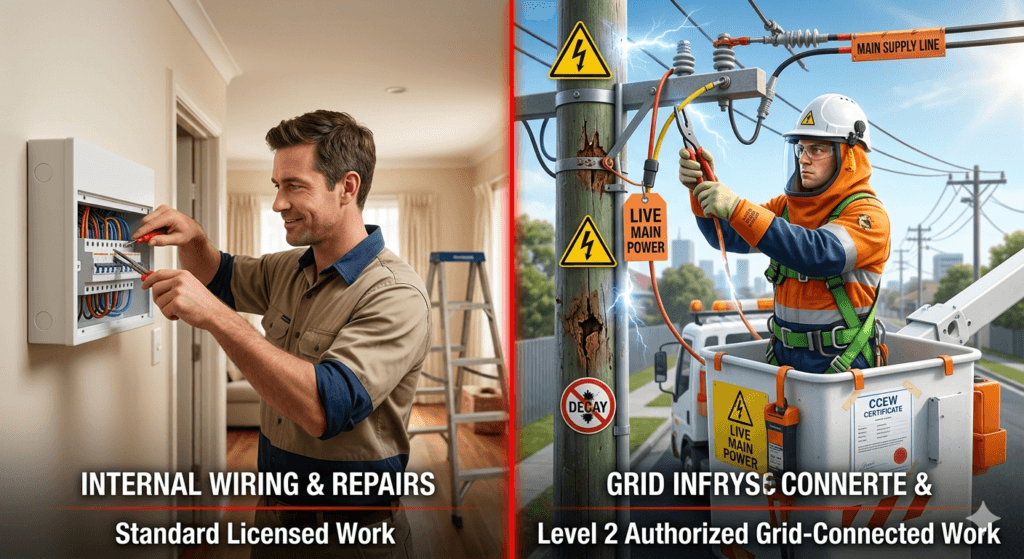
- From the switchboard inward: A standard electrician’s domain.
- From the street network up to the meter: The Level 2 electrician’s domain.
Level 2 electricians act as the vital bridge between the public energy grid and private infrastructure. They are the gatekeepers who ensure power flows safely into your home and that your connection doesn’t compromise the stability of the broader city grid.
What Does a Level 2 Electrician Do?
Because they operate at the intersection of public grids and private homes, a Level 2 ASP handles a highly specific set of high-voltage tasks.
Power Connection and Disconnection Services
Whether you are building a modern duplex or knocking down an old fibro home, you need to manage the power supply. A Level 2 electrician physically connects new builds to the grid, ensuring temporary builder’s power is active so construction can proceed. Conversely, if you are demolishing a site, they safely perform permanent disconnections so excavators don’t hit live wires.
Meter Installation and Upgrades
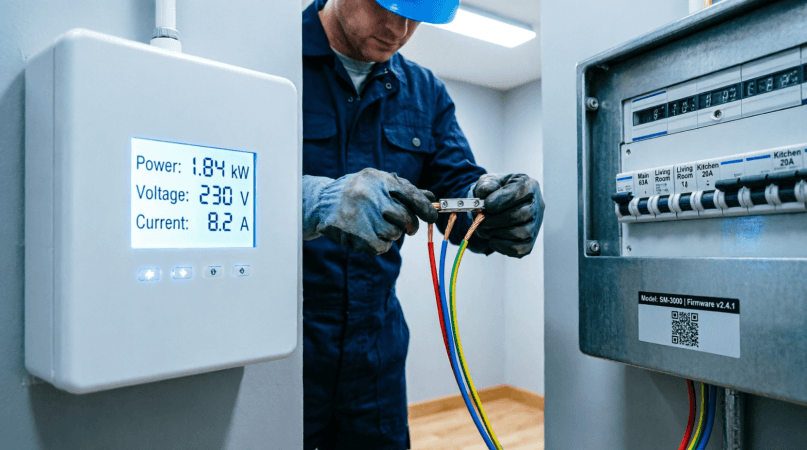
With the ongoing push toward energy efficiency in 2026, many homeowners are transitioning to solar power, adding EV chargers, or moving to time-of-use tariffs. This requires advanced smart meters. Level 2 electricians handle:
- Installing new smart meters.
- Upgrading 1-phase meters to 3-phase meters (essential for modern, high-demand homes with ducted air conditioning and electric vehicles).
- Removing outdated, spinning-disk mechanical meters.
Overhead and Underground Service Line Work
The cables connecting your house to the street are exposed to the elements. High winds, falling gum tree branches, or simple age can damage them. A Level 2 ASP installs, repairs, and replaces these service lines. They can also perform “undergrounding,” which involves taking ugly overhead wires and burying them safely in a trench for a cleaner property aesthetic.
Defect Notice Repairs Issued by Energy Providers
Network distributors routinely inspect properties. If they spot fraying cables, a rusting private power pole, or an outdated connection point, they will issue a Defect Notice. This is essentially a ticking clock. If you do not hire a Level 2 ASP to fix the issue within the specified timeframe (usually 21 days), the distributor will cut off your power. A Level 2 electrician resolves the hazard and submits the clearance paperwork directly to the grid operator.
Private Power Pole Inspection and Repairs
If you live on a larger block or in a leafy, established suburb, you might have a private power pole (typically timber or steel) on your land. Legally, the maintenance of this pole is your responsibility, not the council’s. Level 2 ASPs inspect these for termite damage, wood rot, or rust, and replace them when they become structural hazards.
Consumer Mains Replacement
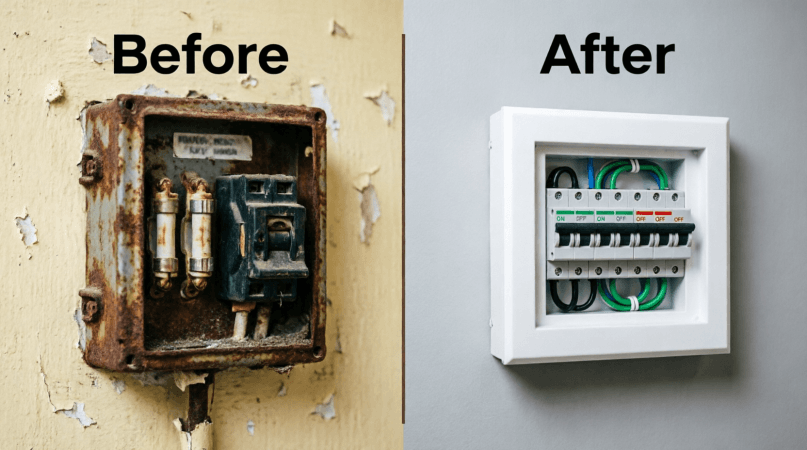
Consumer mains are the thick, heavy-duty cables routing power from the connection point into your meter box. Many homes built before the 1990s still use outdated cables that simply cannot handle the electrical load of modern appliances. When these cables deteriorate or when you need a 3-phase power upgrade a Level 2 electrician must pull new, high-capacity cables to ensure your home is safe from electrical fires.
Emergency Electrical Repairs and Power Restoration
When a severe storm hits Sydney and rips the power line right off the fascia of your roof, a standard emergency electrician cannot fix it. You need a Level 2 ASP emergency response unit to safely detach the live wire, repair the structural attachment, and restore your power.
Is a Level 2 Electrician Licensed?
Yes, and the barrier to entry is intentionally steep to ensure public safety.
Electrical Licensing Requirements for Level 2 Electricians
Becoming a Level 2 ASP is not a weekend course. A tradesperson must first be a fully qualified, licensed standard electrician (holding a NSW Fair Trading Electrical Contractor or Supervisor certificate). From there, they must complete rigorous, specialized high-voltage training modules focused on network safety, live-wire environments, and grid infrastructure.
Level 2 Accreditation and Authorization
Passing the training is only step one. The electrician must then apply for formal accreditation from the local network operator (e.g., Ausgrid). Furthermore, an ASP accredited with Endeavour Energy in Western Sydney cannot legally work on a property in the Ausgrid network (Eastern Suburbs/North Shore) unless they hold dual authorizations.
Whenever a Level 2 electrician finishes a job, they are legally required to issue a Certificate of Compliance for Electrical Work (CCEW) and lodge it with the distributor to prove the work is up to code.
Why Choose a Level 2 Electrician?
The reality is, for supply-side electrical work, you don’t have a choice it is a strict legal requirement.
Hiring a “mate” or an unaccredited standard electrician to replace your consumer mains or tamper with your meter is a recipe for disaster. Not only is it illegal and incredibly dangerous, but if a fire breaks out due to faulty supply-side work done by an unaccredited person, your home insurance will be completely voided.
Beyond the law, a reputable Level 2 ASP brings immense project management value. They understand the dense bureaucracy of dealing with Ausgrid or Endeavour Energy. They know how to submit the right paperwork, fast-track approvals, and seamlessly coordinate the timeline so your home isn’t left without power for days.
Level 2 Electrician Costs in Sydney
Budgeting for electrical work can be tricky, as every property is different. Factors like property access, the distance from the street to the house, and the age of your infrastructure play a huge role. Based on the 2026 Sydney market, here are the estimated costs for common Level 2 services:
- Standard Level 2 Hourly Rate: $150 – $220 per hour
- Consumer Mains Upgrade (Single to 3-Phase): $1,200 – $3,500 (Heavily dependent on cable length and if trenching is required)
- New Residential Grid Connection: $1,000 – $3,500+
- Private Power Pole Replacement (Steel/Timber): $1,800 – $4,500+
- Defect Notice Rectification: $600 – $2,500 (Depends entirely on the severity of the defect)
- Emergency / After-Hours Callout Fee: $250 – $400 (Plus parts and ongoing labor)
Note: Always ask for an itemized, written quote before any work begins to avoid hidden surprises.
How to choose a licensed Level 2 electrician?
Selecting the right professional requires more than just checking a star rating on a review platform. You need to verify their status within the government-regulated scheme. When interviewing potential providers, you must look for specific credentials that prove their authorization to handle contestable work.
The Compliance Guarantee: The CCEW
The true mark of a professional is their commitment to documentation. Every job performed on the grid must be backed by a Certificate of Compliance for Electrical Work (CCEW). This document is not just a receipt. It is your permanent record that the installation or repair meets all current Electrical Safety Regulations. If you ever decide to sell your home, your solicitor will likely request this document to prove the electrical system is up to code. Furthermore, if you ever experience a fire or electrical fault, your insurance provider will check for this compliance documentation to verify the work was performed by a qualified professional. A reputable service provider will always submit this paperwork to the energy distributor on your behalf.
Checking Distributor Authorization
Accreditation is often tied to specific network zones. A professional might be authorized to work in one area but not another. You must ask them specifically if they are registered to work with your provider. For example, a provider authorized for one network might not have the clearance for another. Always ask for their specific authorization status for your regional distributor to ensure the work will be legally recognized and accepted.
Level 2 vs Standard Electrician: Key Differences
To make it incredibly simple, here is a breakdown of who does what:
| Feature | Standard Electrician | Level 2 ASP |
| Everyday Analogy | The indoor plumber | The city water-main engineer |
| Licensing | NSW Fair Trading License | NSW License + Distributor Accreditation |
| Where They Work | Inside the property boundary (from switchboard inward) | Outside/Edge of property (street network to meter) |
| Common Tasks | Ceiling fans, power points, indoor lighting, appliance wiring | Grid connections, smart meters, private poles, consumer mains |
| Live Network Access | Strictly prohibited | Authorized and trained |
| Required Paperwork | CCEW (for standard electrical work) | CCEW + Direct Network Distributor Notifications |
How do I know if an electrician is Level 2 qualified?
It is easy to get lost in the terminology. Many tradespeople hold standard electrical licenses, but that license does not grant them the authority to work on the “live” side of your property connection.
Verifying the License ID
How to verify if an electrician is Level 2 qualified:
- Understand the distinction: Remember that a standard electrical license does not authorize work on the “live” side of your property connection. Ensure you are specifically looking for an electrician with Level 2 authorization.
- Request their accreditation number: Every qualified Level 2 professional must hold a valid accreditation number. Always ask for this ID before any work begins.
- Perform independent verification: Do not just take their word for it. Use their accreditation ID to verify their status through your state government’s official website or your local energy distributor’s portal.
- Assess their transparency: A legitimate expert will be happy to provide their license details upfront because they value transparency and trust.
- Watch for red flags: If an electrician is hesitant to share their license information or tries to convince you that it is “not necessary” for the job, treat this as a significant warning sign and look for another provider.
At Top Electricians, we pride ourselves on full transparency and regulatory compliance, ensuring every job we perform meets the highest safety standards. We are fully licensed and authorized to handle your electrical infrastructure and grid-connection needs:
Are Level 2 electricians insured?
Yes, they must be. However, standard public liability insurance is often insufficient for the high-risk nature of this trade.
Why Grid-Work Coverage Matters
General electricians carry insurance for work performed on internal wiring and appliances. Work performed on the grid involves high-voltage service mains and structural points of attachment. This environment is inherently more dangerous. A true specialist carries specialized public liability insurance that specifically covers grid-work and infrastructure-connected tasks. When you hire a certified professional, you are paying for their liability insurance and the legal certainty that your home’s power supply will not pose a risk to you or the public. You should never be afraid to ask a provider to show you their certificate of currency for their insurance policy. It is a standard request in the industry, and any qualified expert will have it ready for you to inspect.
Which one do you need? If your electrical issue is located within your home’s walls, a Normal Electrician is your go-to. However, if the problem involves your meter box, a power pole, or a “Defect Notice” from the energy provider, you must contact a Level 2 Specialist.
Let’s get started!
How much does a Level 2 electrician cost?
Pricing for grid-related electrical work varies significantly based on the complexity of the task and the requirements mandated by your local network distributor. Because this work involves specialized equipment and adherence to strict safety standards, the costs are higher than standard internal maintenance.
| Service Type | Estimated Scope | Typical Pricing Drivers |
| Simple Connection | Basic meter or fuse work | Accessibility and distributor fees |
| Defect Notice Rectification | Repairing service lines or brackets | Severity of defect and hardware costs |
| 3-Phase Upgrade | Complete supply line replacement | Distance from grid and load requirements |
Variables Influencing Your Quote
When you request a quote, you will notice that prices fluctuate based on three main factors. First, the type of connection matters. An overhead service line is often easier to access than an underground cable, which may require excavation or trenching. Second, the urgency of the job plays a role. If you require emergency after-hours attendance, the cost will reflect the need for immediate deployment of specialized crews. Third, every local network provider has its own administrative fees for processing the required compliance paperwork. At Top Electricians, we provide transparent quotes that break down labor, materials, and necessary regulatory fees so you know exactly what you are paying for before the work begins. If you need assistance with your grid connection, our team is ready to help. View our full range of Level 2 Electrical Services
or Contact Us for an immediate quote.
Is a Level 2 electrician more expensive than a normal electrician?
It is common for homeowners to compare hourly rates, but this is a false comparison because the two roles have different legal boundaries. A standard electrician cannot legally perform work on the street-side infrastructure or meter box. If you hire a standard electrician for work that requires ASP authorization, the work will be illegal, and you will likely fail to get it certified.
When you hire a Level 2 specialist, you are paying for their legal authority, specialized liability insurance, and the administrative expertise required to process your compliance documentation. The extra cost is an investment in your property safety and legal compliance. You are effectively paying to ensure that your power supply remains stable and insurable.
Same-day / 24/7 Level 2 electrician service
Electrical emergencies rarely happen during convenient business hours. When your power is out or you face a safety risk related to the grid, you need someone who can mobilize quickly.
Scenarios Requiring Immediate Attendance
Not every electrical issue is an emergency, but some situations demand immediate action. You should seek 24/7 assistance if you experience any of the following:
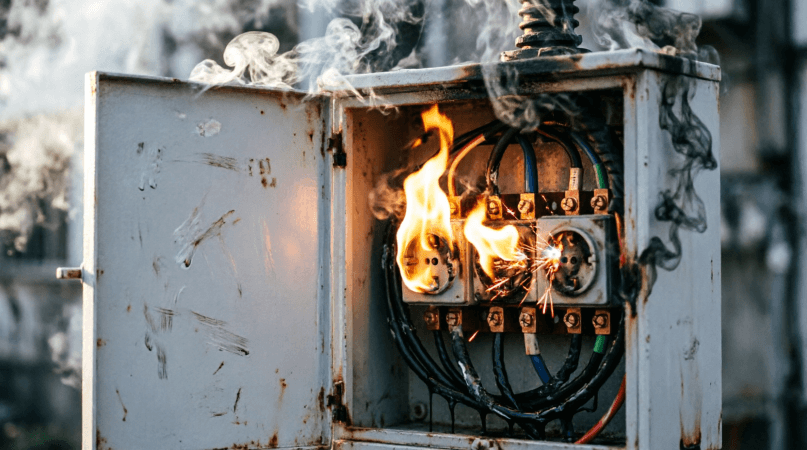
- Arcing or Burning Smells: If you hear buzzing or smell burning plastic near your meter box or service mains, call for help immediately.
- Storm Damage: If high winds or falling branches have torn your service lines from the roof or damaged your private power pole, this is a dangerous situation that must be addressed before the area is re-energized.
- Forced Disconnection: If the energy distributor has disconnected your property due to a severe safety defect, you need a specialist to rectify the issue and submit an emergency request to restore your power.
Final Words
A Level 2 electrician acts as the critical bridge between your home and the public power grid. Whether you are addressing a mandatory defect notice, upgrading your power supply for modern living, or rectifying a dangerous point of attachment, you are not just hiring a tradesperson to fix a wire. You are hiring a licensed professional to ensure your property remains compliant, insured, and safe for years to come. Do not wait for a second notice or an emergency power outage to begin your research. If you suspect your infrastructure is aging or if you have received a letter from your network provider, take action immediately to consult a certified specialist. Securing the right expert now prevents long-term headaches and ensures that your home stays energized according to strict Australian regulatory standards. If you need assistance with your grid connection, our team is ready to help.
Frequently Asked Questions
1. Do I need a Level 2 electrician for solar panel installation?
While solar panels are often installed by specialized technicians, a Level 2 expert is frequently required to perform the grid connection, meter reconfiguration, and any necessary switchboard upgrades to handle the increased power flow into the network.
2. Who is responsible for paying to fix a rotting power pole on my property?
In most cases, if the power pole is located within your property boundary and serves only your home, it is considered private infrastructure. This means the maintenance and repair costs, including the expense of engaging a Level 2 professional, are the sole responsibility of the property owner.
3. What happens if I ignore a defect notice from my energy provider?
Ignoring a defect notice is a high-risk decision. If the defect is not rectified within the timeframe specified by your energy distributor, they have the legal right to disconnect your property from the electricity grid for safety reasons until the work is properly certified.
4. Can a standard electrician upgrade my main switchboard?
A standard licensed electrician can perform internal work on the switchboard components, but they cannot legally touch the main service fuses or the supply cables that connect to the street network. If the upgrade requires work on these grid-connected points, a Level 2 specialist must be involved.
5. What is a 3-phase power upgrade?
A 3-phase upgrade involves changing your property’s power supply from a standard single-phase connection to a 3-phase system. This is typically required when your Electrical Load increases significantly, such as when installing large HVAC systems, EV chargers, or heavy-duty commercial equipment.