
You are researching pricing charts online to estimate your upcoming home improvement budget, only to watch the initial figures jump the moment a technician steps inside your property. It is a common frustration for property owners across the Balmain Peninsula. The issue is not necessarily the trade rates themselves. The real issue is that generic internet estimates completely fail to factor in the architectural, regulatory, and geographical realities of the inner west.
Calculating an accurate electrician balmain cost is near impossible using standard online quoting engines. They operate under the assumption that every home has clear street access, modern drywall, and a compliant, open electrical panel. When an assessment takes place inside a historic coastal suburb, those assumptions disappear. If you base your budget solely on flat metropolitan averages, you are setting yourself up for unexpected invoice adjustments. To get a reliable estimate, you have to look at the loaded operational costs that true local specialists build into their service delivery.
Electrician Balmain Cost Factors: Standard Electrical Fees in Sydney’s Inner West
To evaluate any quote accurately, you must first understand the baseline numbers across the broader Sydney market. Most reputable firms, including teams like Top Electricians, structure their standard residential billing around a flat service call-out fee paired with an hourly rate or a fixed price-per-point model.
In the Sydney metropolitan area, a standard licensed electrician charges an average hourly rate between $90 and $130 plus GST for regular residential service. A formal service call-out fee typically ranges from $80 to $150, which covers vehicle travel, initial diagnostics, and the first 15 to 30 minutes of on-site assessment.
The table below outlines the consensus baseline costs across the region before adding property-specific complications.
| Service Category | Standard Sydney Cost Range (Excl. GST) | Billing Structure |
| Standard Service Call-Out Fee | $80 – $150 | Flat fee per site visit |
| Standard Labor Rate | $90 – $130 | Per hour after initial diagnostic block |
| After-Hours / Emergency Call-Out | $200 – $350 | Flat fee for nights, weekends, and holidays |
| LED Downlight Installation | $70 – $130 | Price per point (excluding fixture costs) |
| Standard Double PowerPoint | $80 – $160 | Price per point including standard plate |
| Ceiling Fan Installation | $180 – $320 | Per unit on a standard gypsum ceiling |
The Hidden Balmain Premium: Non-Electrical Project Cost Drivers
When you hire a professional to service a home in this specific pocket of the inner west, you are not just paying for copper wiring and safety switches. You are paying for the logistics of navigating a geographic tongue of land with severe infrastructure limitations. This is the missing link that generic aggregate pricing sites ignore, yet it directly impacts the final invoice.
- The Parking Access Surcharge: The narrow, single-lane configurations of residential streets branching off Darling Street create a severe logistical deficit. Trade vehicles loaded with heavy diagnostic gear, ladders, and commercial inventory cannot easily park near the job site. A technician frequently spends 20 to 30 minutes simply finding a legal parking spot, followed by multiple equipment carry walks to the property. True local specialists factor this transit and parking fine risk into a slightly higher baseline call-out fee rather than surprising you with hidden line-item charges at the end of the day.
- The Inner West Council Conservation Rules: A vast footprint of the local area sits securely within a strict heritage conservation area. These regulations do not just apply to major structural additions; they extend to visible external trade work. If an upgrade requires a new external meter box or a major structural penetration, the work must comply with local preservation visual aesthetics.
- The Material Price Shock: Independent of geography, the trade sector has absorbed a 15% to 20% wholesale cost increase for premium electrical components. Specifically, combined residual current breakers with overcurrent protection, known natively as an RCBO, have risen in price. Because local properties require extensive circuit protection overhauls during minor modifications, these component increases aggregate quickly.
Architectural Risks in Heritage Terraces and Cottages
Historic Victorian terraces and sandstone cottages across the Balmain Peninsula completely change the scope of minor electrical repairs. Unlike modern timber-framed homes, these properties feature solid double-brick walls, lathed plaster ceilings, and suspended timber subfloors.
Feeding wires through double-brick requires specialized chase cutting, which takes three times longer than standard drywall work. Furthermore, heritage homes frequently contain legacy asbestos fuse backing panels. The moment asbestos is identified, drilling is legally halted until hazardous material containment or full abatement is executed.
Aesthetics are equally critical within a heritage conservation area. To protect property value, technicians avoid exposed plastic conduit. Instead, they perform aesthetic conduit matching, charging a premium to hide wires behind decorative timber skirtings or paint external conduit to blend with period brickwork and sandstone.
Level 2 ASP Demystified: Private Poles and Bedrock Undergrounding
The moment your residential project touches the external service lines connecting your home to the main utility grid, a standard electrical license is no longer legally sufficient. You require an accredited Level 2 ASP (Authorized Service Provider) technician. This tier of work exists in a completely separate financial bracket because it involves high-risk grid connections, consumer mains overhauls, and structural line management.
On the local peninsula, major external infrastructure work generally falls into two distinct categories, both carrying high capital costs that standard blogs fail to demystify.
- Overhead Service Mains & Private Poles: Many local streets still rely on overhead power delivery. Property owners are legally responsible for the maintenance of the point of attachment on their home and any private timber or steel poles inside their property boundary. If an inspection reveals a rotting private pole, a complete replacement typically ranges from $6,000 to $11,500, depending on heavy machinery access constraints.
- Underground Consumers Mains Upgrades: Transitioning your property to an underground power feed, known as a UGOH (Underground to Overhead) conversion, completely removes unsightly lines from your heritage facade. However, the geology of the area presents an immediate cost variable: shallow sandstone bedrock. Trenching a consumer mains line through solid rock requires heavy-duty pneumatic excavation equipment. Combined with mandatory Ausgrid network service provider isolation fees, a full underground conversion project regularly ranges between $12,000 and $22,000.
Modern Compliance: Mandatory Upgrades & Digital Registries
In New South Wales, partial patches on uncertified electrical systems are illegal. Under the strict framework of the AS/NZS 3000 wiring rules, any modification to an existing final subcircuit mandates that the entire circuit be brought up to modern safety thresholds.
Circuit Fault / Modification Request
Inspect Switchboard Framework
Modern Board
Proceed Work
Ceramic Fuse Box
Mandatory Upgrade
Install Active RCBOs
Smart Meter Lock
Lodge Digital CCEW
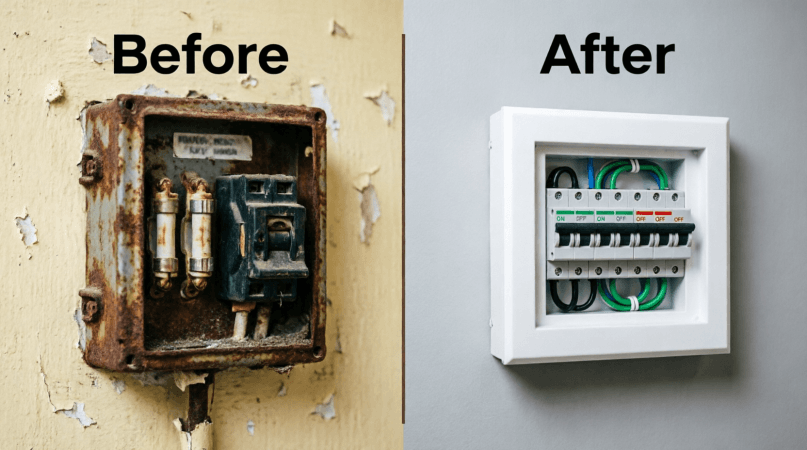
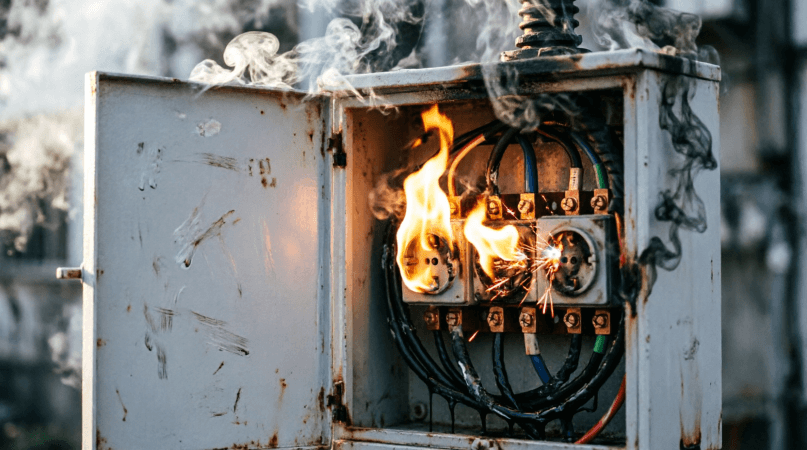
Adding a single powerpoint to a bedroom with an old ceramic fuse box triggers a mandatory terrace house switchboard upgrade. A technician cannot legally connect new work to a system lacking an active RCD safety switch.
State environmental mandates are also accelerating digital transitions. Retail energy providers are actively rolling out mandatory digital smart meters. Legacy switchboards with degraded isolation links or asbestos fuse backing face immediate smart meter compatibility rejections. Retailers will halt installations until a private contractor installs a compliant, enclosed panel.
Compliance administration has moved entirely away from paper. The New South Wales Government now centralizes all trade verifications.
Every electrical installation, modification, or switchboard upgrade requires a formal Certificate of Compliance Electrical Work (CCEW). This safety certificate must be generated and lodged digitally via the official Building Commission NSW eCert portal to ensure permanent consumer tracking.
Securing an Accurate Balmain Quote: Your Next Steps
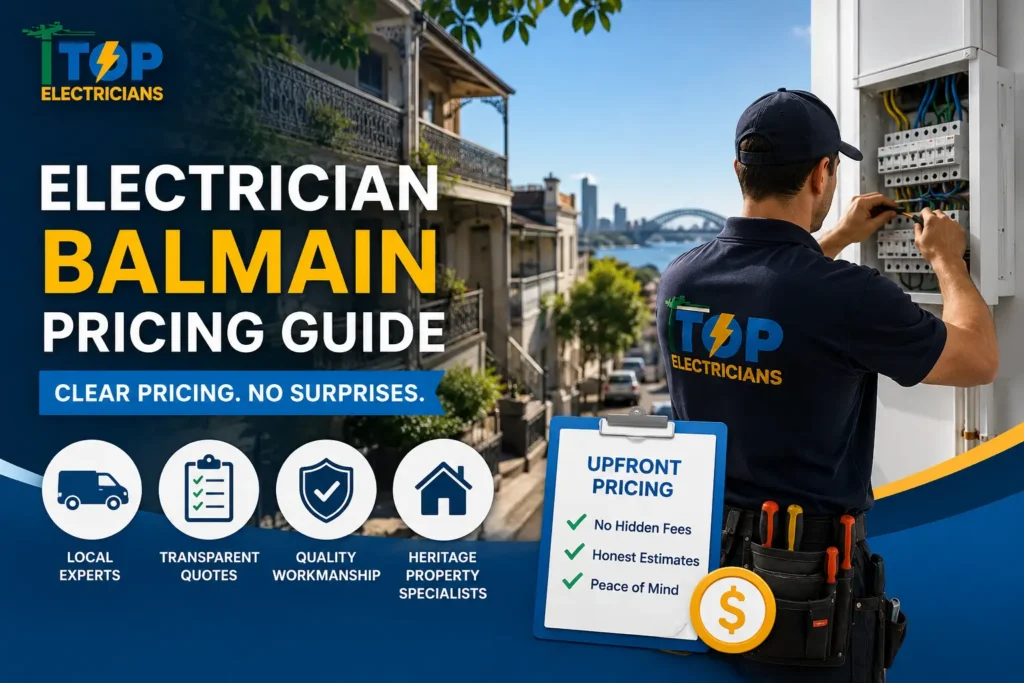
Property infrastructure on the peninsula varies by architectural era. Blind hourly estimates expose you to unexpected budget changes mid-project. Protect your investment with an itemized pricing strategy before work begins.
When consulting a premium local team, such as Top Electricians, enforce three protocols:
- Request a Fixed Price-Per-Point Model: Avoid open-ended hourly billing blocks. Secure a quote with a flat, transparent cost for each individual component or dedicated circuit.
- Mandate an In-Person Structural Load Audit: Refuse any binding quote delivered over the telephone. A technician must physically check your panel for asbestos backing, physical rail space, and cable capacity.
- Confirm Digital Registry Credentials: Ensure your contractor holds a valid license and commits to uploading your compliance paperwork to the state portal within seven days.
Technical Electrical FAQ
Why do local electricians charge a fixed call-out fee to visit a Balmain property?
The service call-out fee is a structured operational charge covering transit, fuel, and local logistics. Technicians face significant non-productive travel time due to dense traffic and parking deficits on narrow heritage streets. The fee ensures a licensed electrician arrives with a fully stocked inventory vehicle, covering the initial diagnostic period without rolling hourly surcharges.
What is the exact legal difference between a standard electrician and a Level 2 ASP contractor?
A standard electrician is restricted to downstream residential wiring, such as installing lights or powerpoints. An accredited Level 2 ASP technician holds specialized utility-grade qualifications. They are legally authorized to handle high-risk connection work linking a private dwelling directly to the main utility grid, including handling overhead mains replacement, live consumer cables, and underground conversions.
Why does replacing a single powerpoint in an older terrace house require a full switchboard upgrade?
The AS/NZS 3000 wiring rules mandate modern residual current protection on any modified circuit. Legacy ceramic fuse boxes lack the physical rail space to house modern RCBO safety switches. If a technician identifies an outdated panel, they cannot legally connect new components to a fire hazard, automatically triggering a mandatory panel overhaul.
How much does it cost to underground a private residential power line on the peninsula?
Moving overhead electrical lines underground ranges from $12,000 to $22,000. The cost depends on the distance from the utility pole to the home and the local geology. Trenching through shallow sandstone bedrock requires heavy pneumatic equipment and extended labor. The final price bracket includes traffic management permits and mandatory Ausgrid isolation fees.
How do I verify that my contractor has registered my project compliance with the NSW Government?
Your contractor must lodge a digital Certificate of Compliance Electrical Work (CCEW) through the government-managed portal within seven days of completing on-site testing. The system then automatically routes a verified PDF copy directly to your email address. Always confirm this digital filing to ensure your property insurance remains valid for structural claims.