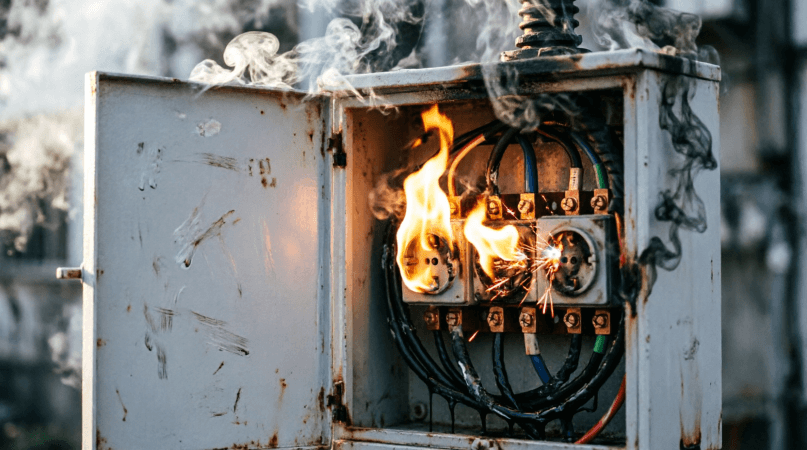

Does your safety switch trip every time the ducted air conditioner and a few kitchen appliances run together? If you’re adding an EV charger, installing high-capacity solar, or renovating, your existing power supply might simply be maxed out.
Most Sydney homes run on single-phase power, capped at around 230 volts and 63 to 80 amps. Push heavy loads through that setup and you get voltage drops, sluggish appliances, and random outages.
The fix is converting to 400-volt three-phase power, which roughly triples your property’s capacity so high-draw systems can run without tripping circuits. This guide, put together with pricing insight from Top Electricians, breaks down every cost involved so you can plan the upgrade with confidence, wherever you are across Sydney.
How Much Does Three Phase Power Installation Cost in Sydney?
A complete 3-phase power upgrade in Sydney typically costs $4,000 to $9,500. Standard residential conversions, where 3-phase already exists at the street, usually land around $5,500 to $7,500. Complex jobs involving trenching or network augmentation can reach $12,000 or more.
2026 Three Phase Power Costs by Scenario
Here’s how the price breaks down across the most common scenarios:
| Scenario | What’s Included | Typical Cost |
| Standard overhead conversion | Existing 3-phase at the pole, short service drop, switchboard rebuild, metering | $4,000–$6,500 |
| Standard underground conversion | Underground connection from street pit, new mains, new switchboard, metering | $6,500–$9,500 |
| Complex / long run upgrade | Trenching through concrete or paving, long boundary distance, private pole replacement | $9,500–$14,000+ |
| New build or secondary dwelling | Fresh 3-phase mains trenched from boundary pit to a dedicated meter box | $3,800–$7,500 |
What Determines Your Three Phase Upgrade Cost
No two Sydney properties have the same electrical setup, so your final quote comes down to four core variables.
- Overhead vs. underground supply – an overhead connection just needs the old two-wire drop swapped for a four-wire bundle, which is quick and cheap. Underground supply means pulling heavy-duty cable through your property’s conduit, and if that conduit is damaged or undersized, trenching adds real cost
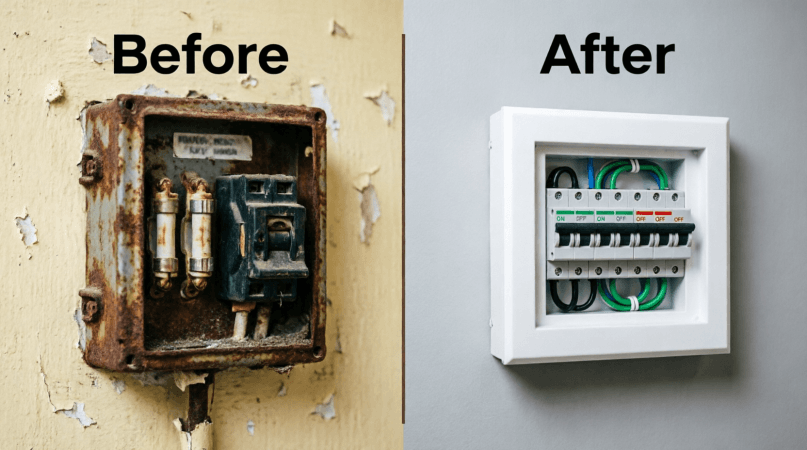
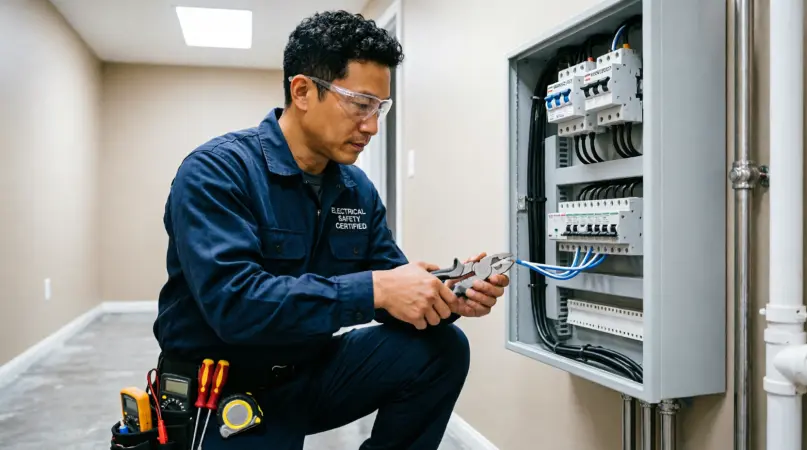
- Switchboard replacement – you can’t run three-phase through a single-phase board. The whole enclosure needs a three-phase isolation switch, surge protection, and multi-pole safety switches as part of a full switchboard upgrade, typically adding $1,800 to $3,500
- Consumer mains upgrade – the cable running from your meter box into your switchboard has to be upgraded to safely carry the extra current
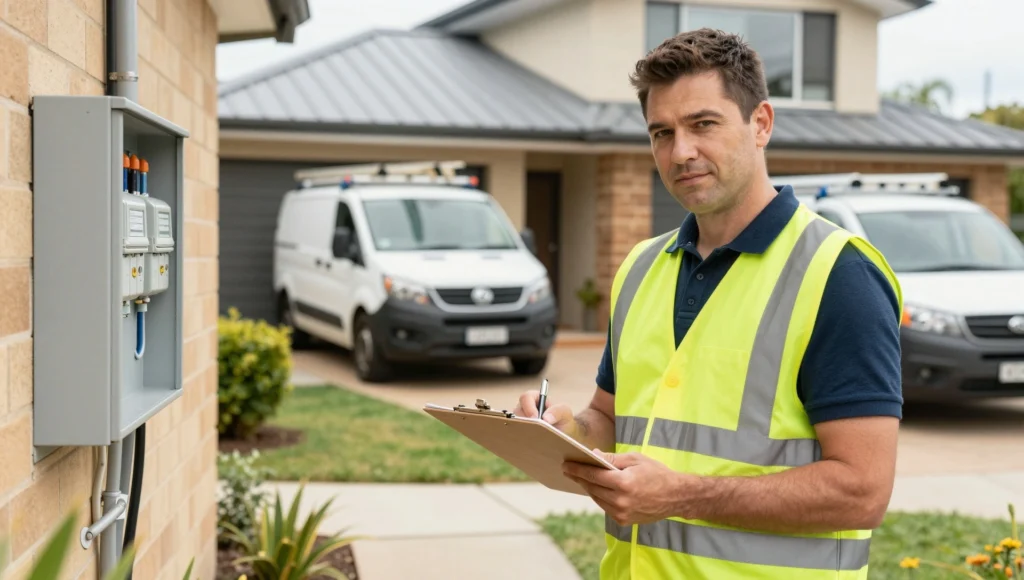
- Which network distributor you’re under – Ausgrid covers the City, Eastern Suburbs, North Shore, and Inner West, while Endeavour Energy covers Western Sydney and the Blue Mountains. Only an accredited Level 2 ASP, like the team at Top Electricians, can work on grid assets, and each distributor’s application and inspection fees add roughly $500 to $1,500
Red Flags to Watch for in Three Phase Quotes
A cheap-looking quote often just excludes something mandatory, and these three items are where the biggest gaps usually show up.
- Underground trenching ($1,500–$4,500+) – conduit has to sit at least 500mm deep under AS/NZS 3000 rules. Digging through soft soil is fast and cheap; cutting through concrete or pavers needs specialised equipment and restoration work afterward
- Service protection and metering ($400–$900) – modern 3-phase boards need an isolated Service Protection Device, and some retailers charge an admin fee to set up your new smart meter
- Private power pole replacement ($1,800–$4,200) – if your overhead line connects to a decayed or undersized pole inside your boundary, the network won’t connect a 3-phase line until it’s replaced
Roughly, a typical project splits out as: Level 2 ASP labour and grid work (~35%), switchboard hardware (~25%), consumer mains and conduit (~20%), retailer and network fees (~10%), and site prep and contingency (~10%).
Signs Your Property Needs a Three Phase Upgrade
A few clear symptoms point to a property that’s outgrown single-phase power, and it’s worth checking for these before assuming an upgrade is necessary.
- Appliances trip the main breaker together – if the induction cooktop plus ducted air con trips your switchboard, you’ve hit your single-phase limit
- EV charging is slow – single-phase chargers cap out at 7.4 kW, around 40km of range per hour. A 3-phase setup unlocks 11 to 22 kW
- Solar exports are capped – many Sydney networks limit single-phase solar exports to 5 kW. Three-phase lets you install a bigger array and export more per phase
The Three Phase Installation Process, Step by Step
Converting your connection takes coordination between your electrician, the network operator, and your energy retailer, and it typically follows five steps.
- Site assessment – an accredited electrician inspects your switchboard, measures the distance to the grid, and lodges a connection application with Ausgrid or Endeavour Energy
- Network approval – the distributor reviews street capacity and issues a Notice of Service Arrangement (NOSA)
- Switchboard and civil works – your electrician builds the new three-phase board and lays the new consumer mains conduit
- Level 2 ASP grid connection – a Level 2 ASP isolates power at the street, disconnects the old single-phase line, runs the new four-wire connection, and restores power
- Metering and sign-off – your retailer installs a multi-phase smart meter, then final testing produces your Certificate of Compliance for Electrical Work (CCEW)
Is a Three Phase Upgrade Worth the Investment?
Spending $4,000 to $9,500 on infrastructure you’ll never see might feel steep, but it’s one of the more effective ways to future-proof a property. It stops nuisance tripping, enables real EV fast-charging, unlocks your full solar potential, and holds up your property’s value as home energy demands keep growing.
If you’re renovating, adding heavy appliances, or just tired of a power supply that can’t keep up, Top Electricians can run a full site assessment and deliver a safe, compliant, cost-effective upgrade, with coverage right across Sydney, from the Eastern Suburbs to Western Sydney and everywhere in between.
Frequently Asked Questions
How long does the power outage last during the upgrade?
Usually 4 to 8 hours on connection day. Your Level 2 ASP prepares the switchboard and conduit beforehand so disconnection, line replacement, and restoration happen within one workday.
Can I keep my existing single-phase smart meter?
No. A 3-phase supply needs a multi-phase digital meter that can record consumption across all three lines, which your retailer schedules once the electrical work is done.
Will this increase my electricity bills?
Not directly. You’re billed on kWh consumption, not the number of phases. Bills may rise only if the extra capacity means you actually run more or bigger appliances.
What’s the difference between a standard electrician and a Level 2 ASP for this job?
A standard electrician handles interior wiring and power points. Only a Level 2 ASP is legally authorised to disconnect power at the street and connect your home to the network.
Does an EV charge faster on 3-phase?
Yes, if the car supports it. A single-phase charger caps at 7.4 kW, while a 3-phase setup can deliver up to 11 kW, cutting charging time by roughly a third to a half.