

Getting power connected or restored sounds simple until you are actually in the middle of it. A builder waiting on a new connection before trades can start. A homeowner with no power after storm damage. A landlord who needs a disconnected property reconnected before a new tenant moves in.
These situations share one thing in common: the wrong electrician or a missed step adds days to the timeline and unnecessary cost to the job.
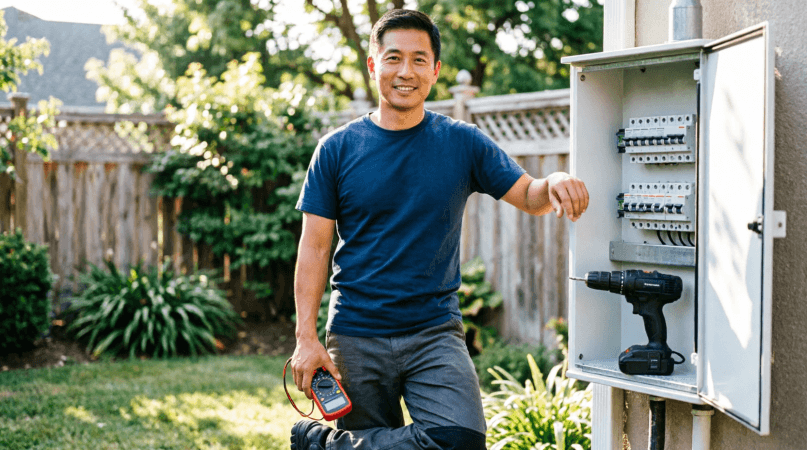
Electricity connection and reconnection in Sydney involves the network supply side, on-site equipment, compliance requirements, and in most cases a Level 2 Accredited Service Provider. At Top Electricians, our team includes licensed Level 2 ASPs accredited by Ausgrid, Endeavour Energy, and Essential Energy, covering residential and commercial properties across Sydney.
Do You Need a New Connection or a Reconnection?
Understanding which service applies to your situation saves time before you even pick up the phone.
New Electricity Connection
A new connection applies to any property that has never been connected to the grid, including new builds, subdivisions, and new tenancies on previously unserviced land. This is not simply a matter of contacting your energy retailer. A new connection typically involves establishing the connection point, installing or verifying the meter box and switchboard, arranging the correct supply line type, and coordinating with the network distributor.
For builders, delays at this stage can hold up the entire project. Getting the connection process started early, before the build is complete, prevents unnecessary gaps in the schedule.
Electricity Reconnection After Disconnection
A reconnection is needed when power has previously been connected to a property and needs to be safely restored. This comes up in a number of common situations: after storm damage, following a defect notice from the network, after a planned disconnection for renovation work, or when a property has been vacant and the supply was terminated.
Not every reconnection is straightforward. In some cases, a meter access booking is all that is needed. In others, the supply side must be inspected and any identified faults repaired before power can be legally restored. This second scenario is where reconnection becomes more involved and where having a Level 2 electrician from the start avoids delays.
Temporary vs Permanent Disconnection
Temporary disconnections are arranged when live lines need to be isolated for roof work, guttering, exterior renovations, painting near service lines, or any other work where proximity to the overhead supply creates a safety risk. The supply is isolated for the duration of the work and then reconnected once the area is clear.
Permanent disconnections apply to demolitions, condemned structures, or properties being removed from the network entirely. These require formal notification to the network distributor and cannot be reversed without going through the new connection process again.
Who Is Allowed to Disconnect and Reconnect Power in Sydney?
Why a Level 2 ASP Is Required
Work that touches the network supply side of a property falls outside the scope of a standard electrical licence. This includes the connection point, overhead service lines, underground supply cables, the point of attachment, and the consumer mains.
A Level 2 Accredited Service Provider holds additional accreditation from the network distributor, authorising them to work on this part of the electrical system. Without this accreditation, an electrician cannot legally perform supply-side work, regardless of how experienced they are.
DIY attempts on supply-side connections are not just illegal. They carry serious risk of electrocution, fire, and significant liability. The network supply is live at the street even when your main switch is off.
What a Level 2 Electrician Actually Does
Level 2 ASPs handle the supply-side scope that standard electricians cannot touch, including:
- Connecting and disconnecting power at the service entrance
- Working on the point of attachment where the service line meets your property
- Installing, relocating, or repairing overhead service lines
- Trenching and connecting underground supply cables
- Installing and certifying private power poles
- Coordinating with the network distributor for metering and connection approvals
For jobs that involve both internal electrical work and supply-side work, having a team that covers both avoids the cost and scheduling complexity of bringing in two separate contractors.
Common Reasons for Power Disconnection in Sydney
Renovations, Roof Work, Guttering, and Exterior Repairs
Roof-related trades are one of the most frequent triggers for planned power disconnections across Sydney. Gutter replacements, fascia repairs, roof restorations, exterior painting, and scaffold erections near service lines all require the supply to be isolated before work begins.
The overhead service line running from the street to your property carries live voltage at all times. Safe working distances must be maintained, and in many cases the only way to achieve that is to have the supply temporarily disconnected by a Level 2 ASP before trades start work.
Timing matters here. Builders and trades work on tight schedules, and a disconnection that is not booked in advance can hold up an entire day’s work. Planning the disconnection and reconnection as part of the job schedule, not as an afterthought, keeps the project moving.
Storm Damage, Faults, and Emergency Situations
Severe weather across Sydney regularly damages service lines, private poles, and points of attachment. After a storm, it is common to find lines pulled loose from the point of attachment, poles leaning or cracked, or visible damage to the overhead service cable.
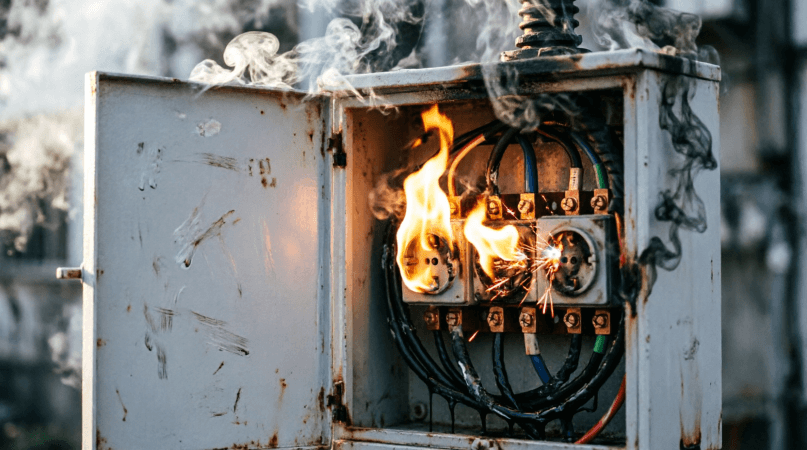
If you see any of the following after a storm or electrical fault, do not approach the affected area:
- Sparking or arcing at the service line or point of attachment
- A line that has come down or is visibly sagging
- Burning smell near the meter box or external wiring
- Scorch marks on the point of attachment or meter box
Call an emergency electrician and, if there is immediate danger, contact Ausgrid’s fault line or your network distributor directly. Power should only be restored once a Level 2 ASP has inspected and cleared the supply-side equipment.
Defect Notices
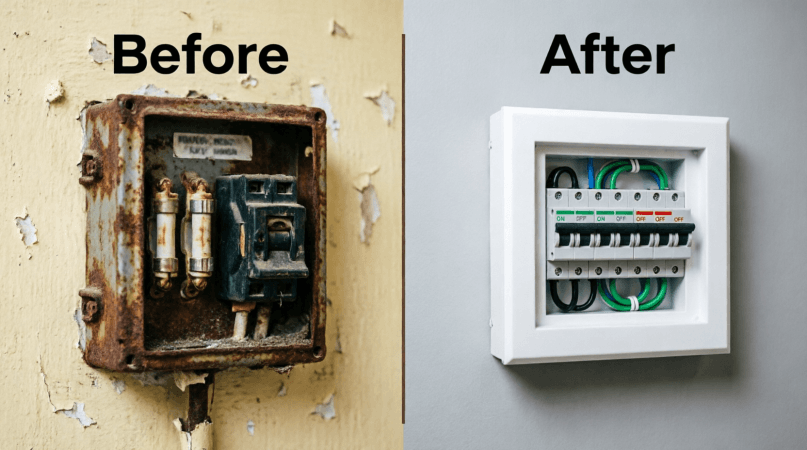
Network distributors issue defect notices when inspection of the supply-side equipment reveals non-compliant or unsafe conditions. Common defects include deteriorated service line insulation, a point of attachment that no longer meets clearance requirements, a private pole that has degraded beyond acceptable limits, or consumer mains that need replacing.
Once a defect notice is issued, the property owner is responsible for arranging the repairs within the specified timeframe. Ignoring a defect notice can result in the network disconnecting supply until the work is completed. A Level 2 electrician handles defect rectification and coordinates with the distributor to clear the notice and restore supply.
Demolition and Permanent Shutdown
Before any demolition work begins, the electricity supply must be permanently disconnected at the network level. This prevents accidental energising of the site during demolition and is a requirement under SafeWork NSW guidelines for demolition site safety. The network distributor must be formally notified, and a Level 2 ASP carries out the disconnection work.
Step-by-Step: How Electricity Connection and Reconnection Works in Sydney
Before the Job
Having the right information ready before contacting an electrician speeds up the booking and avoids delays on the day. Useful details include:
- Full property address and site access details
- Meter box location and whether it is accessible
- Whether the supply is overhead or underground
- The reason for the disconnection or reconnection
- Any existing defect notices or compliance documents
Taking a clear photo of the meter box, switchboard, and point of attachment before the job is also helpful, particularly for properties with older or non-standard setups.
On the Day
For planned disconnections, the Level 2 ASP coordinates with the network distributor as required and carries out the isolation before other trades begin work. For reconnections, the electrician inspects the supply-side equipment, confirms everything is safe and compliant, and then restores the connection.
If faults or defects are identified during the reconnection inspection, repairs must be completed before power can be restored. Attempting to reconnect to a system with unresolved faults is not something a licensed electrician will do, and for good reason.
After the Job
On completion of any prescribed electrical work, a Certificate of Compliance for Electrical Work (CCEW) is issued. This document confirms the work meets AS/NZS 3000:2018 and is relevant for insurance purposes, future property sales, and network distributor records. Keep it with your property documents.
Electricity Reconnection: How Power Is Restored Safely
What Is Checked Before Reconnecting?
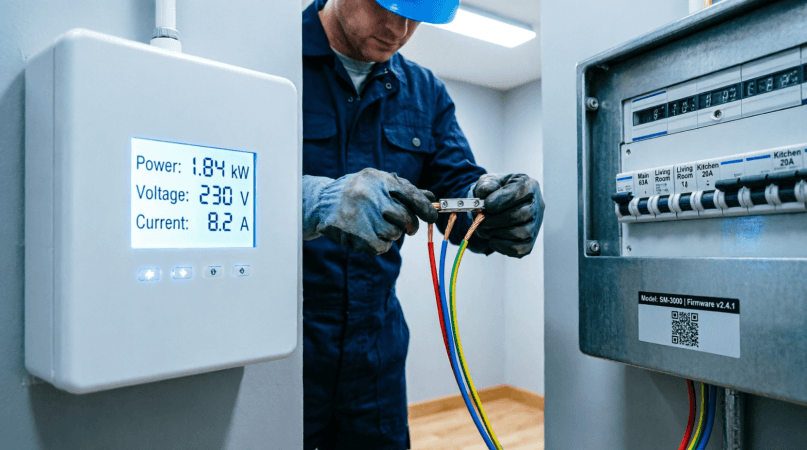
Reconnection is not just about getting the power back on as fast as possible. Before a Level 2 ASP restores supply, they check for faults in the service line, damage to the point of attachment, condition of the consumer mains, and whether the on-site switchboard and metering equipment is in an acceptable state.
If the fault is inside the property, internal repairs must be completed by a licensed electrician first. If the issue is on the supply side, the Level 2 ASP handles it directly. In some cases, both are required before reconnection can proceed.
Treating connection and reconnection as a complete system rather than a single switch-on step is what prevents repeat faults and avoids the cost of a second callout shortly after.
When a CCEW Is Required
Not every reconnection requires a new CCEW, but any prescribed electrical work carried out as part of the reconnection process does. This includes repairs to consumer mains, replacement of the point of attachment, switchboard work, or any other work that modifies the electrical installation. Your electrician will advise whether a CCEW applies to your specific job and arrange it as part of the scope.
Access and On-Site Requirements
A surprisingly high number of reconnection delays come down to access. If the meter box is locked, the area is blocked by a vehicle, or the property is not occupied on the day, the job cannot proceed. Confirming access arrangements in advance and making sure the meter area is clear and reachable prevents an unnecessary delay.
How Long Does It Take to Reconnect Electricity in Sydney?
There is no fixed answer because the timeframe depends on several variables: whether repairs are needed, whether the network distributor needs to be involved, and what time of day the job is booked.
As a general guide:
- Planned reconnections with no defects and clear access: same day in most cases
- Reconnections requiring minor repairs before restoration: same day to next day
- Jobs involving network distributor coordination or significant defect rectification: one to several days depending on the scope and distributor scheduling
- Emergency reconnections after storm damage: prioritised, but timeframe depends on the extent of damage and network availability
What Causes Delays
The most common avoidable delays include blocked meter access, incorrect service bookings, unresolved defects that were not identified before the job was booked, and damage to private power poles that requires additional scope. Booking a standard electrician for work that requires a Level 2 ASP is also a common source of delay.
Tips for Faster Reconnection
- Make sure the meter area is accessible and clear before the electrician arrives
- Provide photos of the meter box and point of attachment when booking if the setup is unusual
- Check whether a CCEW or other compliance document is needed as part of the process
- For overhead connections, check the visible condition of the point of attachment in advance and flag any visible damage when booking
Temporary Power Solutions for Sydney Building and Renovation Sites
When Temporary Power Is Needed
A temporary power supply is the practical solution when a build or renovation site needs electricity before the permanent connection is established, or when the permanent supply must be disconnected for an extended period. It supports power tools, site lighting, security systems, and basic amenities without stopping work.
Builder’s Temporary Pole and Site Connection
Temporary setups for construction sites typically include a builder’s pole with metering and a site board installed to network distributor specifications. This is a compliant, properly metered installation, not a workaround. It allows the site to operate normally while permanent supply arrangements are progressed in parallel.
Switching to Permanent Supply
When the build is complete and the permanent connection is ready, the temporary supply is removed and the final connection is made. Planning this transition early in the project prevents gaps between the two. Sites that leave the switch to permanent supply until the last minute often end up with unexpected delays at handover.
Private Power Poles in Sydney: Risks and Responsibility
Private power poles are more common across Sydney than many property owners realise, particularly in older suburbs and on larger blocks where the street supply does not reach the property directly. Unlike network poles on public land, private poles are the responsibility of the property owner to maintain.
Signs Your Private Pole Has a Problem
If your property has a private power pole, check it periodically for:
- Leaning or movement at the base
- Rust, corrosion, or visible rot in timber poles
- Loose fittings, brackets, or hardware
- Damage or deterioration at the point of attachment
- Cracks in the pole or signs of pest damage in timber
If anything looks wrong, stay clear of the pole and call a Level 2 electrician. Do not attempt to inspect it closely or touch any part of the hardware.
Who Is Responsible for What?
The responsibility boundary between the property owner and the network distributor is a common source of confusion. As a general guide for NSW:
The property owner is responsible for the private pole itself, the service line running from the pole to the property, the point of attachment, and the consumer mains. The network distributor is responsible for the network pole on public land and the supply line up to the connection point.
Knowing where this boundary sits avoids time spent trying to get the network distributor to attend to work that is actually the owner’s responsibility and vice versa.
Common Private Pole Work
Most private pole jobs require a Level 2 ASP and include:
- Full pole replacement where the existing pole is beyond repair
- Repairs or replacement of the point of attachment
- Replacement of damaged or deteriorated service lines
- Adjustments to maintain required clearances from vegetation or structures
If a defect notice has been issued relating to your private pole, the rectification work must be completed before the network will restore or maintain supply. A Level 2 electrician handles the full scope including coordination with the distributor to clear the notice.
Underground vs Overhead Power Connections in Sydney
Sydney properties use both overhead and underground power supply depending on the suburb, the era of construction, and whether any conversion work has been done. Each has practical implications for maintenance, repairs, and planned work.
Overhead Power Connections
Overhead connections are the most common supply type in older Sydney suburbs. The service line runs from the network pole to the point of attachment on the building, and from there into the consumer mains and meter.
Key considerations for overhead connections:
- Any work near the service line, including roof work, guttering, painting, and scaffolding, requires a clearance check and in many cases a temporary disconnection
- The point of attachment is a common failure point as the hardware ages and the cable insulation deteriorates
- After storm events, overhead lines are more vulnerable to damage from falling branches and wind
Underground Power Connections
Underground connections use cabling run through conduit below ground level. They are less exposed to storm damage and do not require the same clearance considerations for work on the building exterior.
The trade-off is that repairs are more involved when they are needed. Locating and accessing underground cabling requires excavation, which adds cost and time compared to overhead repairs.
Which Option Is Better for Your Property?
There is no universal answer. Overhead is generally faster and cheaper to repair and maintain. Underground is better protected from weather events and visually less intrusive. The right choice depends on your property layout, the surrounding area, and what work you are planning. If you are considering converting from overhead to underground, a Level 2 ASP can assess the feasibility and give you an accurate cost before you commit.
Electrical Connection Costs in Sydney: What to Expect
Pricing for connection and reconnection work varies depending on the scope, whether Level 2 work is involved, and network distributor coordination requirements. As a general guide:
- Standard electrician rate: Around $80 to $100 per hour
- Level 2 ASP rate: Around $150 to $200 per hour
- Emergency call-out: from Around $200+
- Temporary builder’s supply installation: $800 to $2,000+, depending on site requirements
- Private pole replacement: $1,500 to $4,000+ depending on pole type and access
- Defect rectification (point of attachment, consumer mains): $500 to $2,000+ depending on scope
All pricing is provided in writing before work begins. If the scope changes during the job, you are informed before any additional work proceeds.
Let’s get started!
Australian Standards and Regulations That Apply
All electrical connection and reconnection work in NSW must comply with:
AS/NZS 3000:2018 is the Australian and New Zealand Wiring Rules covering all electrical installation work including consumer mains, switchboards, and internal wiring.
Ausgrid’s Service and Installation Rules set the technical requirements for connections within the Ausgrid network area, which covers a large portion of the Sydney metropolitan area.
NSW Fair Trading administers electrical contractor licensing in NSW. All electrical work must be performed by or under the supervision of a licensed electrical contractor.
SafeWork NSW sets requirements for electrical safety on construction sites, including temporary power installations and demolition disconnections.
Frequently Asked Questions About Electricity Connection and Reconnection in Sydney
Can a standard electrician reconnect my power in Sydney?
It depends on the reason the power is off. If the disconnection was supply-side, meaning the network connection itself was isolated, a Level 2 Accredited Service Provider is required to restore it. A standard electrician can carry out internal repairs that may be needed before reconnection, but cannot perform the supply-side restoration. Booking the wrong type of electrician is one of the most common causes of same-day delays on reconnection jobs.
How do I know if my property needs a Level 2 electrician?
If the job involves anything on the network side of your meter, including the consumer mains, point of attachment, service line, private power pole, or the connection point itself, you need a Level 2 ASP. If you are unsure, describe the situation when you call and a good electrician will tell you upfront what is required.
What happens if my property has a defect notice on the electrical supply?
A defect notice from your network distributor means non-compliant or unsafe equipment has been identified on the supply side of your property. You are required to have the defect rectified within the specified timeframe. If it is not addressed, the distributor can disconnect supply until the work is done. A Level 2 ASP carries out the rectification work and coordinates with the distributor to formally clear the notice.
How long does a temporary power connection last on a building site?
A temporary builder’s supply can remain in place for the duration of the construction or renovation project. Once the permanent connection is ready and certified, the temporary supply is removed. There is no fixed time limit, but the connection must remain compliant throughout and cannot be left in place indefinitely after the permanent supply is established.
Who is responsible for a private power pole on my property?
In NSW, the property owner is responsible for maintaining private power poles and the associated service lines on their land. This includes the pole structure, point of attachment, and consumer mains. The network distributor is responsible for network infrastructure on public land. If your private pole is damaged or non-compliant, the cost and responsibility for repairs falls to you as the owner.
Do I need a CCEW after a reconnection?
Not every reconnection requires a new Certificate of Compliance for Electrical Work. However, if prescribed electrical work is carried out as part of the reconnection process, such as replacing consumer mains, repairing the point of attachment, or upgrading the switchboard, a CCEW is required for that work. Your electrician will confirm whether a compliance certificate applies to your job before starting.
Conclusion: Get the Connection Right the First Time
Electricity connection and reconnection in Sydney involves more moving parts than most people expect. Network distributor requirements, Level 2 accreditation, compliance documentation, access logistics, and the condition of the supply-side equipment all affect how quickly and smoothly a job gets done.
Getting the right team from the start avoids the frustration of delays, second callouts, and jobs that stall because the wrong type of electrician was booked.
At Top Electricians, we handle the full scope: new connections, planned disconnections, emergency reconnections, defect rectification, temporary power for building sites, private pole repairs, and all supply-side work through our accredited Level 2 ASPs. We work across Sydney with clear pricing confirmed before any work begins and a compliance certificate issued on every job that requires one.
Contact us for a free quote or call our 24/7 emergency line if you need power restored today.