

An office fit-out represents a significant investment in your company’s future. You plan the layout, choose the furniture, and design the branding. Yet, many business owners overlook the electrical infrastructure that powers these spaces. Relying on a general contractor or a residential electrician for commercial projects introduces massive risks. You face potential project delays, insurance invalidity, and safety hazards that threaten your business continuity from day one. Choosing to hire a Licensed Commercial Electrician is the difference between a seamless move-in and a series of costly technical setbacks. This partnership ensures that every wire and switch meets strict professional standards.
The Hidden Risks in Office Electrical Infrastructure
When you upgrade an office space, you change how power flows through the building. Commercial environments operate under different demands than homes. A mistake in calculating the electrical load or circuit protection can cause frequent power trips, equipment damage, or even fire hazards. Many businesses attempt to save costs by bypassing professional commercial services. This leads to emergency repairs that cost three times the original installation price. Poor planning results in insufficient power points, tangled cabling, and an inability to support modern office hardware. These technical failures halt productivity instantly.
Why Residential Experience Falls Short in a Commercial Environment
Residential and commercial projects follow different rules. A residential electrician might excel at home wiring, but they lack the expertise for heavy-duty commercial demands. The scale of work differs significantly.
| Feature | Residential Electrician | Commercial Electrician |
| Power Systems | Single-phase only | Three-phase capability |
| Wiring Rules | AS/NZS 3000 (Basic) | AS/NZS 3000 (Advanced/Complex) |
| Data Infrastructure | Minimal requirements | High-capacity Cat6A/Fibre |
| Documentation | Standard safety checks | Certified CCEW/Digital Portal |
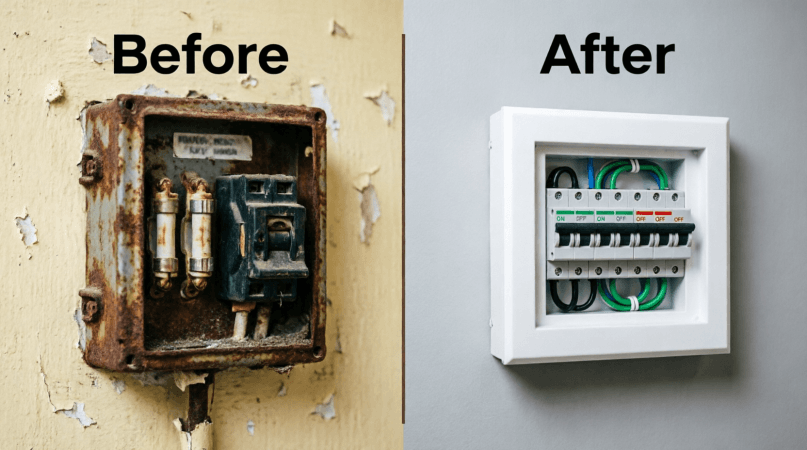
Commercial spaces require three-phase power to run air conditioning, server rooms, and heavy machinery without voltage drops. If your office design includes a server room or a high-density workstation setup, a residential specialist will likely lack the experience to install the necessary RCD protection and switchboard architecture. At Top Electricians, we see the consequences of this mismatch often. We frequently perform remedial work for offices that fail their initial electrical inspections due to basic compliance errors.
Compliance as Your Best Insurance Policy
Strict adherence to AS/NZS 3000 and AS/NZS 2293 is not optional. It is the legal backbone of your business operations. Your commercial office must provide functional emergency lighting that stays active for 90 minutes during a total power failure. Failure to meet these standards voids your property insurance and opens your business to massive legal liability.
As of July 2026, the regulatory landscape has tightened significantly. All CCEW (Certificate of Compliance for Electrical Work) submissions in New South Wales must be submitted exclusively via the BCNSW eCert portal. Handwritten forms are no longer legally valid. If your contractor cannot navigate this digital portal, your fit-out will not receive official certification. This leaves your business unable to open legally or secure necessary occupancy permits. Always verify that your chosen electrician maintains current registration and understands these 2026 digital requirements before they touch a single wire.
Future-Proofing: Building the Digital Nervous System
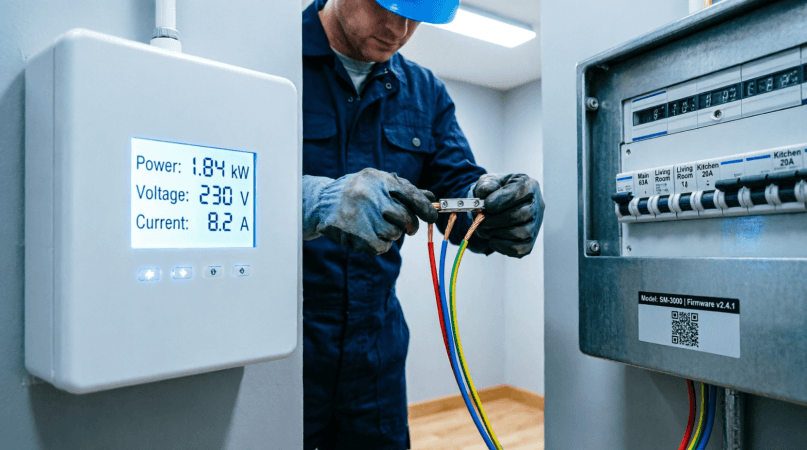
Modern offices are no longer just desks and lights. They are high-speed, hybrid environments that demand a robust digital nervous system. If your electrical infrastructure is outdated, your office technology will fail. Using inferior cabling or poorly planned power distribution creates bottlenecks that stifle productivity.
For 2026 and beyond, installing Cat6A cabling is the industry standard for new commercial fit-outs. Unlike its predecessors, Cat6A supports data transfer speeds up to 10 Gbps and is built to handle the intense power requirements of PoE++ (Power over Ethernet) devices. This is critical for smart office integration, including:
- IoT Sensors: Occupancy tracking and climate control systems that adjust based on real-time data.
- Hybrid Meeting Tech: Video-enabled conference rooms that rely on low-latency, high-bandwidth connections.
- Smart Security: Integrated access control and surveillance that draw power directly through the network cable.
Trying to retrofit these systems after your office is complete is an expensive disaster. A specialized commercial electrician designs your cabling pathways to avoid interference from high-voltage lines, ensuring your digital infrastructure remains stable and scalable for years to come.
Minimizing Operational Downtime During Installation
Every hour your office remains without power is lost revenue. Professional commercial contractors do not just show up and work. They manage your project with a focus on business continuity. Top Electricians utilizes a phased installation strategy to ensure your operations continue uninterrupted. We plan heavy power work outside of your core business hours and coordinate with building management to ensure loading docks and service lifts are reserved.
By utilizing temporary power solutions and staging installations in modular zones, we allow your team to continue working in unaffected areas of the office. We also prioritize the installation of critical circuits, such as those for server rooms and communication hubs, to ensure your business remains online throughout the transition.
Ensuring Your Fit-out Meets 2026 Regulatory Standards
Compliance is more than a legal checkbox; it is your shield against catastrophic loss. An audit-ready fit-out requires rigorous documentation. Keep this checklist handy to ensure your project stays on the right side of the law:
- Verification of Licensing: Confirm your contractor holds a current commercial electrical license.
- Digital CCEW Submission: Ensure your contractor uses the official portal for certification, not outdated PDF forms.
- Emergency Lighting Records: Maintain a 7-year history of 6-monthly discharge tests as per AS/NZS 2293.
- Safety Documentation: Ensure all circuit diagrams are updated to reflect the new fit-out layout and saved in a centralized digital format.
- Insurance Validation: Verify that your electrical certification is signed off by a qualified supervisor to maintain your property insurance validity.
Final Verdict: Investing in Professional Infrastructure
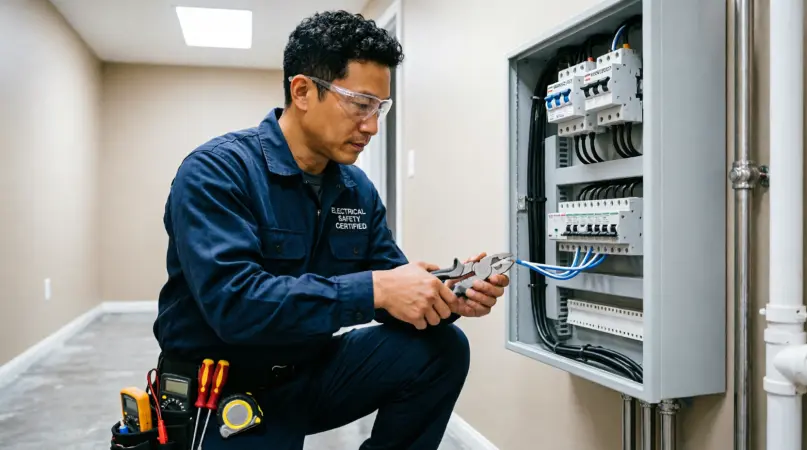
A commercial office fit-out is an investment in your company’s growth. Hiring a professional commercial electrician is not an added cost; it is risk mitigation. By prioritizing professional-grade cabling, strict regulatory compliance, and a strategic installation plan, you protect your infrastructure from the start. Build your office on a foundation of reliability, and you will set the stage for your team’s success.
No matter what your needs, Top Electricians Sydney is ready to help keep it safe, compliant, and fully functional. We proudly service all Sydney areas, including Greater Western Sydney, the Southern Suburbs, and the Eastern Suburbs. Wherever your strata building is located across Greater Sydney, the team is ready to help. Call 0431 460 141 or email info@topelectricianssydney.com.au to talk through your requirements today.
Ready to start your fit-out with a team that understands commercial scale? Contact Top Electricians today to schedule a site assessment and ensure your project meets the highest industry standards.
Expert FAQ: Commercial Electrical Fit-outs
1. Does a small office fit-out really need three-phase power?
It depends on your equipment. If your office utilizes high-capacity air conditioning, multiple server racks, or industrial-grade kitchen appliances, three-phase power is likely mandatory to balance the electrical load safely and prevent frequent circuit tripping.
2. Can I use my existing office wiring for a new fit-out?
Usually, no. Older wiring rarely meets the current National Construction Code or the load demands of modern smart offices. An initial electrical audit is necessary to determine if existing circuits are safe, compliant, and capable of supporting your new technology infrastructure.
3. What happens if I fail to get my electrical work certified?
Without a valid Certificate of Compliance for Electrical Work (CCEW), your fit-out is legally non-compliant. This can result in significant on-the-spot fines, void your building insurance, and prevent you from obtaining a final occupancy permit from your local council.
4. Why is Cat6A preferred over Cat6 for office fit-outs in 2026?
Cat6A is designed to support 10 Gbps speeds and handle the heat generated by modern high-wattage PoE++ devices. Cat6 is often insufficient for high-density, smart-office environments, leading to performance bottlenecks that will require costly re-cabling as your data needs grow.
5. How far in advance should I book a commercial electrician for my fit-out?
To ensure a smooth transition, engage your electrical contractor during the design phase ideally 8 to 12 weeks before your planned construction start. This allows your electrician to coordinate with architects and facility managers to ensure power and data requirements are integrated into the floor plan before walls are closed up.