
A light starts flickering. There’s a faint chemical smell in the air. Your heart rate goes up before your brain has worked out why.
Not every electrical problem is a crisis. But some warning signs should never be ignored, and knowing the difference protects your home, your family, and your budget.
Whether you are dealing with a routine issue or an urgent situation, Top Electricians provides reliable standard and Level 2 emergency electrical services right across all of Sydney.
This guide walks you through how to quickly assess what’s happening, what to do while you wait for help, and what to avoid doing yourself.
When Should You Call an Emergency Electrician?
If you’re short on time, use this table to work out what category your situation falls into and what to do next.
| Situation | What to Do |
| Active fire, heavy smoke, visible sparks, or someone has been shocked | Get everyone out and call 000 immediately |
| Burning smell, a hot switchboard or power point, loud crackling or sizzling, or a safety switch that won’t reset | Call an emergency electrician now |
| An isolated issue, like one dead power point or a single appliance behaving oddly | It can usually wait. Book a standard appointment |
| A one-off safety switch trip that resets fine and nothing else seems unusual | Keep an eye on it. No urgent action needed |
If you’re not sure which category you’re in, treat it as the more serious one and call a licensed electrician.
Electrical Warning Signs You Should Never Ignore
Your senses usually pick up on trouble before anything catastrophic happens, and each sign below points to something specific worth acting on.
- Burning or “hot plastic” smell a sharp, chemical odour around older outlets or switches usually means insulation or a fitting is overheating. Stop using the circuit if it’s safe to, and call an electrician urgently. Don’t go looking inside walls, power points, or the switchboard yourself
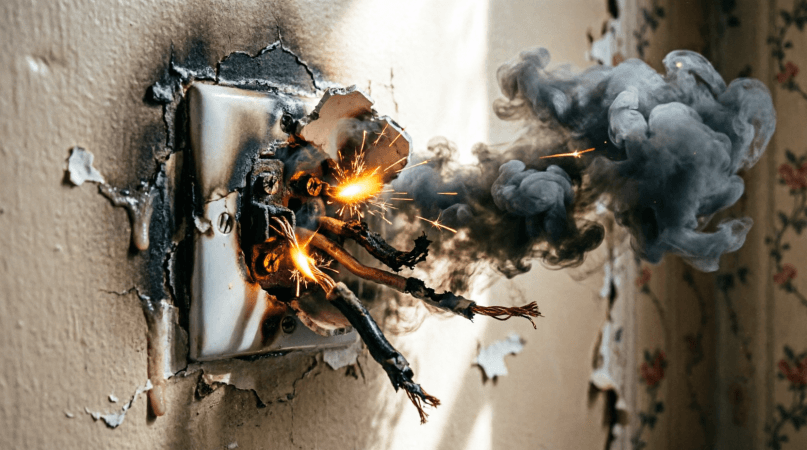
- Smoke or visible sparks a genuine fire risk, not something to wait on. Leave the area, and call 000 if there’s any real danger
- Hot power points or switches usually have a loose connection or an overloaded circuit. Stop using it and arrange an urgent inspection
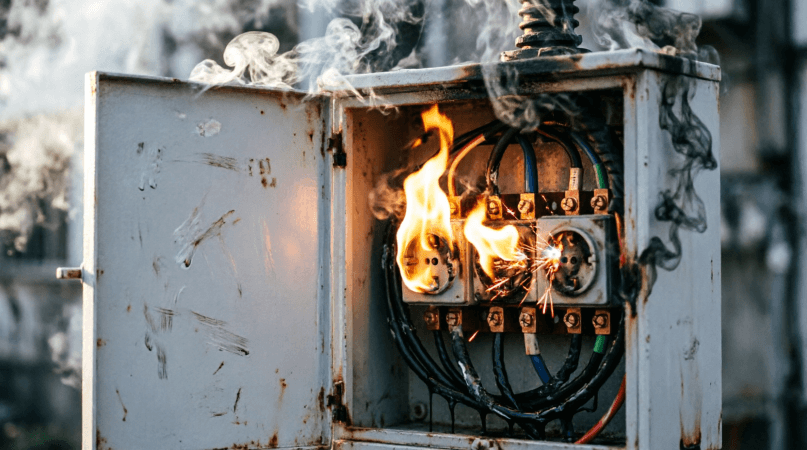
- A hot or noisy switchboard warmth on the door, or buzzing, crackling, sizzling, or popping, can mean trouble. Stay away, don’t open it, and call an emergency electrician
- Crackling or sizzling sounds often means arcing, where electricity jumps across a damaged connection and generates heat. Move away and call an electrician rather than tracing the sound by touch
- A safety switch that keeps tripping it’s protecting you from a fault somewhere. Leave it off if it won’t stay reset, and avoid repeatedly forcing it back on
- Electric shocks or tingling from a tap, appliance casing, or metal surface can point to a serious fault, including earthing issues. Stop touching it and call an electrician urgently
- Water near electrical equipment is a dangerous combination. Keep well clear and call an electrician rather than touching or drying it yourself
- Multiple lights flickering or changing brightness together different from one bulb acting up, and can point to a bigger supply issue, covered next
Is a Flickering Light an Emergency?
It depends on what’s actually happening: one light flickering alone is usually minor, while several lights flickering together points to something more serious.
One light flickering occasionally is often just a loose bulb or a dying globe, and it can usually wait for a normal appointment. Multiple lights flickering or changing brightness together can point to a wider supply issue. And if flickering shows up alongside any smell, sound, or heat, treat that as a warning sign, not a coincidence.
If in doubt, it’s always reasonable to call a licensed electrician and describe exactly what you’re seeing.
Why Is My Safety Switch (RCD) Tripping?
A safety switch constantly monitors the electricity flowing through a circuit, and cuts power quickly if it detects current going somewhere it shouldn’t, like through a person, water, or a damaged cable.
It might trip because of a faulty appliance, moisture in an outdoor fitting, or damaged wiring insulation. You can safely unplug appliances on the affected circuit and try resetting it once. If it trips again straight away, leave it off.
Call an electrician if it won’t stay reset after unplugging everything, keeps tripping over time, or trips with no obvious cause. If a safety switch keeps tripping, that’s a sign to bring in a licensed professional for a proper safety switch upgrade rather than keep working through it yourself.
What If I Smell Burning Plastic?
Treat it as a genuine warning sign rather than something to wait out.
Stop using the appliance or circuit if it’s safe to reach it, and don’t go searching inside walls, power points, or the switchboard for the source. If you see smoke or flames, leave the property and call 000. Otherwise, call an emergency electrician as soon as possible.
What If the Switchboard Is Hot or Making Noise?
Switchboards aren’t always silent, and the difference between a normal hum and a genuine warning sign comes down to whether the noise is steady or unpredictable.
A faint, low, steady hum at consistent times is usually nothing to worry about, some hot water systems and off-peak metering cause this. Buzzing that comes and goes unpredictably, crackling, sizzling, popping, any burning smell, or visible scorch marks are a different story.
If you’re hearing or smelling anything in that second group, stay away from the switchboard and call an emergency electrician. Don’t open it or attempt to inspect it yourself.
Is It an Electrical Fault or a Street Power Outage?
Before assuming the worst, check whether the problem is actually inside your home at all.
Check your neighbours: if nearby houses or streetlights are also without power, it’s likely a wider outage rather than a fault in your home. You can also check your electricity distributor’s outage information online or by phone, since which distributor covers your area depends on where you live.
If it’s a wider outage, a private electrician generally can’t restore your supply, and you’ll need to wait for the network operator. But if only your property is affected, especially alongside shocks, tingling, or lights behaving strangely, that points to something inside your home that needs an electrician.
What If I Feel a Shock or Tingling From a Tap or Appliance?
Treat this as a serious warning sign.
Stop touching the item immediately and keep other people and pets away from it. Avoid touching other metal fittings or appliances to check whether the problem extends further, leave that to a professional. Contact a licensed electrician or your electricity distributor’s emergency line urgently. If you’re at all unsure how serious it is, treat it as urgent.
What Should You NEVER Do During an Electrical Emergency?
A handful of actions make an electrical emergency worse rather than better, so avoid all of the following until a licensed electrician arrives.
- Touch exposed or damaged wiring
- Open the switchboard or remove its cover
- Remove power point or switch covers
- Attempt to repair wiring yourself
- Keep using an appliance that’s overheating, smoking, or has sparked
- Repeatedly reset a safety switch that keeps tripping
- Touch electrical equipment that’s been in contact with water
- Attempt any DIY electrical repair; in Australia, this legally needs a licensed electrician
Can the Problem Wait Until Morning?
Some issues genuinely can wait, and others can’t, so the deciding factor is whether anything beyond a stable, isolated fault is involved.
A stable, isolated problem, with no smoke, burning smell, unusual heat, sparks, shocks, or water involved, often doesn’t need an after-hours call-out. You can usually turn off the affected circuit or unplug the item and book a standard appointment.
If there’s any uncertainty at all, it’s better to call a licensed electrician and talk it through than to guess and take a risk overnight.
What Information Should You Give the Electrician?
You don’t need to diagnose the fault yourself, but a few details help the electrician prepare before they arrive.
- What happened, exactly
- When it started
- Where in the property it happened
- What you smelt, heard, or saw
- Whether an appliance was in use at the time
- Whether the safety switch tripped
- Whether anything like this has happened before
What About Emergency Electrician Call-Out Costs?
Emergency call-out pricing varies by electrician, location, time of day, and the work involved, so there’s no single fixed figure to rely on.
After-hours, weekend, and public holiday call-outs are generally more expensive than a standard daytime appointment, since tradespeople are paid higher rates outside normal hours. It’s worth asking your emergency electrician directly about the call-out fee, hourly labour rate, any after-hours loading, likely material costs, and whether they’ll get your approval before doing any extra work.
If there’s a genuine safety risk, don’t let cost be the deciding factor in whether you call for help.
If You’re Renting
Rules around who arranges and pays for urgent electrical repairs differ between states and territories, and can depend on your specific tenancy agreement.
If you’re a tenant facing an electrical issue, contact your landlord or property manager as soon as possible and let them know what’s happening. Ask about the emergency repair process for your tenancy, including who to call if they can’t be reached. Your state or territory’s residential tenancies authority is the best source for the specific rules that apply where you live.
How to Prevent Electrical Emergencies
A little prevention goes a long way toward avoiding an emergency call-out in the first place.
- Have your electrical system inspected periodically, particularly in older homes
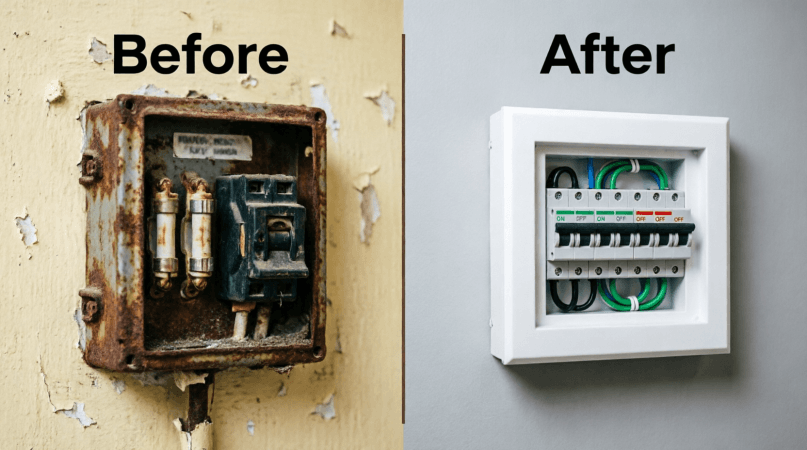
- Get an ageing switchboard assessed if it still uses old-style fuses
- Make sure safety switches are fitted across your home’s circuits
- Replace damaged cords, plugs, and fittings promptly rather than continuing to use them
- Avoid overloading power boards and double-adapters
- Get professional advice before installing high-load equipment like EV chargers, large air conditioners, or solar systems
- If a fault keeps happening, get it properly diagnosed rather than repeatedly resetting the safety switch
Simple Electrical Emergency Checklist
- Smoke or fire get to safety and call 000 if there’s immediate danger
- Electric shock or tingling stop touching the item and get urgent professional help
- Burning smell stop using the affected equipment and arrange an urgent inspection
- Crackling or sizzling stay away and call an electrician
- One occasional flicker book an inspection if it continues
- Repeated safety switch trips stop resetting it repeatedly and arrange a professional inspection
- Water near electrical equipment keep well away from the area
Frequently Asked Questions
Can I turn my safety switch back on if it trips?
You can try resetting it once after unplugging everything on that circuit. If it trips again straight away, leave it off and call an electrician rather than repeatedly forcing it back on.
Is it safe to use a room while a light in it is flickering?
Usually yes, if it’s a single light and nothing else seems unusual. If several lights flicker together, or you notice any smell, heat, or sound alongside it, treat it as a warning sign and stop using that circuit.
How do I know if a power outage is just my house or the whole street?
Check whether your neighbours’ lights or nearby streetlights are also out. If they are, it’s likely a wider network outage rather than a fault inside your home, and you’ll need to wait for the network operator to restore it.
Should I unplug everything if my switchboard feels warm?
A faint, steady warmth or hum can be normal. But if it’s genuinely hot, buzzing unpredictably, crackling, or smells like burning, don’t touch anything inside it, stay clear, and call an emergency electrician straight away.
Who pays for an emergency electrical repair if I’m renting?
This depends on your state’s tenancy laws and your specific agreement. Contact your landlord or property manager first, and check with your state or territory’s residential tenancies authority if you’re unsure who’s responsible.
Need Help Right Now?
Dealing with an electrical issue can be stressful, scary, and completely overwhelming, especially when you’re worried about your family’s safety or costly structural damage. You don’t have to guess or take unnecessary risks.
Whether it’s a midnight switchboard failure, flickering lights, or an urgent grid reconnection, Top Electricians is here to bring you instant peace of mind. We provide fast, reliable Level 2 emergency electrical services across all of Sydney, including Western Sydney, the Eastern Suburbs, and the Northern Suburbs.
Don’t stay in the dark or worry about what to do next call us today to get expert guidance and keep your property safe!