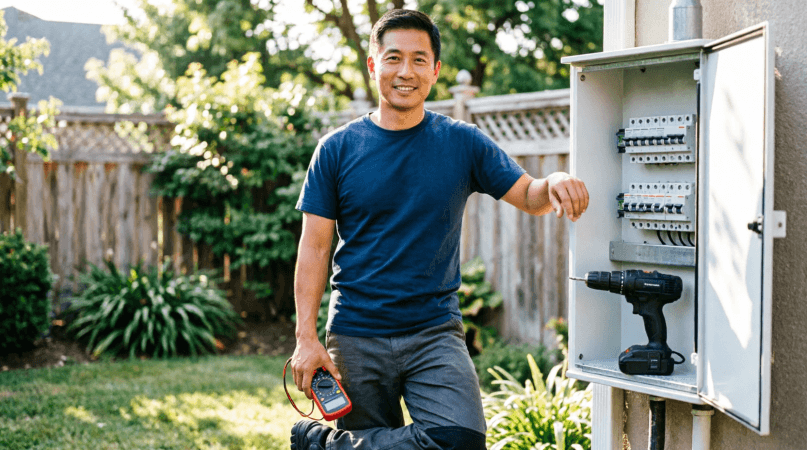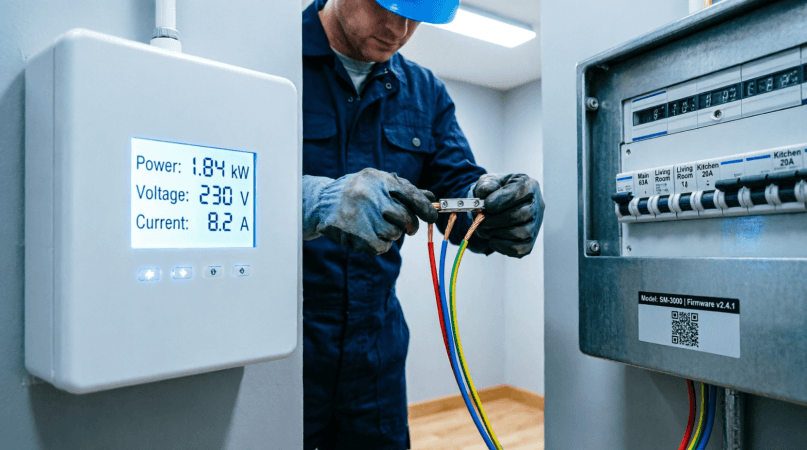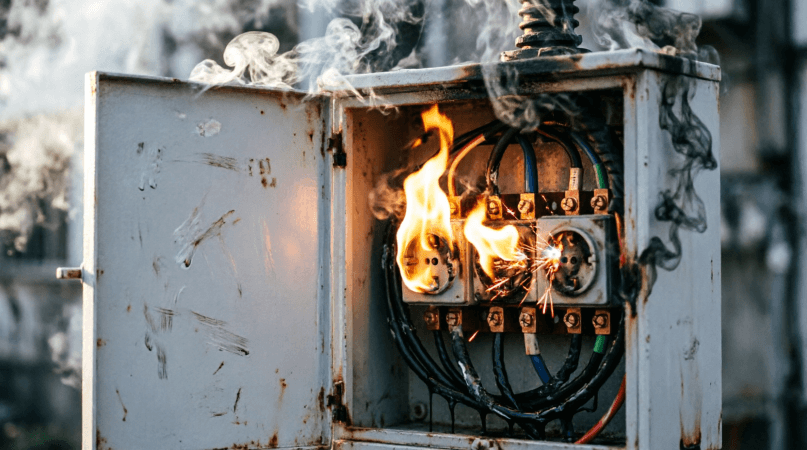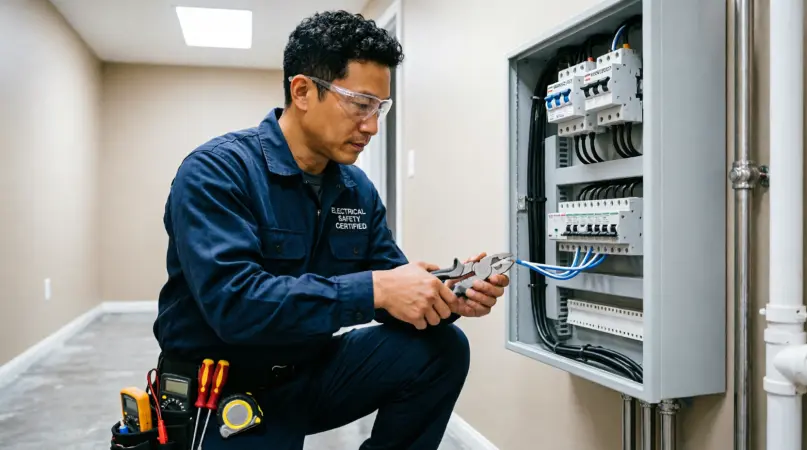

An emergency electrician in Sydney is a licensed electrical contractor who diagnoses and repairs hazardous electrical faults that present an immediate risk of electric shock, electrical fire, property damage, or structural blackouts. Certified to operate 24/7 under AS/NZS 3000 wiring standards, these specialists handle critical events like sparking power points, burning insulation smells, overheating switchboards, and live exposed wires to restore safety and compliance.
Why Some Electrical Problems Cannot Wait Until Morning
You should never wait until morning if your property exhibits burning smells, active sparks, humming switchboards, flickering lights, or localized blackouts. These critical indicators signal acute thermal overload or dielectric breakdown within your electrical infrastructure, requiring immediate isolation and repair by a 24-hour emergency electrician in Sydney to prevent structural fires and lethal electric shock.
In electrical engineering, physical faults inside a building’s distribution system do not stabilize on their own; instead, they degrade continuously. Delaying an essential service call overnight exposes occupants to silent, dangerous failures behind drywall.
What Is Considered an Electrical Emergency?
An electrical emergency is defined as any system failure, safety device malfunction, or structural defect that bypasses standard circuit protection and actively threatens human life or property integrity. Under Australian Standards, this includes any incident where an overcurrent or earth leakage fault occurs but fails to trip the protective Residual Current Device (RCD) or circuit breaker.
- Emergency Electrician: A licensed professional specializing in fault diagnosis, hazard mitigation, live wire isolation, and power restoration under strict safety compliance.
- Electrical Switchboard: The main distribution board housing protective devices like RCDs, Miniature Circuit Breakers (MCBs), and RCBOs designed to manage load distribution and intercept overloads.
- Electrical Fire: Rapid combustion triggered by thermal dissipation, arc faults, or resistive heating, causing localized ignition of surrounding building materials and PVC cable insulation.
Signs You Need an Emergency Electrician Immediately
If your residential or commercial property in Sydney displays any of the following symptoms, you must secure emergency electrical repairs instantly to prevent systemic infrastructure failure.
1. Burning Plastic or Fish-Like Odor (Insulation Degradation)
A distinct burning plastic or fish-like smell near wall outlets or your switchboard indicates that copper conductors are operating far past their safe temperature limits. This thermal stress causes the surrounding PVC insulation to melt, exposing bare live wires to nearby timber studs and metallic conduits.
2. Audible Buzzing, Crackling, or Hissing (Arc Faults)
Audible acoustic noise radiating from switches, outlets, or consumer mains indicates active electrical arcing. An arc fault occurs when high-voltage currents leap across loose terminal screws or damaged copper strands, generating localized heat zones that can easily exceed 1,000°C.
3. Discolored, Smoldering, or Sparking Power Points
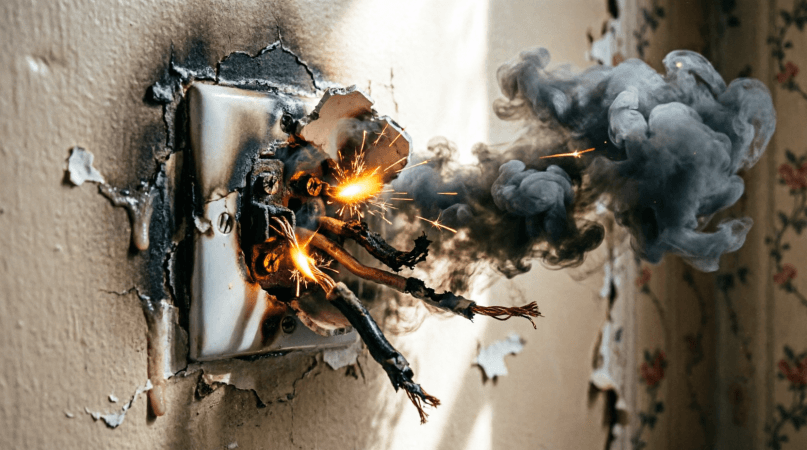
Visible soot deposits, heat warping, or active sparking during appliance insertion indicate serious ground faults or high-resistance connections. These symptoms represent an immediate fire risk, as the outlet’s structural components have already suffered thermal degradation.
4. Overheating or Humming Switchboards
If the metal enclosure of your main distribution panel feels warm to the touch or emits a constant low-frequency hum, the switchboard is experiencing a severe thermal overload. This condition suggests that aging circuit breakers or ceramic fuses are failing to trip despite operating far beyond their rated amperage.
5. Sudden Localized Blackouts (Single Property Outage)
If nearby streetlights and adjacent homes remain fully illuminated while your property loses power completely, the issue is typically a localized mains failure. This fault may involve blown service fuses, compromised private power poles, or damaged overhead consumer mains.
Let’s get started!
Why Electrical Faults Become More Dangerous Overnight
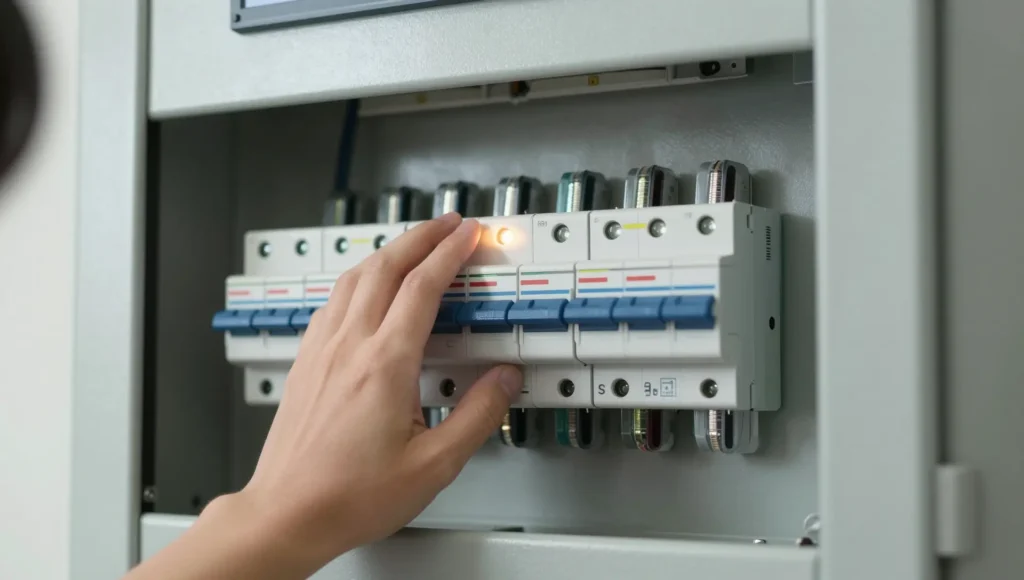
Electrical faults become significantly more dangerous overnight because human supervision drops to zero while systemic load demands often spike due to continuous thermal appliances. This combination allows silent, sub-surface faults to escalate into active structural fires without detection.
The Physics of Insulation Failure and Thermal Runaway
The escalation of a minor insulation defect to a full-scale structural fire is governed by Joule’s Law of Heating, represented by the formula:
Where:
- P represents thermal power dissipated as heat (Watts).
- I represents the electric current flowing through the circuit (Amperes).
- R represents the physical resistance at the connection point (Ohms).
Terminal
Spikes
Soars
Melts
Ignition
When a brass connection terminal inside an outlet or switchboard becomes loose, the physical contact area decreases, causing electrical resistance (R) to rise. As high-load appliances like ducted air conditioning or hot water storage systems draw continuous current (I) overnight, the heat generated (P) increases exponentially.
Because PVC insulation begins to soften between 80°C and 105°C, prolonged thermal stress causes it to liquefy and carbonize. This carbonized plastic acts as an active electrical conductor, leading to high-voltage short circuits and rapid ignition of structural timber frame elements behind walls while occupants are asleep.
Emergency Hazard Matrix: What Can Safely Wait vs. What Requires Immediate Action
This matrix defines the boundaries of risk, helping Sydney property owners distinguish between urgent hazards that demand immediate intervention and minor defects that can be scheduled for normal business hours:
| Identified Symptom | Risk Classification | Underlying Fault Physics | Required Response Time |
| Pungent chemical / burning plastic smell | Immediate Danger | PVC insulation degradation and active thermal overload | Within 1 Hour (Call 24/7 Support) |
| Audible buzzing / crackling inside wall cavities | Immediate Danger | Active electrical arcing due to damaged conductors or terminals | Within 1 Hour (Call 24/7 Support) |
| Humming or hot switchboard enclosure | Immediate Danger | Protective device failure with potential high-resistance connection | Within 1 Hour (Call 24/7 Support) |
| Total blackout (adjacent properties have active power) | Immediate Danger | Private service line fault, consumer mains failure, or blown service fuse | Within 1 Hour (Call 24/7 Support) |
| Single wall outlet has no power (no smell or heat) | Non-Urgent | Individual outlet contact wear or localized wire disconnect | Next Business Day (Standard Booking) |
| Nuisance tripping of a single RCD switch | Conditional | Earth leakage fault triggered by a specific, isolated appliance | Immediate Isolation (Book Standard Repair) |
When You Need an ASP Level 2 Emergency Electrician
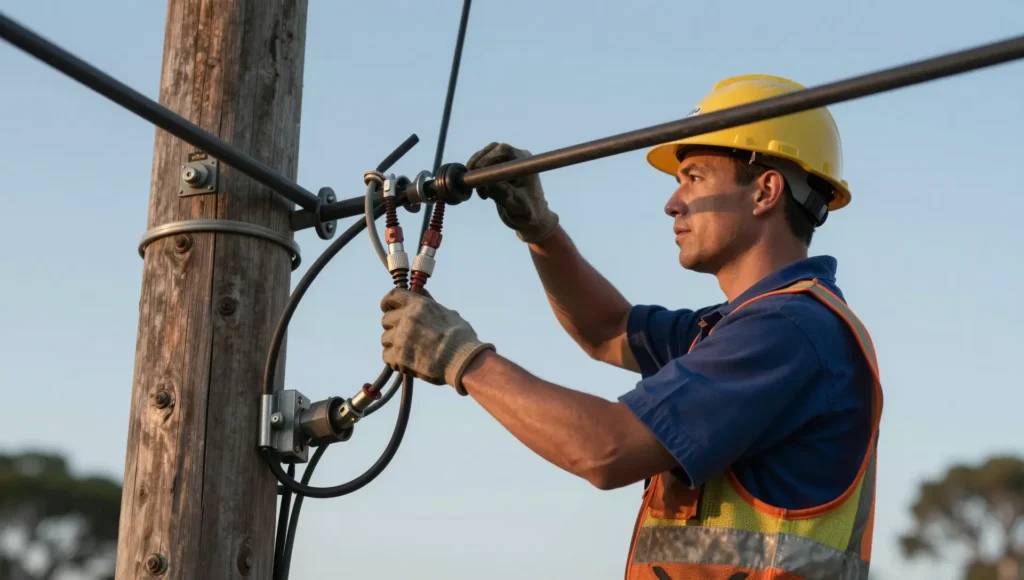
You need an Accredited Service Provider (ASP) Level 2 emergency electrician when an electrical fault occurs on the network side of your property, involving the overhead or underground connection lines that link your switchboard to the primary energy distribution grid. Under NSW regulations, standard electricians cannot legally touch, disconnect, or service these high-voltage distribution components.
Overhead Service Line Failures and Private Power Poles
During severe storms across the Sydney basin, falling tree branches can sever overhead service lines or cause private timber and steel power poles to lean dangerously. An emergency Level 2 electrician is required to safely isolate the connection at the network pole, run new aerial cables, and secure structural mountings.
Consumer Mains Degradation and Smart Meter Emergencies
If water enters your consumer mains conduit, it can corrode the heavy-gauge copper cables connecting your property to the utility network. Additionally, a malfunctioning smart meter can disrupt power delivery to your entire facility. Only an ASP Level 2 technician can pull the high-amperage service fuses (which protect the main supply), isolate the system, replace damaged infrastructure, and safely reconnect your service to the Ausgrid or Endeavour Energy networks.
Advanced Technical Breakdown: Understanding Circuit Protection and Risks
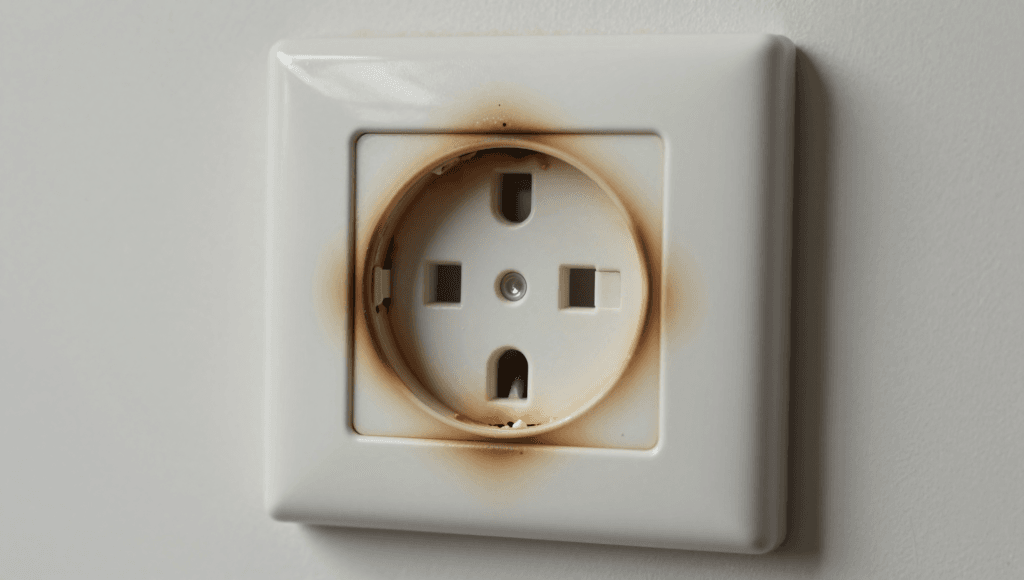
To maintain a safe property, owners should understand how modern circuit protection devices function and recognize the warning signs of older, high-risk infrastructure.
How RCDs Reduce Electric Shock Risks
A Residual Current Device (RCD) continuously monitors the balance of electric current flowing through the circuit’s active and neutral conductors. If it detects a current imbalance as small as 30 milliamperes, which indicates electricity is leaking to the earth, potentially through a person, the RCD trips and cuts off power within 40 milliseconds. This rapid response prevents dangerous muscle contraction and protects against fatal cardiac arrest.
The Differences Between Overloads, Short Circuits, and Arc Faults
- Overload: Occurs when too many appliances draw power from a single circuit simultaneously, exceeding its rated current capacity and causing the wiring to heat up slowly.
- Short Circuit: Happens when an active wire makes direct, low-resistance contact with a neutral or earth wire, causing a massive, instantaneous spike in current that trips the circuit breaker immediately.
- Arc Fault: Occurs when damaged, loose, or corroded wiring allows current to jump across a physical gap. Because the current flow may remain below the trip threshold of a standard circuit breaker, arc faults can burn silently for hours, making them a leading cause of electrical fires.
Why Aging Switchboards and Old Sydney Homes Increase Fire Risk
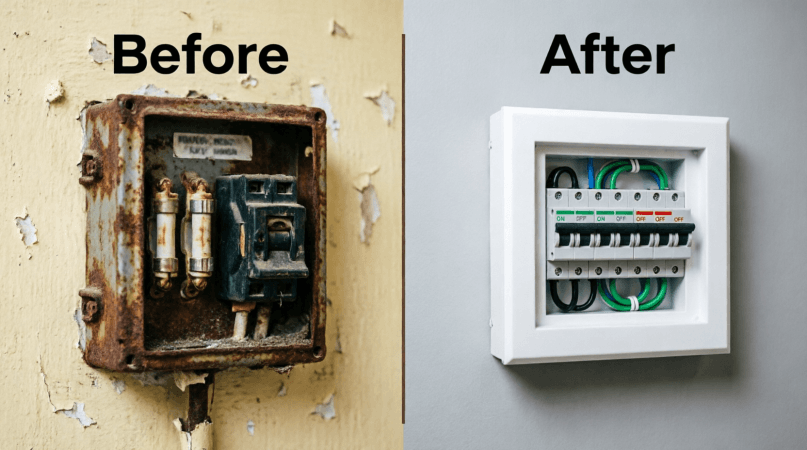
Many historic properties across the Inner West, Eastern Suburbs, and North Shore still feature outdated switchboards with rewirable ceramic fuses. These older setups lack modern RCD safety switches and arc fault detection. If a homeowner installs modern, high-load appliances on these vintage circuits, the old copper fuses can overheat without blowing, significantly increasing the risk of an electrical fire.
Emergency Safety Checklist Before Help Arrives
If you are facing an active electrical hazard, taking immediate, structured safety steps can protect your family and minimize property damage before your technician arrives.
1. Safely Isolate the Main Power: Perform within 1 minute.
If the floor is completely dry and there is no visible smoke or heat coming from your distribution panel, open the switchboard cover and flip the main isolation switch to the “OFF” position to cut off all current flow to the property.
2. Evacuate and Isolate the Area: Perform within 2 minutes.
If you detect active sparking, heavy smoke, or crackling sounds behind walls, evacuate all occupants from the room immediately. Close the doors to isolate the affected area and keep pets and children clear.
3. Never Use Water on Electrical Fires: Absolute Safety Rule.
Never throw water on an electrical fire. Water is highly conductive and will spread the current, creating lethal shock paths across the floor. If a fire starts and you have a certified Class E dry chemical fire extinguisher, use it only if it is safe to do so.
4. Contact Emergency Responders: Immediate Action.
Call the 24-hour dispatch team at Top Electricians Pty Ltd on 0431 460 141. If an active fire is spreading or a structural emergency occurs, dial 000 immediately before calling your technician.
Why Sydney Property Owners Trust Top Electricians Pty Ltd
When managing complex electrical hazards, relying on uncertified contractors or handymen can lead to non-compliant repairs and recurring safety issues.
Licensing & Compliance Assurance: Top Electricians Pty Ltd (NSW License: 258657C / 139042C) delivers fully compliant, certified Level 2 emergency electrical services across all Sydney regions.
Our team operates in strict accordance with the AS/NZS 3000 Wiring Rules and provides official Certificates of Electrical Safety (CCEW) for all completed works. Since our founding in 2009, we have resolved more than 4,250 emergency calls, providing rapid response coverage across Greater Sydney. No matter where you are located, our dispatch network ensures we have local technicians ready to deploy across Western Sydney, the Southern Suburbs, the Northern Suburbs, the Eastern Suburbs, and Central Sydney, offering absolute 24/7 coverage for any residential, commercial, or industrial emergency.
We offer complete transparency with a $0 Call-Out Fee structure, upfront fixed-rate quotes, and comprehensive lifetime warranties on all workmanship. Do not risk your safety or your property’s integrity overnight.
Call our certified Sydney emergency team now on 0431 460 141
Frequently Asked Questions
Is a humming noise from my switchboard normal?
No, a humming noise from your switchboard is not normal. It indicates that a circuit breaker or transformer is overloaded, vibrating due to loose internal components, or failing to trip. This requires immediate attention from an emergency electrician to prevent a total switchboard failure.
What should I do if my safety switch keeps tripping?
If your safety switch keeps tripping, do not try to hold or tape the switch in the “ON” position. This is a clear sign of an active earth leakage fault or a faulty appliance. Unplug all devices on that circuit and try to reset the switch once. If it trips again, contact an emergency electrician to perform a professional fault-finding diagnostic.
Can I do my own emergency electrical work in Sydney?
No, it is illegal in New South Wales to perform any electrical work yourself. All electrical installations, repairs, and alterations must be completed by a licensed electrician who can issue a Certificate of Compliance (CCEW) to guarantee the work meets Australian safety standards.