
Electrical emergencies in commercial buildings across Sydney rarely happen at a convenient time, and the fallout is usually immediate, including lost trading hours, damaged stock, disrupted equipment, and in worst cases, fire. As commercial properties across Greater Sydney carry heavier electrical loads, more sensitive equipment, and higher energy demand than ever, ageing systems are placed under growing strain. This makes hiring a licensed commercial electrician one of the most important safety decisions a Sydney business owner or facilities manager can make.
At Top Electricians, we work with offices, retail tenancies, warehouses, hospitality venues, and industrial sites throughout Greater Sydney, and we see the same patterns of failure again and again. Below, we break down the most common commercial electrical emergencies, the early warning signs, and how proactive maintenance keeps your Sydney premises safe and compliant.
Whether it’s a routine inspection or an urgent call-out, our team is on hand across Sydney to diagnose faults quickly and get your building back to safe, reliable operation.
The Most Common Electrical Emergencies in Commercial Buildings
Most serious common electrical incidents in Sydney commercial buildings trace back to overloaded circuits, deteriorating wiring, water ingress, poor original installation, or gaps in maintenance. Offices, warehouses, retail spaces, and industrial facilities across the city all face these risks, and downtime can become expensive very quickly once a fault takes hold.
Power Outages and Partial Power Loss
A sudden loss of power, whether a full blackout or an outage affecting only certain circuits, floors or tenancies, can bring operations to a halt. When this happens, staff should avoid lifts, secure critical equipment such as servers, refrigeration and safety systems, and never resort to unsafe workarounds like piggybacked power boards. Outages that keep recurring usually point to a deeper fault in the switchboard, cabling, or supply, and need proper diagnosis rather than repeated resets.
Burning Smells, Overheated Switchboards and Arcing
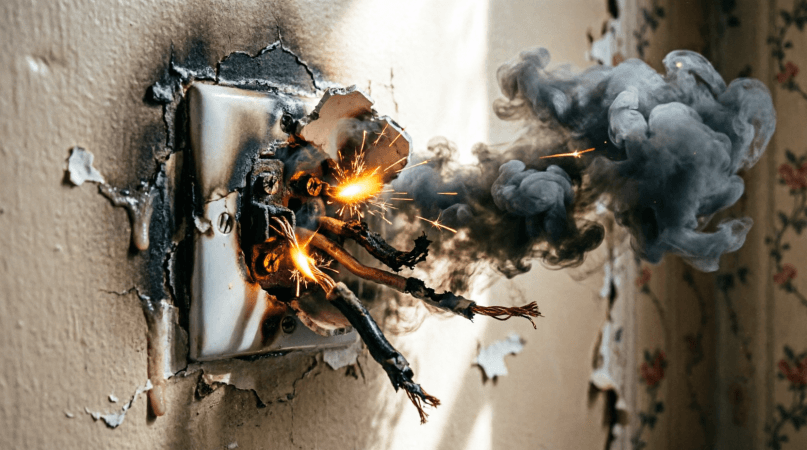
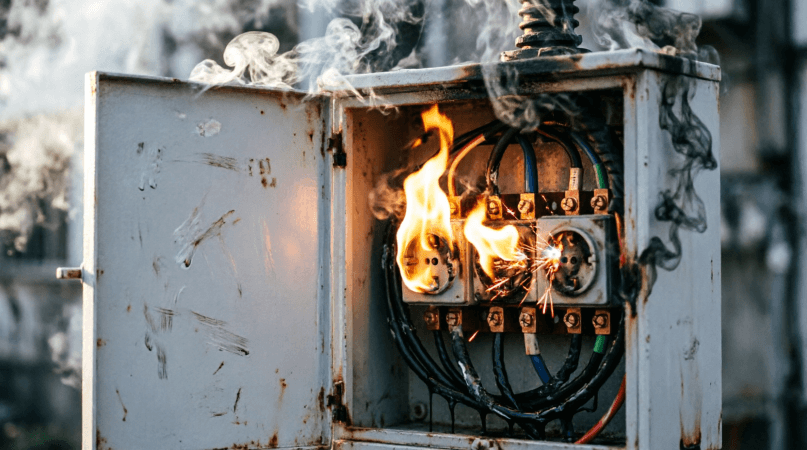
Any burning smell around switchboards, meter panels, plant rooms or outlets should be taken seriously. Warning signs include a plastic or fishy odour, switchboard covers that feel warm or hot, and visible sparking when a breaker is reset. These symptoms usually mean loose connections, overloaded busbars, or wiring that can’t handle the load, and the risk is made worse by heavy commercial loads such as HVAC plant, commercial kitchens or production machinery. Left unaddressed, this can lead to fires in ceilings, walls or switch rooms.
Tripping RCDs, Breakers and Recurring Equipment Failures
Repeated tripping isn’t just an annoyance; it’s a signal. In busy Sydney commercial spaces like server rooms, kitchens, open-plan offices and retail floors, common causes include faulty appliances, damaged leads, water ingress, overloaded circuits and uneven load distribution across phases. Continuing to reset a tripped device without investigating the cause raises the risk of shock, equipment damage and fire, and may also point to voltage fluctuations or a loose neutral connection.
Early Warning Signs You Should Never Ignore
Serious electrical failures are almost always preceded by smaller warning signs. Catching these early prevents damage, disruption, and far more expensive repairs down the line.
Frequent Tripping, Flickering and Dimming Lights
A breaker that trips repeatedly is telling you a circuit is overloaded or faulty, and resetting it without investigation isn’t a fix. Flickering or dimming lights, especially when printers, HVAC units or machinery switch on, often point to loose connections, undersized circuits or a load-balancing issue rather than a simple globe failure.
Hot Surfaces, Burning Odours and Discolouration
Switch plates, outlets or switchboards that feel hot to the touch usually mean overloading or poor connections generating resistance and heat. Acrid or burning-plastic smells, and any browning or soot marks near outlets or light fittings, should be treated as a possible fire risk and investigated immediately.
Buzzing Sounds, Sparking and Damaged Fittings
A well-functioning electrical system should be quiet. Buzzing, crackling or humming from switchboards or fittings, along with visible sparks when switching equipment on or off, are red flags for loose connections or arcing. Cracked outlets, wobbly switches, and a reliance on extension leads or multi-plug adapters usually mean your building’s electrical capacity hasn’t kept pace with demand.
How Electrical Faults Impact Safety, Operations and Downtime
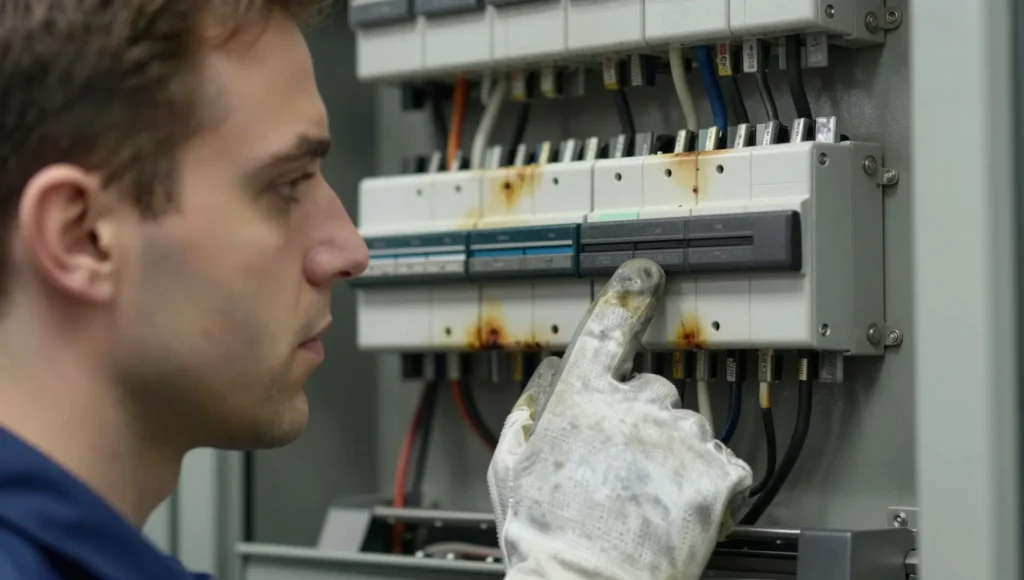
Electrical faults rarely stay contained. A single loose connection or overloaded circuit can threaten staff safety, damage equipment, and shut down operations all at once.
Safety Risks to People and Property
Deteriorated wiring and overloaded boards raise the risk of electric shock, arc faults, and fires in risers, plant rooms or tenancy fit-outs. Faulty emergency or exit lighting is a particular concern, since undetected battery or backup failures can leave people without safe egress during a real emergency.
The Impact on Operations, Equipment and Compliance
Voltage dips, surges and nuisance tripping can interrupt point-of-sale systems, servers, HVAC, refrigeration, and access control, and even brief outages can corrupt data or spoil stock. Recurrent electrical problems also create compliance risk, since commercial buildings are expected to maintain safe systems, clear isolation points and functioning emergency lighting at all times.
Downtime, Access Disruption and Hidden Business Costs
Locating a fault in a commercial building, with multiple switchboards, submains and tenancy alterations, often takes longer than expected, sometimes requiring entire floors or kitchens to be isolated. Beyond the obvious lost trading time, there are hidden costs too: relocated staff, temporary generators, and damaged tenant or client confidence.
How Regular Maintenance Reduces Commercial Electrical Risk
Scheduled maintenance is the single most effective way to catch problems before they become emergencies, and it keeps your building aligned with electrical standards and insurance requirements.
Catching Hidden Faults Before They Escalate
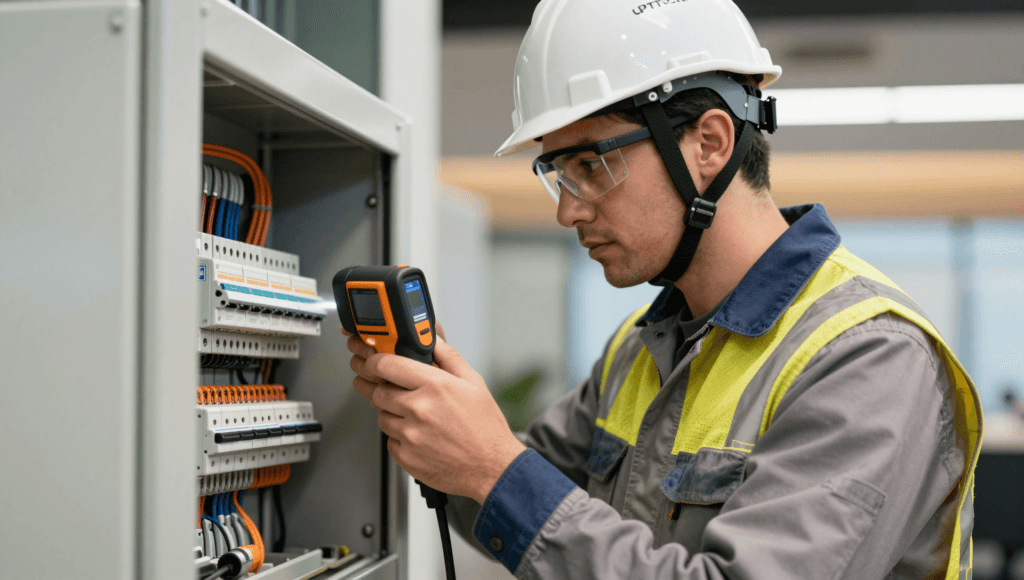
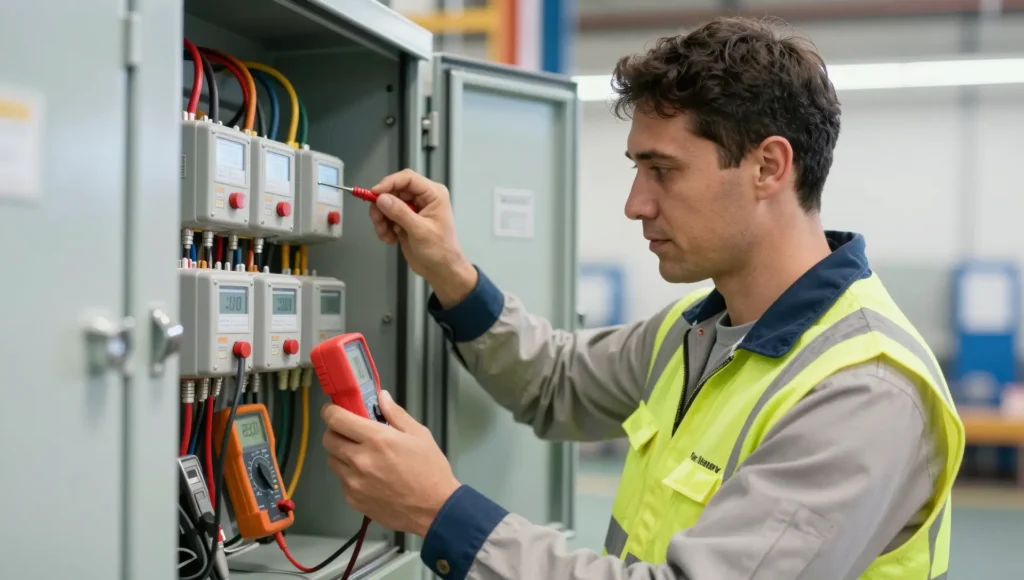
Insulation breaks down, connections loosen, and circuits become overloaded gradually as equipment is added over time, often invisibly, until something fails. Regular inspection, terminal tightening, insulation resistance testing and infrared thermal scanning can catch hot spots in switchboards and busbars long before they cause a shutdown.
Verifying Protection Devices and Load Capacity
Breakers, RCDs and surge protection only work if they’re correctly matched to current demand, and that demand changes as a business grows. Load monitoring identifies circuits running close to capacity, allowing loads to be rebalanced or upgraded before nuisance tripping or overheating occurs.
Staying Compliant and Keeping Systems Reliable
Routine servicing is also a chance to confirm emergency lighting, isolation points, and backup power for lifts and fire systems are all functioning and properly documented. Accurate testing records give property managers, insurers and regulators clear evidence of due diligence.
When to Call a Commercial or Emergency Electrician
Knowing which faults can wait for a scheduled visit and which need immediate attendance is critical to protecting people and property.
When to Call a Commercial Electrician Promptly
Book a licensed electrician promptly if you notice repeated breaker tripping, flickering lights, warm outlets or switchboards, damaged fittings, unpredictable equipment behaviour, or an ongoing reliance on extension leads and adapters. These issues can progress to shock or fire risk if left unchecked.
When to Call an Emergency Electrician Immediately
Call an emergency electrician straight away if there’s a burning smell, smoke or visible heat damage, sparking or arcing, water near electrical equipment, a hot switchboard, or loss of power to critical systems like refrigeration, medical equipment or fire and security systems. Isolate the area if it’s safe to do so, and never keep resetting a breaker in these conditions.
Onsite Staff Action vs Calling a Professional
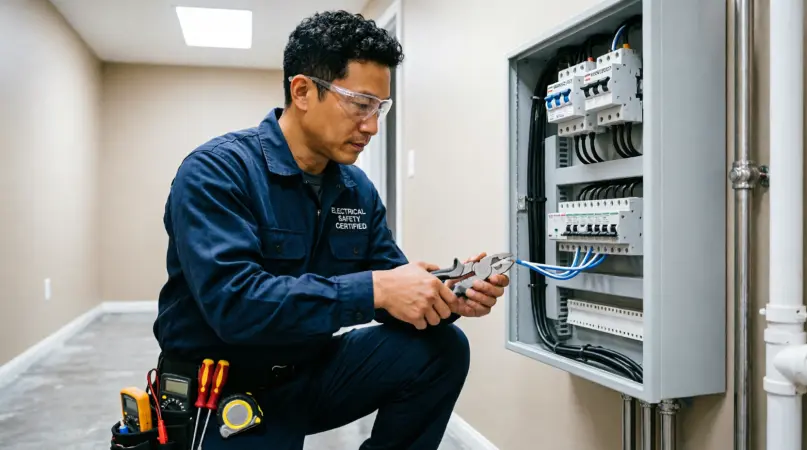
Facilities staff should limit themselves to isolating power at labelled switches, resetting a tripped breaker once (only if there’s no burning smell, damage or water present), and unplugging and tagging out faulty appliances. Anything involving switchboard covers, live parts or wiring should always be left to a qualified electrician, and if in doubt, treat it as an emergency.
Reducing Electrical Risk Across Sydney’s Commercial Buildings
Most commercial electrical emergencies develop slowly, long before the moment they become critical. Recognising early warning signs, acting on them quickly, and keeping to a regular maintenance schedule are the best ways for Sydney businesses to avoid downtime, protect their people, and stay compliant. Top Electricians provides commercial and Level 2 electrical services across Greater Sydney, helping property owners and managers keep their systems safe, reliable and ready for whatever the business throws at them.
Frequently Asked Questions
1. What are the most common causes of electrical emergencies in commercial buildings?
Most incidents come down to overloaded circuits, ageing or damaged wiring, water ingress, poor original installation, or a lack of regular maintenance. These issues are common across offices, warehouses, retail spaces and industrial sites in Sydney, particularly where equipment demand is high.
2. How do I know if a power outage is a serious electrical fault?
A one-off outage may simply be a supply issue, but repeated or unexplained power loss to the same circuits, floors or tenancies usually points to a deeper problem in the switchboard, cabling or upstream supply, and should be assessed by a licensed electrician rather than reset repeatedly.
3. Is it safe to keep resetting a breaker that keeps tripping?
No. Continuously resetting a tripped breaker without identifying the cause increases the risk of electric shock, equipment damage and fire. Frequent tripping usually signals an overloaded circuit, a faulty appliance, or a developing wiring fault that needs proper investigation.
4. What should I do if I smell burning near my switchboard?
Treat it as an emergency. Isolate the area if it’s safe to do so, avoid opening switchboard covers yourself, and call an emergency electrician immediately. A burning smell, warm switchboard covers, or visible sparking can all indicate a serious fire risk.
5. How often should commercial electrical systems be maintained?
This depends on the size and use of the building, but regular inspections, including visual checks, insulation testing and infrared thermal scanning, help catch hidden faults before they escalate. Top Electricians can recommend a maintenance schedule suited to your Sydney property based on its equipment load and usage.