
Annandale’s terrace houses are among the most architecturally distinctive homes in Sydney’s Inner West. The ironwork balconies, leadlight windows, and original hardwood floors tell a story stretching back over a century. But behind those beautifully preserved facades, many properties are running electrical systems that were never designed to handle the demands of modern Australian life.
Today’s households run air conditioning units, EV chargers, induction cooktops, and whole-home Wi-Fi simultaneously. That’s a world away from what an early 20th-century terrace was wired for.
This guide covers what ageing wiring looks like, why it’s dangerous, how a professional upgrade works in a heritage property, and what to expect to pay in Sydney. Whether you’re a long-term resident, a new owner, or an investor, our licensed electricians have you covered.
Why Old Electrical Wiring in Annandale Terraces Is a Safety Hazard
Most Annandale terraces were built between the 1880s and the 1930s, placing their original wiring well past its safe service life. Australian electrical infrastructure from this era used materials and installation methods that are now considered genuinely dangerous.
VIR Wiring: The Inner West’s Most Common Electrical Hazard
Vulcanised Indian Rubber (VIR) cabling was the dominant wiring type in Australian homes from roughly the 1920s through to the 1960s. Unlike modern TPS (thermoplastic sheathed) cable, VIR insulation has a finite lifespan. After 50 to 80 years, the rubber becomes brittle, cracks, and eventually crumbles.
When VIR insulation fails, live copper conductors are left exposed against old, dry timber framing. That is exactly the kind of fuel a house fire needs. The risk is compounded in terrace houses, where the original construction used a lot of combustible timber and where wall cavities are small and hard to inspect without invasive work.
The tell-tale signs of deteriorating VIR wiring include:
- A persistent faint smell of burning plastic or hot rubber, particularly near power points or ceiling roses
- Lights that flicker or dim when other appliances switch on
- Power points or light switches that feel warm to the touch
- Intermittent power loss on certain circuits
- Discolouration or scorch marks around outlets or switchboard connection
Lead-Sheathed and Knob-and-Tube Wiring
Some older Annandale properties contain even earlier wiring systems. Lead-sheathed cable predates VIR and carries additional hazards related to lead exposure during any renovation work. Knob-and-tube wiring, a system using ceramic insulators stapled to framing with no earth conductor, was also used in some early Federation-era homes.
Neither of these systems is compatible with modern safety requirements under AS/NZS 3000:2018 (the Australian Wiring Rules), and both must be replaced during any significant electrical upgrade.
The Load Problem: Old Circuits, Modern Demands
Beyond the insulation issue, there is a fundamental capacity problem. A terrace wired in 1920 was designed to carry a fraction of today’s electrical loads. Original circuits were typically rated for 10 to 15 amps per entire floor. A modern kitchen alone, with a dishwasher, an induction cooktop, a microwave, and a refrigerator, can easily exceed that.
Running modern loads through undersized original wiring creates chronic overloading. This doesn’t always trip a fuse immediately. Instead, it causes gradual heat buildup inside your walls over months and years, a slow fire risk that remains invisible until it becomes an emergency.
Industry Reference: AS/NZS 3000:2018 (the Australian Wiring Rules) sets the minimum standard for all electrical installations in Australia. Any licensed electrician in NSW must comply with this standard, as well as the relevant NSW Fair Trading and SafeWork NSW requirements. |
Is Your Switchboard Due for an Upgrade?
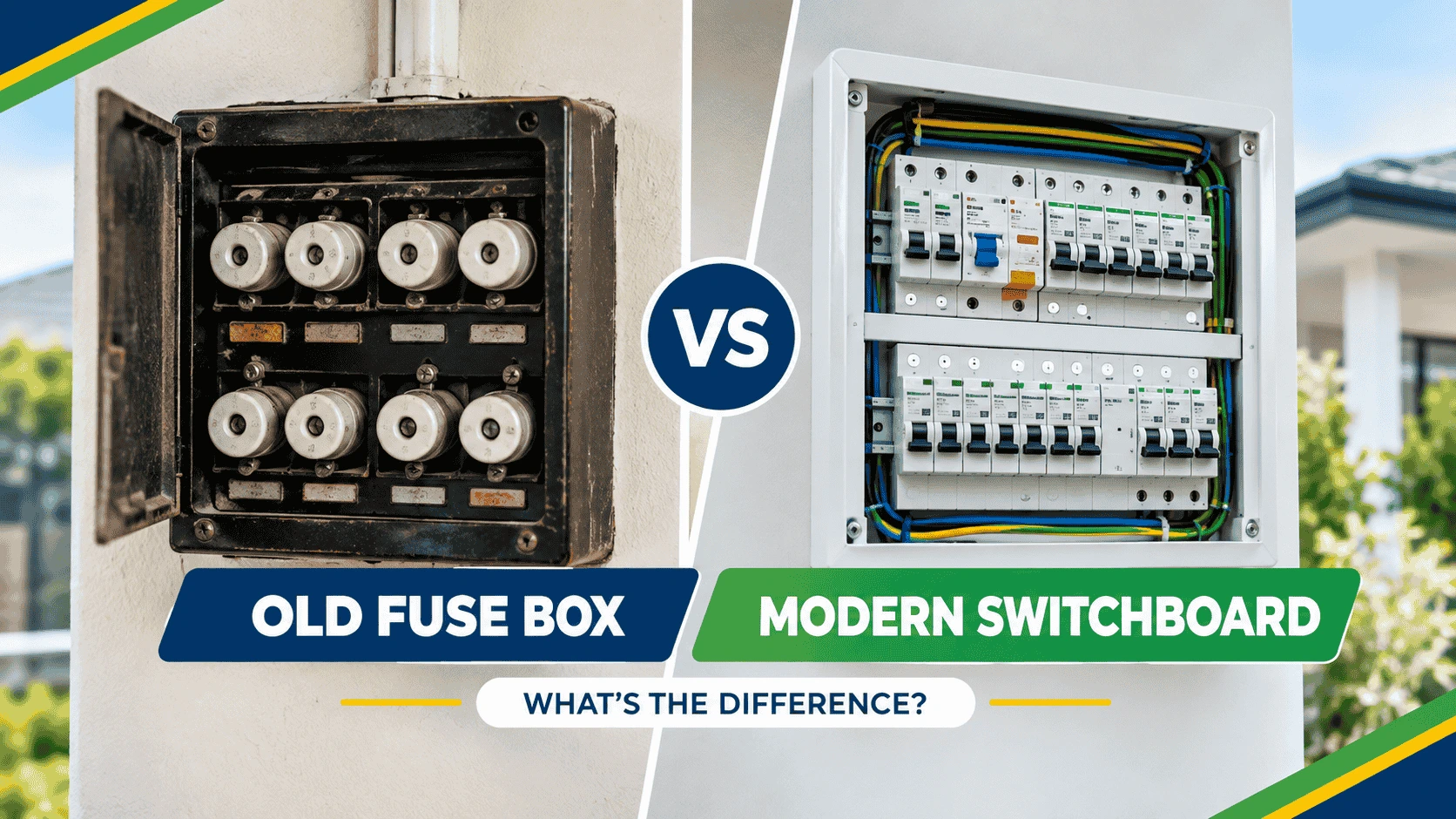
Your switchboard is the central nervous system of your home’s electrical infrastructure. In many Annandale terraces, the original switchboard is a wooden box mounted in a hallway or laundry, housing ceramic fuses and, in some cases, a roll of spare fuse wire. This is not a backup plan. It is a liability.
How to Identify an Outdated Switchboard
Your switchboard is almost certainly due for replacement if any of the following apply:
- It uses ceramic or rewirable fuses rather than modern circuit breakers.
- There are no RCDs (Residual Current Devices / safety switches) installed
- The board feels warm or makes humming or buzzing sounds
- You regularly experience tripped circuits when using multiple appliances
- Circuit labels are missing, handwritten, or unclear
- The board was last serviced more than 15 years ago
- There is evidence of DIY modifications or non-standard wiring entering the board
RCDs: What They Are and Why They’re Now Mandatory
A Residual Current Device (RCD), commonly called a safety switch, monitors the flow of electrical current through a circuit. The moment it detects a leakage, even as small as 30 milliamps, it cuts the power in less than 30 milliseconds. That is fast enough to prevent electrocution in most circumstances.
Under current NSW regulations, RCDs are mandatory on all power and lighting circuits in residential properties when any electrical work is performed. A home without RCD protection is not compliant with current Australian standards and carries significant risk in the event of a fault or an insurance claim. Learn more about our switchboard upgrades and RCD installations.
A modern switchboard upgrade will include:
- Individual RCDs protecting every power and lighting circuit
- Properly rated circuit breakers replacing old ceramic fuses
- A dedicated main switch
- Surge protection for sensitive electronics (recommended)
- Clear, accurate labelling of all circuits
- A dedicated circuit for any future EV charger or solar inverter
NSW Regulation Note: Under the NSW Home Building Act 1989 and the Electricity Supply Act 1995, a licensed electrician must carry out all electrical work. Unlicensed electrical work is illegal and may void your home and contents insurance entirely. Verify any electrician’s licence via NSW Fair Trading. |
The Heritage Challenge: Rewiring Without Ruining Your Home
Rewiring a Victorian or Federation terrace in Annandale is a fundamentally different job to rewiring a modern brick veneer in Penrith. The architectural features that make these homes so desirable, including original lath-and-plaster ceilings, decorative cornices, 19th-century skirtings, and double-brick walls, are exactly what makes electrical work technically demanding. Our residential electricians have years of hands-on experience with Inner West heritage properties.
Common Structural Challenges in Inner West Terraces
- Double-brick external walls with no internal cavity make cable routing extremely difficult
- Original lath-and-plaster ceilings are fragile and irreplaceable, and any damage is costly to repair
- Decorative cornices and ceiling roses limit access points for wiring
- Narrow ceiling cavities, sometimes less than 200mm, restrict the tools and techniques that can be used
- Original floorboards may be tongue-and-groove, making board lifting difficult without damage
- Properties within Annandale’s Heritage Conservation Areas may require council notification.
How Professional Electricians Protect Heritage Features
Experienced Inner West electricians use specialised cable-fishing techniques to route new TPS wiring through existing wall and ceiling cavities without cutting access holes in finished surfaces. This involves:
- Using flexible fibre-optic inspection cameras to map existing cable paths and identify obstructions
- Steel fish tapes and flexible rods to thread cables through narrow, irregular voids
- Strategic use of surface-mounted conduit where cavity access is genuinely impossible, chosen to match period-appropriate aesthetics
- Working from roof space and subfloor wherever possible to avoid touching interior plasterwork
- Carefully lifting only the minimum number of floorboards required and relaying them without visible damage
The objective is always to make the electrical upgrade invisible. All the safety and capability of a brand-new system, with the home’s historical character completely intact.
Heritage Listings and Council Approvals in Annandale
Annandale falls within the Inner West Council local government area. The suburb contains several Heritage Conservation Areas (HCAs) and a number of individually listed heritage items under the Inner West Local Environmental Plan 2022 (LEP). You can review relevant heritage information directly on the Inner West Council heritage page.
For most internal electrical work, including switchboard replacement and rewiring, a Development Application (DA) is not required. However, if the work involves any alteration to the external appearance of a heritage-listed property (such as installing new conduit on an external wall), you may need to notify Inner West Council or obtain a Heritage Impact Statement.
A qualified electrician familiar with Inner West properties will advise you on what approvals, if any, apply to your specific project before work commences.
What a Full Electrical Upgrade Involves: Step by Step
A comprehensive electrical upgrade for an Annandale terrace typically follows a defined process. Understanding each stage helps you plan the work around your household and set realistic expectations.
Stage 1: Safety Audit and Inspection
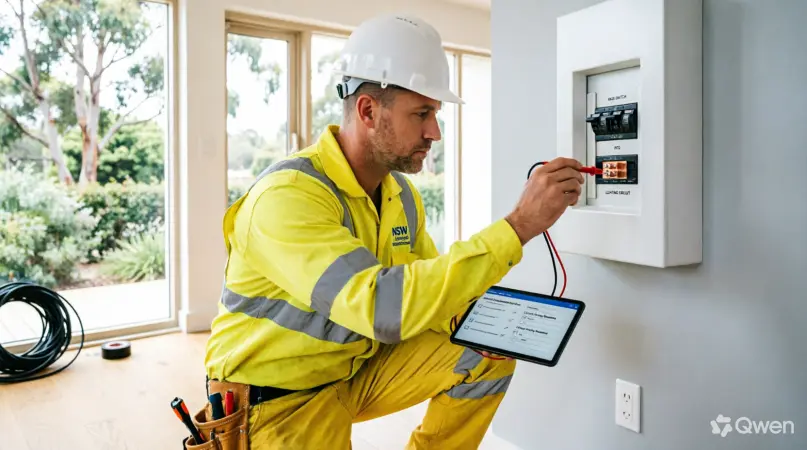
A licensed electrician begins by conducting a thorough inspection of your entire electrical installation. This is not a visual check of power points. It means tracing circuits from the point of attachment (where Ausgrid’s network connects to your home) all the way to every outlet, light fitting, and hard-wired appliance.
The inspection documents all existing wiring types, circuit configurations, earthing arrangements, and any compliance issues. The result is a clear picture of what needs replacing versus what can be retained, and forms the basis for an accurate, itemised quote.
Stage 2: Old Wiring Removal
Old VIR, lead-sheathed, or any other non-compliant cabling is fully removed, not abandoned in place. Leaving old wiring in walls is a common shortcut that can cause confusion for future electricians, create unnecessary fire risk from deteriorating insulation, and complicate the sale of the property.
Stage 3: New Cable Installation
Modern TPS (Thermoplastic Sheathed) cable compliant with AS/NZS 5000.1 is installed throughout the home. In a heritage property, this is where the cable-fishing expertise discussed earlier becomes critical. New circuits are designed with dedicated runs for high-load appliances such as the oven, cooktop, air conditioning, and EV charger, rather than combining these loads on shared circuits.
Stage 4: Switchboard Upgrade
The old switchboard is replaced with a modern consumer mains unit (CMU) containing individual RCDs for all circuits, correctly rated circuit breakers, a main switch, and sufficient spare capacity for future circuits.
Stage 5: Earthing and Bonding
Many Annandale terraces have inadequate or absent earthing. Modern AS/NZS 3000:2018 compliance requires a properly installed main earthing conductor and, in most cases, a copper earth electrode driven into the ground at the property. All metal water and gas pipework entering the premises is also bonded to earth under current standards. This is a critical safety measure that older homes frequently lack.
Stage 6: Testing, Certification, and Notification
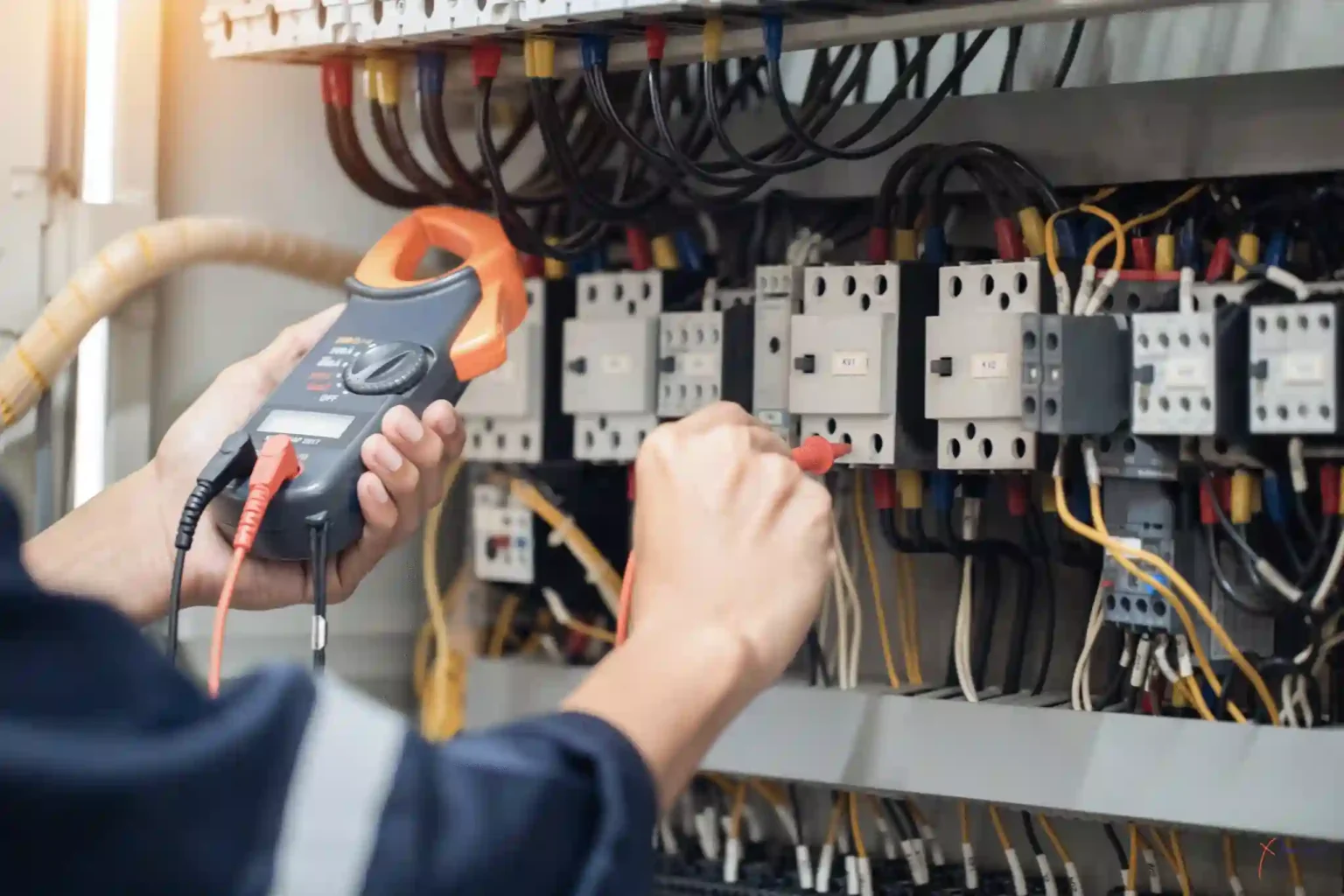
Once installation is complete, the electrician performs a full series of electrical tests including insulation resistance testing, earth continuity testing, and RCD trip-time testing. The licensed electrician then issues a Certificate of Compliance for Electrical Work (CCEW), a legal requirement in NSW for all notifiable electrical work. A copy of this certificate is lodged with Ausgrid.
Important: Always request your Certificate of Compliance for Electrical Work (CCEW) from your electrician upon completion. This document is essential for insurance purposes and must be disclosed when selling the property. For peace of mind, contact Top Electricians to book a full compliance inspection. |
Cost Breakdown: What to Budget for Electrical Upgrades in Sydney
Electrical work in heritage properties commands a premium over standard residential electrical work, and that premium is justified. The technical demands of working in double-brick terraces with original plasterwork require experienced tradespeople and specialised equipment.
The following ranges reflect current Sydney market pricing as of 2026:
Scope of Work | Estimated Cost (AUD) | Notes |
Switchboard upgrade (standard) | $1,200 to $2,500 | Includes RCDs, breakers, labelling |
Partial rewire (single floor or zone) | $2,500 to $5,000 | Targeted replacement of specific circuits |
Full rewire (2 to 3 bedroom terrace) | $5,000 to $9,000 | Entire home, all circuits |
Full rewire (4+ bedroom terrace) | $5,000 to $14,000+ | Larger properties, complex access |
Additional power points (GPOs) | $150 to $300 each | Depends on access difficulty |
EV charger installation | $500 to $1,800 | Including a dedicated circuit |
Solar inverter connection | $400 to $1,200 | Switchboard prep and connection |
Earthing upgrade | $300 to $900 | Includes earth electrode installation |
These figures are indicative. The final cost depends on access difficulty, the condition of existing wiring, and the number of circuits required. Request a free quote and we will always provide a detailed, written estimate before commencing any work.
Let’s get started!
Planned vs Emergency Electrical Work: The Real Cost Difference
Emergency call-outs typically attract rates of two to three times the standard hourly charge. Our 24/7 emergency electrician service is available when you need it most, but acting proactively keeps costs predictable. Here is what a major failure can cost beyond the repair bill itself:
- Hotel accommodation if the home becomes uninhabitable
- Spoiled refrigerated and frozen food
- Potential fire damage and associated insurance excess
- Business disruption costs if you work from home
- No ability to negotiate on price or scope under emergency conditions
Proactive electrical upgrades allow you to get multiple quotes, plan the work around your schedule, and prioritise the most critical elements first if budget is a consideration.
Future-Proofing Your Annandale Home: Beyond Basic Compliance
An electrical upgrade is not just a compliance exercise. It is the most sensible time to prepare your home for the technologies that will shape the next decade of Australian residential life. Explore our full range of electrical services to see how we can set your home up for the future.
Solar Panel and Battery Storage Readiness
Sydney has one of the highest rates of rooftop solar adoption in the world, and the economics continue to improve. If you’re considering adding a solar system to your Annandale terrace, whether immediately or in the next few years, it costs very little extra to have your switchboard configured with a dedicated solar inverter connection point, bidirectional metering capability, and appropriate circuit breaker sizing during your rewire.
Installing this infrastructure later as a standalone job typically costs significantly more and may require re-opening walls.
EV Charging Infrastructure
Electric vehicle uptake in inner-city Sydney is growing rapidly. Annandale terraces with rear-lane access are well-positioned for EV charger installation. A dedicated 32-amp circuit from the switchboard to a garage or rear parking area can be roughed in during a rewire at minimal additional cost, even if you install the charger itself later.
Smart Home and Automation Wiring
While wireless smart home systems have reduced the need for extensive data cabling, a rewire is still the logical time to install data outlets, USB-C charging points, and smart lighting infrastructure. Hard-wired connections consistently outperform wireless equivalents for reliability and latency, which matters if you work from home or run streaming entertainment throughout the property.
LED Lighting Upgrade
While replacing wiring, switching to high-CRI (Colour Rendering Index) LED lighting throughout the home is a cost-effective upgrade with immediate returns. Modern LEDs use approximately 75 to 80 per cent less electricity than halogen or incandescent equivalents, generate minimal heat (important in timber-framed ceilings), and have a rated lifespan of 15,000 to 25,000 hours. Choosing fittings with a CRI of 90 or above means colours appear true and accurate, which is important in a home with quality period finishes and furnishings.
Electrical Upgrades and Property Value in the Inner West
In Sydney’s Inner West property market, buyers and conveyancers are increasingly sophisticated about what they look for during inspections and due diligence. A modern, compliant electrical installation is not just about safety. It is a tangible value driver.
- A modern switchboard with RCDs and clear circuit labelling signals to buyers that the property has been professionally maintained
- The CCEW certificate provides documented proof of compliance, reducing the buyer’s risk and potential renegotiation leverage
- An upgraded electrical system reduces the buyer’s estimated cost of ownership post-purchase
- Properties with compliant wiring are less likely to have issues flagged in a pre-purchase building and pest inspection
- Solar and EV-ready infrastructure is increasingly valued in Inner West buyer demographics
Real estate agents in Annandale and neighbouring suburbs, including Leichhardt, Newtown, Balmain, and Glebe, consistently report that buyers place significant weight on the condition and age of the electrical installation, particularly for period homes where expensive hidden defects are a known risk category. View all areas we service across Sydney.
How to Choose the Right Electrician for a Heritage Terrace
Not all licensed electricians are equally well-equipped for heritage property work. At Top Electricians, our team brings years of specific Inner West experience to every job. Here is what you should look for when comparing tradespeople:
Non-Negotiable Minimum Requirements
- Valid NSW electrical contractor licence. Verify any electrician via the NSW Fair Trading licence check
- Appropriate public liability and professional indemnity insurance
- Ability to issue a Certificate of Compliance for Electrical Work (CCEW)
- Notification of work with Ausgrid, the relevant Distribution Network Service Provider in Annandale
Heritage-Specific Experience to Look For
- Demonstrated experience rewiring double-brick or lath-and-plaster homes in the Inner West
- Familiarity with VIR removal procedures, including the safe management of lead-sheathed cables where present
- Cable-fishing expertise and the equipment to perform it (borescope cameras, flexible fish rods, and similar tools)
- Knowledge of Inner West Council heritage requirements and when notification is necessary
- A portfolio of completed work in period properties. Do not hesitate to ask for references
Red Flags to Avoid
- Any electrician who provides a verbal quote without inspecting the property in person
- Unusually low quotes that do not reflect the complexity of heritage work
- Reluctance to provide a CCEW certificate or discuss compliance requirements
- Proposals to leave old wiring in place and just add new circuits on top
- No public liability insurance or inability to produce evidence of it
Frequently Asked Questions
Is old wiring in my Annandale terrace automatically dangerous?
Not automatically, but the risk level increases significantly with age. VIR wiring from before the 1960s is approaching or past the point where insulation failure becomes likely, particularly in homes that have experienced any movement, pest activity, or previous renovation work. The absence of modern RCD protection means that even a minor fault can escalate before any protection trips. The safest approach is always a professional inspection. Book a safety inspection with Top Electricians to determine the actual condition of your wiring.
Can I upgrade only part of my home’s wiring rather than the whole lot?
Yes. A staged approach is common and can be an effective way to manage costs. Typically, a switchboard upgrade with full RCD installation is prioritised first, as this provides maximum safety improvement for the lowest cost. High-risk zones such as kitchens, bathrooms, and any area where VIR condition is worst are addressed next. The remainder of the home can follow in subsequent stages.
Do I need council approval to rewire my Annandale terrace?
For internal electrical work, including rewiring, switchboard replacement, and adding power points, a Development Application to Inner West Council is generally not required. The work is notifiable through your electrician to Ausgrid, and a CCEW is required. However, if your property is individually heritage-listed and any work affects the external appearance, heritage approval may be required.
How long does a full electrical rewire take in a terrace house?
A full rewire of a typical two to three-bedroom Annandale terrace takes between three and seven business days, depending on access difficulty, the number of circuits involved, and whether any plasterwork repairs are required. A switchboard-only upgrade is typically completed in a single day. Most households can remain in the property during the process, though you will need to plan for periods without power in individual areas.
Will a rewire damage my original plasterwork and cornices?
This is understandably the biggest concern for most Annandale Terrace owners. Our residential electricians use cable-fishing techniques to minimize or eliminate the need for access holes in finished surfaces. In the rare cases where access cannot be achieved any other way, a skilled electrician will make small, clean penetrations in non-feature locations and arrange for a qualified plasterer to make good the finish afterwards.
What happens if I sell my home without upgrading the old wiring?
You are legally permitted to sell a property with older wiring in NSW, and there is no mandatory pre-sale electrical inspection requirement. However, non-compliant wiring disclosed in a pre-purchase inspection will affect buyer confidence and often results in a lower offer price or a price reduction negotiation. In a competitive Inner West market, having a current CCEW and modern switchboard removes a significant buyer objection.
The Bottom Line: Do Not Wait for a Warning You Cannot Ignore
An Annandale terrace is one of the most valuable types of residential property in Sydney. The combination of architectural character, inner-city location, and the community that surrounds it makes these homes genuinely special. Protecting that investment, and the people living in it, means ensuring the electrical infrastructure is equal to the task of modern life.
Ageing VIR wiring, ceramic fuse boxes, and absent earthing are not minor inconveniences. They are well-documented fire and electrocution hazards, and the consequences of a failure are severe. The good news is that a professional electrical upgrade carried out by our experienced Level 2 electricians is a manageable, predictable process that leaves your home safer, more capable, and more valuable.
The risks of waiting are real. Higher emergency costs, potential fire damage, complications on sale, and most importantly, the safety of your household all point in the same direction. Acting proactively is always the better choice.
Ready to Take the Next Step? If you’re concerned about your Annandale terrace’s wiring, or if you’ve noticed any of the warning signs mentioned in this article, contact Top Electricians today. We will carry out a thorough electrical safety inspection, provide a clear and honest assessment of what needs to be done, and give you a fixed-price quote with no hidden charges. Call us on 0431 460 141 or request a free quote online to book your inspection. |