
Getting your electricity meter compliant is not something most Sydney homeowners think about until a power upgrade stalls, a rental property fails inspection, or a new connection gets rejected at the last minute. Suddenly, what seemed like a routine electrical job turns into a confusing back-and-forth with distributors, missed deadlines, and unexpected costs.
The good news? Most compliance issues are entirely preventable. This guide breaks down exactly how electricity meter compliance works in NSW, why rejections happen, and what you can do to get approvals through cleanly the first time.
What Electricity Meter Compliance Really Means
Electricity meter compliance is the formal process of verifying that your meter installation, metering equipment, and associated switchboard infrastructure meet the current technical and safety standards required by your local network distributor and the NSW regulatory framework.
In New South Wales, compliance is governed by:
- NSW Service and Installation Rules (SIR), the primary technical standard for all customer-side electrical work
- AS/NZS 3000:2018 (the Wiring Rules), the Australian standard for electrical installations
- National Electricity Rules (NER), the federal framework governing metering and market participation
- Ausgrid, Endeavour Energy, and Essential Energy, the three DNSPs covering Greater Sydney and its surrounds
Compliance confirms that the metering system is safe, accurately measures consumption, and correctly integrated with the broader electricity network. Without a valid compliance sign-off, distributors will not energize or re-energise a connection.
Why Meter Compliance Is a Big Deal in Sydney
Sydney housing stock spans more than a century of electrical infrastructure. Federation homes in the Inner West still run on mid-20th century switchboards, while high-density apartment towers in Parramatta require sophisticated metering setups for embedded networks. This creates a compliance landscape that is more complex than most Australian cities.
Common scenarios where compliance becomes critical:
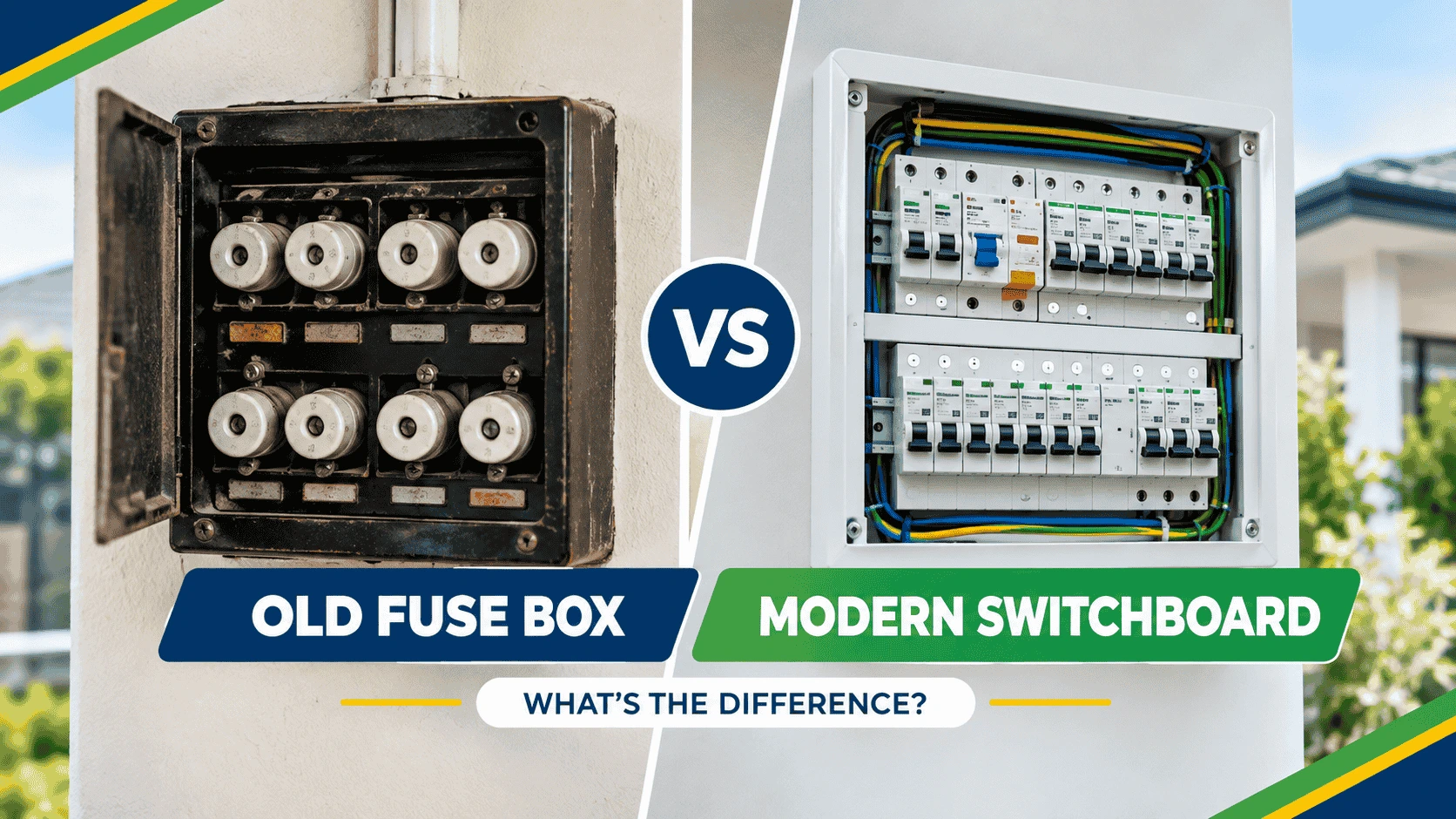
- Older homes undergoing renovation, where switchboards untouched for 30 or more years often fail basic safety checks
- Granny flat and secondary dwelling additions, which require separate metering points. See our granny flat electrical connection services for more details.
- EV charger and solar system installations that trigger mandatory metering assessment. Learn more about our solar and EV electrical services.
- Strata and apartment buildings, where embedded network metering follows its own AER compliance pathway
- New subdivisions and land releases that require fresh connections with full distributor sign-off
Can a Level 2 Electrician Submit Paperwork to the Energy Provider?
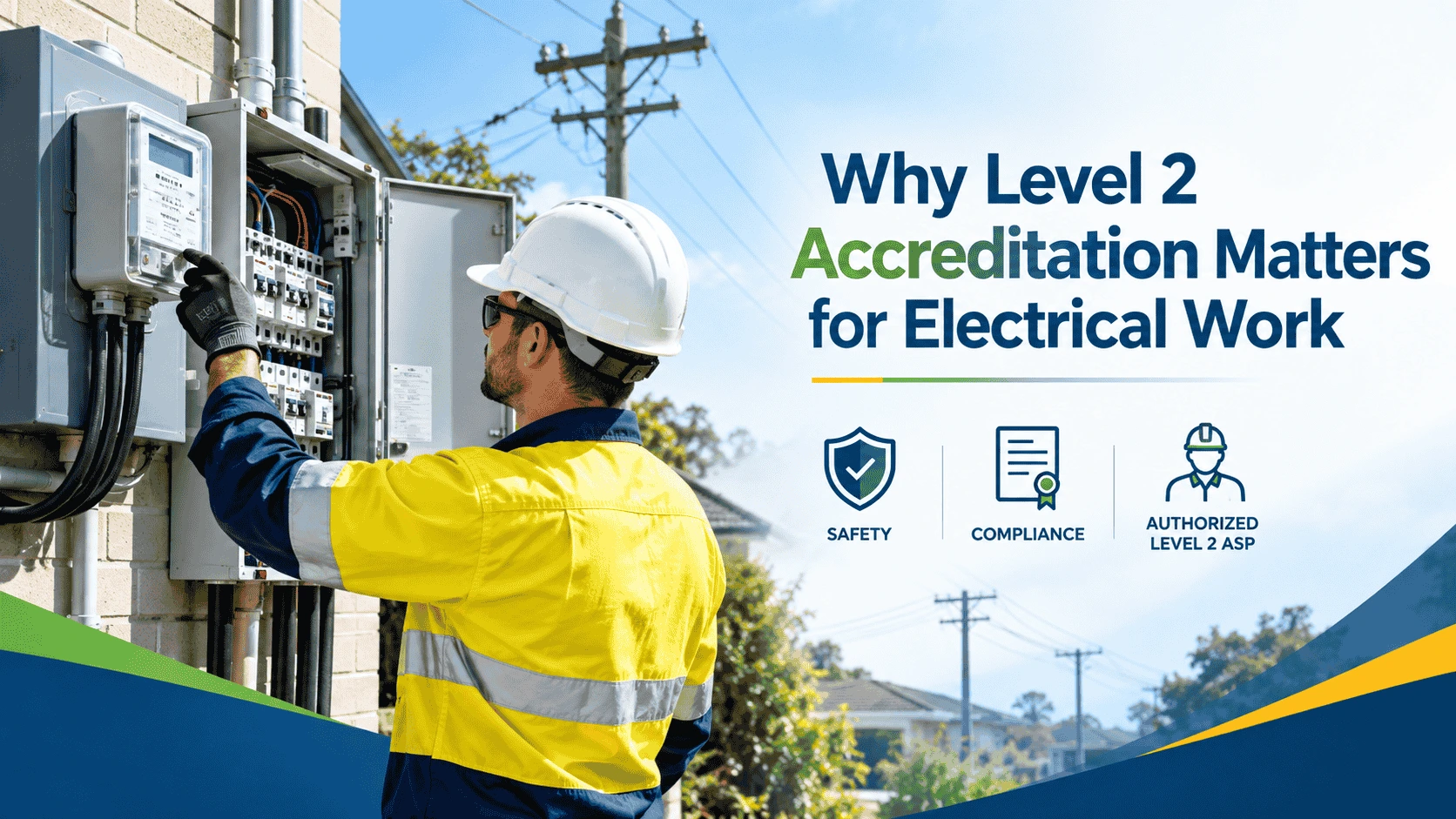
Yes, and this distinction matters more than most people realise. A Level 2 Accredited Service Provider (ASP) holds additional accreditation from the relevant network distributor, authorizing them to work on service provider infrastructure, which covers the assets between the street network and your main switchboard.
Standard licensed electricians (Level 1) can only work on internal customer wiring. Level 2 ASPs are authorised to:
- Install, relocate, and upgrade overhead and underground service lines
- Replace and upgrade metering equipment and meter panels. See our meter upgrade services.
- Connect and disconnect the supply at the network level
- Submit compliance documentation directly to Ausgrid, Endeavour Energy, and Essential Energy
- Liaise with distributors on approval status, rectifications, and resubmissions
Always ask your electrician for their ASP accreditation number and verify it with the relevant distributor before work begins. This single step prevents most compliance problems. Contact our Level 2 electricians in Sydney to get started.
What Happens During a Meter Compliance Upgrade?
A properly executed compliance upgrade follows a structured process. Cutting corners at any stage is the primary reason inspections fail.
Stage 1: Pre-Work Site Assessment
Before tools are picked up, a qualified Level 2 ASP inspects meter location and accessibility, meter height compliance (typically 600mm to 1800mm from finished floor level under NSW SIR), service line condition, point of attachment (POA) condition, existing switchboard type and RCD protection status, and fire separation requirements for Class 2 buildings.
Stage 2: Load Assessment and Design
For upgrades involving increased demand such as three-phase supply, solar, or EV chargers, a load assessment confirms metering and protection equipment is correctly rated for the new demand.
Stage 3: Upgrade Works
Depending on the assessment, works may include meter panel replacement or relocation, switchboard upgrade with new RCDs and surge protection, earthing system upgrade, service line replacement, and point of attachment works.
Stage 4: Testing and Verification
All completed work is tested for correct voltage levels, earthing continuity and resistance values, RCD trip times to AS/NZS 3000, and polarity and phase sequencing.
Stage 5: Compliance Certificates and Documentation
A Certificate of Compliance for Electrical Work (CCEW) is issued and lodged with Fair Trading NSW. The Level 2 ASP also prepares distributor-specific documentation, including as-installed wiring diagrams, test results, metering data forms, and photographic evidence.
Inaccurate or incomplete documentation is the number one cause of distributor rejections.
Stage 6: Distributor Inspection and Approval
The distributor reviews submitted documentation and may conduct a physical inspection. Once satisfied, they issue formal approval and schedule energisation.
Why Was My Meter Upgrade Rejected?
Rejections are frustratingly common, and the majority are avoidable. The main causes fall into three categories.
Documentation Errors
- Incorrect or missing ASP accreditation details
- Wiring diagrams that do not match the as-installed configuration
- Missing test results or results outside acceptable ranges
- Wrong form version, as distributors update forms periodically and outdated versions trigger automatic rejection
Installation Non-Compliance
- Meter installed at incorrect height or with insufficient clearance
- Non-compliant point of attachment with deteriorated insulators or inadequate mounting
- Switchboard not meeting current RCD requirements under AS/NZS 3000:2018. Our switchboard upgrade service can resolve this.
- Earthing system not meeting current standards, which is common in pre-1990s homes
Fire and Building Regulation Failures
- Inadequate fire separation around metering enclosures in Class 2 buildings
- Non-compliant metering cabinet materials or ratings
- Insufficient weatherproofing on external installations
What Causes Distributor Approval Delays?
A rejection and a delay are different problems. Delays where an application is in the queue but not yet actioned are usually caused by:
- Peak submission volumes, as Ausgrid alone processes tens of thousands of applications annually with spikes after storm events and at end of financial year
- Requests for further information (RFIs), issued when documentation is incomplete but not technically wrong
- Incorrect distributor selection, where submitting to the wrong DNSP restarts the process entirely
- Missing prerequisite approvals, as some upgrade types require a separate augmentation approval before the compliance application can be processed
Working with an experienced Level 2 ASP in Sydney who knows each distributor’s current processes significantly reduces the risk of delays.
Can a Level 2 Electrician Resubmit Rejected Paperwork?
Yes, a rejection is not the end of the road, but it requires a methodical approach to avoid a second rejection. When a compliance application is rejected, the distributor provides a defect notice specifying exactly what needs to be rectified. A competent Level 2 ASP will:
- Review the defect notice and identify every listed issue
- Rectify physical installation defects if any are present
- Update and recompile all documentation to reflect the corrected installation
- Resubmit the complete application, not just the corrected items
Partial resubmissions where only flagged items are corrected without reviewing the full application often result in a second rejection. In most cases, resubmissions from experienced ASPs are processed faster than original submissions because the distributor can see the previously flagged items have been addressed.
What Happens If Level 2 Work Fails Inspection?
A physical inspection failure means a distributor inspector has attended the site and found the installation does not meet the required standard. This is different from a documentation rejection. When this happens:
- The distributor issues a non-compliance notice specifying the defects
- No energisation or re-energisation occurs until defects are fully cleared
- A follow-up inspection must be booked once rectification is complete
- Additional inspection fees may apply depending on the distributor and the number of failed inspections
In serious cases, the matter may be referred to Energy Safety NSW or SafeWork NSW for investigation. Poor quality Level 2 work carries real regulatory consequences.
Why Non-Compliant Meters Are a Safety Risk
Non-compliant metering infrastructure creates genuine, documented safety hazards, not just paperwork problems.
Electrical Fire Risk
Undersized or deteriorated cables in ageing meter panels can overheat under normal load conditions. The NSW Rural Fire Service has identified outdated electrical infrastructure as a contributing factor in residential fires across Greater Sydney.
Shock and Electrocution Risk
Non-compliant earthing systems, which are common in pre-1980s homes, mean a fault has no safe path to ground. The risk transfers directly to the occupant.
Insurance Implications
Most home and contents insurance policies in Australia contain clauses that void cover where a loss is caused by non-compliant electrical work. If a fire originates in a non-compliant meter panel, your insurer has grounds to deny the claim. Read more from the Insurance Council of Australia on electrical safety and insurance obligations.
Compliance Costs: What to Expect in Sydney
Electricity meter compliance costs vary significantly depending on the scope. As a general guide for Sydney properties in 2025 to 2026:
Work Type | Typical Cost Range (AUD) |
Meter panel replacement (basic) | $800 to $1,500 |
Switchboard upgrade (including RCDs) | $1,200 to $3,500 |
Three-phase upgrade | $2,500 to $6,000+ |
Point of attachment upgrade | $600 to $1,800 |
Earthing upgrade | $400 to $900 |
Full compliance upgrade (combined) | $3,000 to $8,000+ |
These are indicative ranges only. Final costs depend on property type, existing installation condition, distributor requirements, and access conditions. For an accurate quote, contact Top Electricians Sydney today.
Let’s get started!
Frequently Asked Questions
How long does electricity meter compliance take in Sydney?
A straightforward upgrade with correct documentation typically takes 5 to 15 business days from submission to approval. Complex upgrades, resubmissions, or peak submission periods can extend this to 4 to 8 weeks. An experienced Level 2 ASP is the most reliable way to minimise the timeline.
Do I need a Level 2 electrician for a simple meter replacement?
Yes. Any work involving the meter, service line, or point of attachment requires a Level 2 ASP regardless of complexity. This is a regulatory requirement under the NSW Electricity (Consumer Safety) Act. Work performed by an unaccredited tradesperson must be rectified before distributor approval can be granted.
Which distributor covers my Sydney property?
Ausgrid covers most of inner, eastern, and northern Sydney. Endeavour Energy covers western and south-western Sydney, the Blue Mountains, and the Illawarra. Essential Energy covers regional NSW. You can confirm your distributor using the postcode lookup tool on each company’s website.
Can a tenant organise meter compliance?
In NSW, the property owner holds legal responsibility for ensuring the installation is compliant. While a tenant can engage an electrician to identify issues, any formal compliance application, associated costs, and rectification responsibility sit with the owner.
What happens if I ignore a non-compliance notice?
Ignoring a non-compliance notice from a distributor can result in disconnection of supply, referral to Energy Safety NSW or SafeWork NSW, and potential prosecution under the NSW Electricity (Consumer Safety) Act. For landlords, there is also significant civil liability exposure if a tenant is harmed due to a known non-compliant installation.
How Top Electrician Pty Ltd Can Help
Top Electrician Pty Ltd is a Level 2 Accredited Service Provider operating across Sydney and Greater Sydney, with direct accreditation from Ausgrid, Endeavour Energy, and Essential Energy.
Working with an experienced Level 2 ASP means:
- Correct scoping upfront so all required work is identified before any application is submitted. See our full electrical services.
- Accurate documentation with distributor-specific paperwork prepared correctly the first time
- Fewer rejections as most applications are approved on first submission
- Direct distributor communication with no middlemen and no delays
- Full compliance that protects your property, your tenants, and your insurance cover
Electricity meter compliance does not need to be confusing or stressful. With the right Level 2 electrician, approvals become smoother, inspections pass faster, and your power stays connected safely.
Struggling with a rejected meter upgrade or delayed compliance in Sydney? Contact Top Electricians today on 0431 460 141 for expert guidance from a certified Level 2 ASP.