
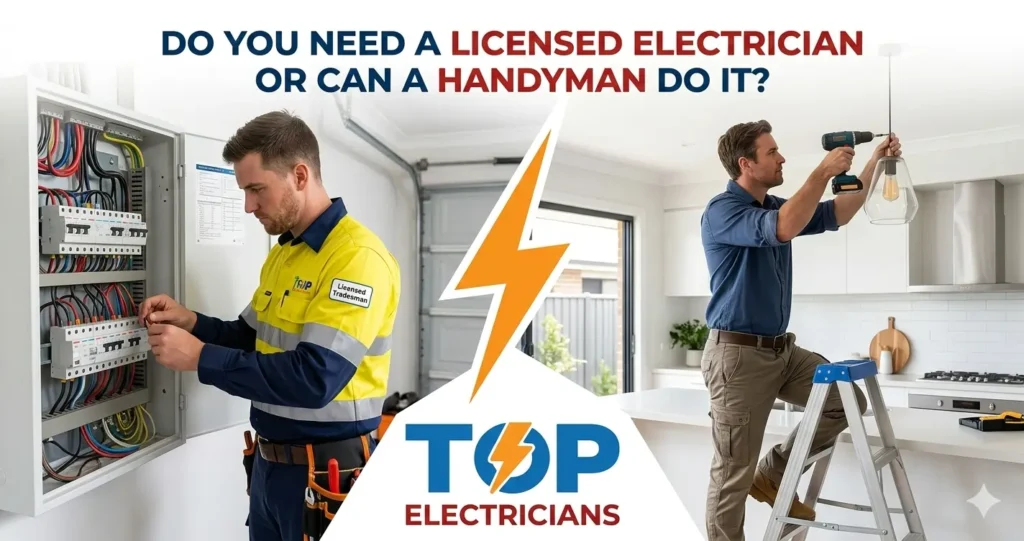
We’ve watched too many Sydney homeowners hire handymen for electrical jobs, only to face devastating consequences later. The licensed electrician vs handyman decision isn’t just about upfront costs it’s about protecting your family, home, and legal standing.
One wrong choice leads to house fires, voided insurance policies, massive fines, and serious injuries that change lives forever. Top Electrician sees the aftermath of unlicensed work daily. Understanding the difference between electrician and handyman qualifications helps you make safe, legal decisions for your property’s electrical needs.
What is the difference between a licensed electrician and a handyman?
The difference between electrician and handyman comes down to legal qualifications and scope of work. Licensed electricians complete years of training and hold certifications that handymen don’t have.
| Aspect | Licensed Electrician | Handyman |
| Training | 4-year apprenticeship + formal education | No formal electrical training required |
| Certification | Electrical licence from NSW Fair Trading | General trade experience only |
| Insurance | Public liability + professional indemnity | Basic public liability (if any) |
| Legal Authority | Can perform all electrical work legally | Extremely limited electrical tasks |
| Compliance | Must follow AS/NZS 3000 wiring standards | No regulatory oversight |
What electrical work legally requires a licensed electrician?
Australian law mandates licensed electricians for any work involving fixed wiring, switchboards, or mains power. The Electricity Supply Act 1989 (NSW) makes it illegal for unlicensed people to touch these systems. Breaking this law carries fines up to $22,000 and potential criminal charges.
Wiring and circuit installation
Installing new circuits or rewiring requires a licensed electrician under AS/NZS 3000 standards. This includes adding power points, lighting circuits, or dedicated appliance lines. Top Electrician handles all circuit work with full compliance and certification.
Switchboard and fuse box upgrades
Switchboard work is strictly regulated in Sydney. Upgrading from old ceramic fuses to modern safety switches requires proper licensing. Only qualified electricians can legally open, modify, or replace switchboards. Unlicensed work here risks electrocution and house fires.
Electrical safety system installation (smoke detectors, emergency systems)
Hardwired smoke alarms must be installed by licensed electricians per Australian Standard 3786. Emergency lighting, exit signs, and safety switching systems also require professional installation. These life-saving systems need proper wiring to function during emergencies and pass building inspections.
Major appliance wiring and connection (ovens, HVAC, water heaters)
Connecting ovens, air conditioners, and hot water systems to mains power needs licensed work. These high-draw appliances require dedicated circuits with correct cable sizing. Improper connections cause overheating, fires, and voided manufacturer warranties. Always use certified electricians.
Outdoor electrical connections (garden lights, pool wiring)
Pool equipment and outdoor lighting connect to mains power, making them high risk. NSW regulations demand licensed electricians install all outdoor circuits with proper waterproofing and RCD protection. Garden lighting systems running off the main supply also require professional installation for safety compliance.
Can a handyman do any electrical work at all?
Handymen can legally perform extremely limited tasks in Sydney. They’re allowed to replace existing light globes, power point covers, and switch plates but only like for like replacements. The moment they touch wiring, open a junction box, or modify circuits, they break the law. NSW Fair Trading prosecutes unlicensed electrical work regularly, protecting homeowners from dangerous practices.
Like for like fixture replacements
Handymen can swap light fittings, ceiling fans, or exhaust fans if no wiring changes occur. They must use identical fixtures with the same electrical specifications. Any modification to wiring, even minor, requires a licensed electrician immediately.
Restrictions by law
The Electricity Supply Act 1989 bans unlicensed electrical work across NSW. Breaking this carries $22,000 fines for individuals and $55,000 for companies. Police can issue on-the-spot penalties, and serious cases lead to criminal prosecution with possible jail time.
What are the risks of using a handyman for electrical work?
Using handymen for electrical tasks creates serious dangers beyond just safety hazards. We’ve seen Sydney homes burn down, families lose insurance payouts, and homeowners face massive legal bills. The risks of unlicensed electrical work aren’t worth the few dollars saved. Top Electrician responds to botched handyman jobs weekly, fixing problems that cost ten times more than proper installation.
Fire hazards
Faulty wiring from unlicensed work causes over 40% of residential fires in Australia. Incorrect connections overheat, melt insulation, and ignite surrounding materials. Poor circuit sizing creates constant fire risks that smoulder undetected until disaster strikes.
Electric shocks and injury risks
Handymen lack training to identify live wires or install proper earthing. Direct contact with 240-volt mains causes severe burns, cardiac arrest, or death. Children and pets face higher risks from exposed wiring that unlicensed workers leave behind.
Insurance claims being rejected due to non compliant work
Home insurance policies exclude damage from unlicensed electrical work. When fires or faults occur, insurers investigate and deny claims totalling hundreds of thousands. You’re left paying rebuild costs, temporary accommodation, and replacing everything you owned yourself.
Legal penalties and compliance issues
Property owners face prosecution for allowing unlicensed electrical work, not just the handyman. Council building inspectors can issue stop work orders, demand complete rewiring, and refuse occupancy certificates. Selling your home becomes impossible without compliance certificates from licensed electricians.
When should you always choose a licensed electrician?
Choose licensed electricians for anything involving fixed wiring, power circuits, or safety systems. Top Electrician (License 258657C, Contractor 139042C) handles all electrical work requiring legal compliance in Sydney. New installations, circuit repairs, switchboard upgrades, and appliance connections all need certified professionals. Don’t risk unlicensed electrical work; proper licensing protects your family, property value, and insurance coverage permanently.
New installations
Any new electrical installation power points, lighting circuits, outdoor sockets, or appliance connections require licensed electricians. Top Electrician provides certified installations with compliance certificates, ensuring your work meets AS/NZS 3000 standards and passes council inspections every time.
Repairs and upgrades
Faulty wiring, tripping circuits, or outdated systems need professional diagnosis and repair. Licensed electricians identify root causes, replace damaged components safely, and upgrade systems to current standards. DIY or handyman repairs often worsen problems, creating bigger safety hazards.
Safety critical tasks
Smoke alarms, RCD safety switches, and emergency systems protect lives during failures. These installations require precision wiring and testing that only licensed electricians perform legally. Incorrectly installed safety devices fail when you need them most, turning minor incidents into tragedies.